How to Create Website Mockups People Actually Love
Learn how to create website mockups that bridge the gap between idea and reality. Our guide covers tools, principles, and developer handoff.

Build beautiful websites like these in minutes
Use Alpha to create, publish, and manage a fully functional website with ease.
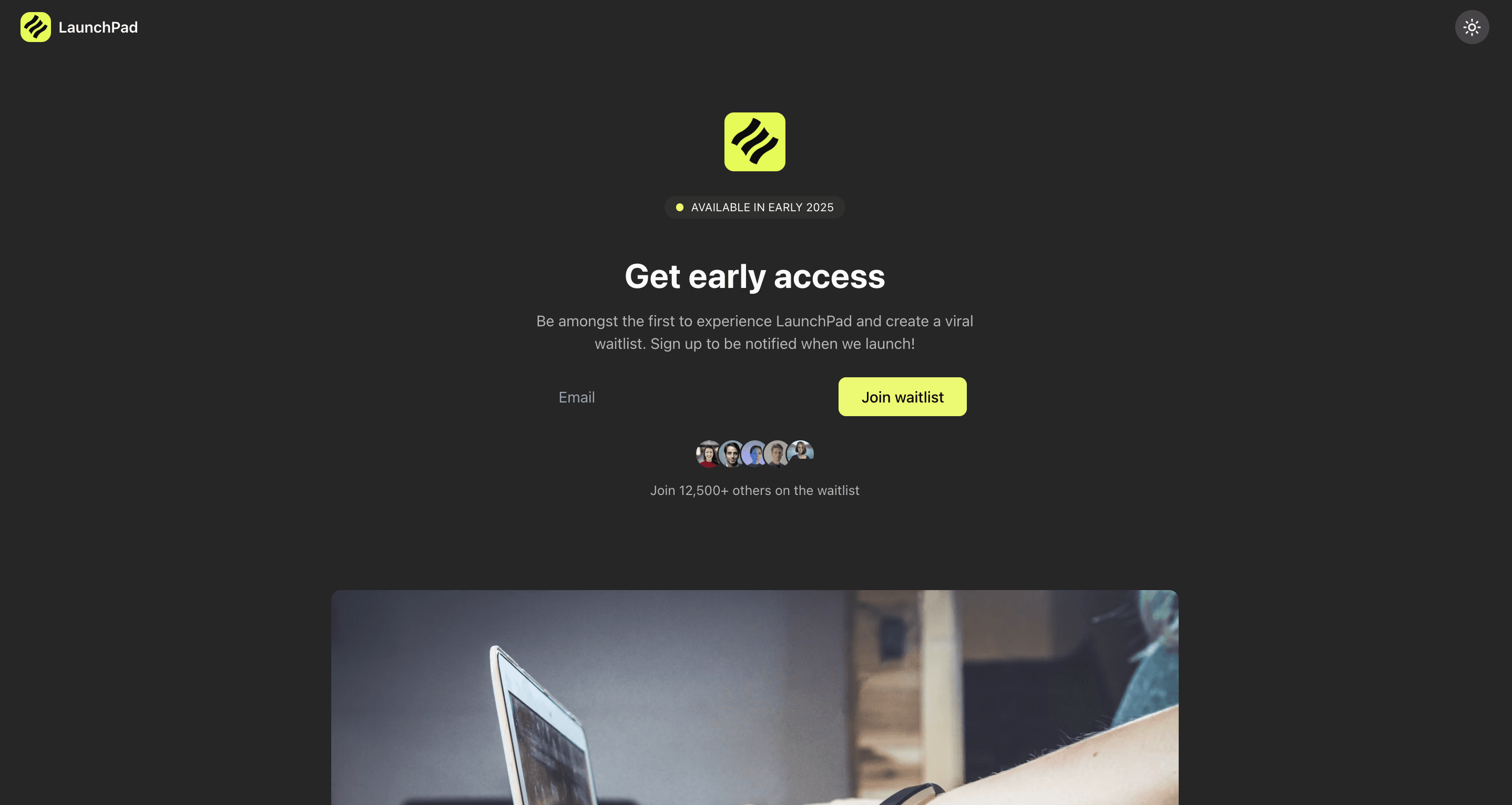


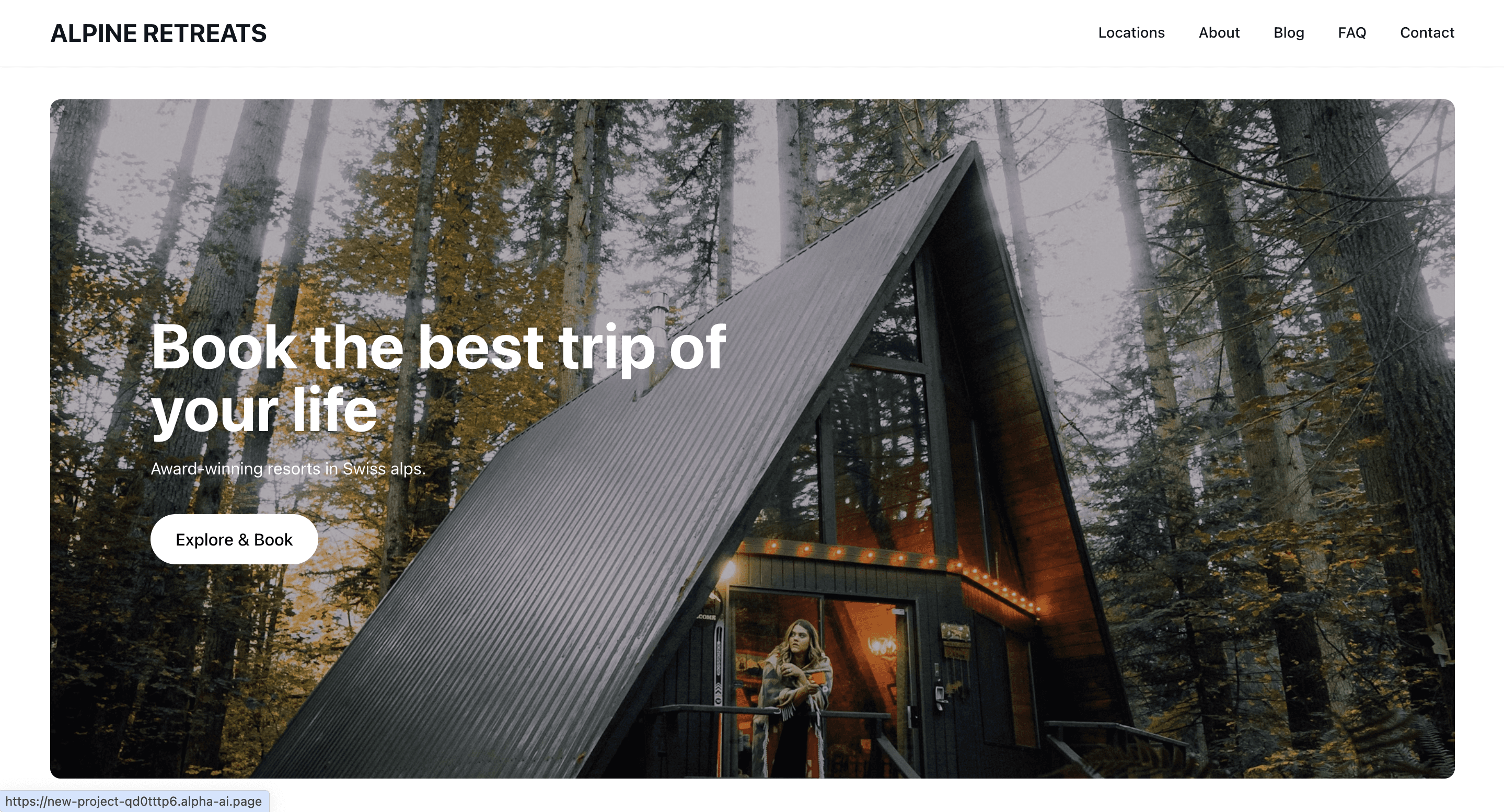
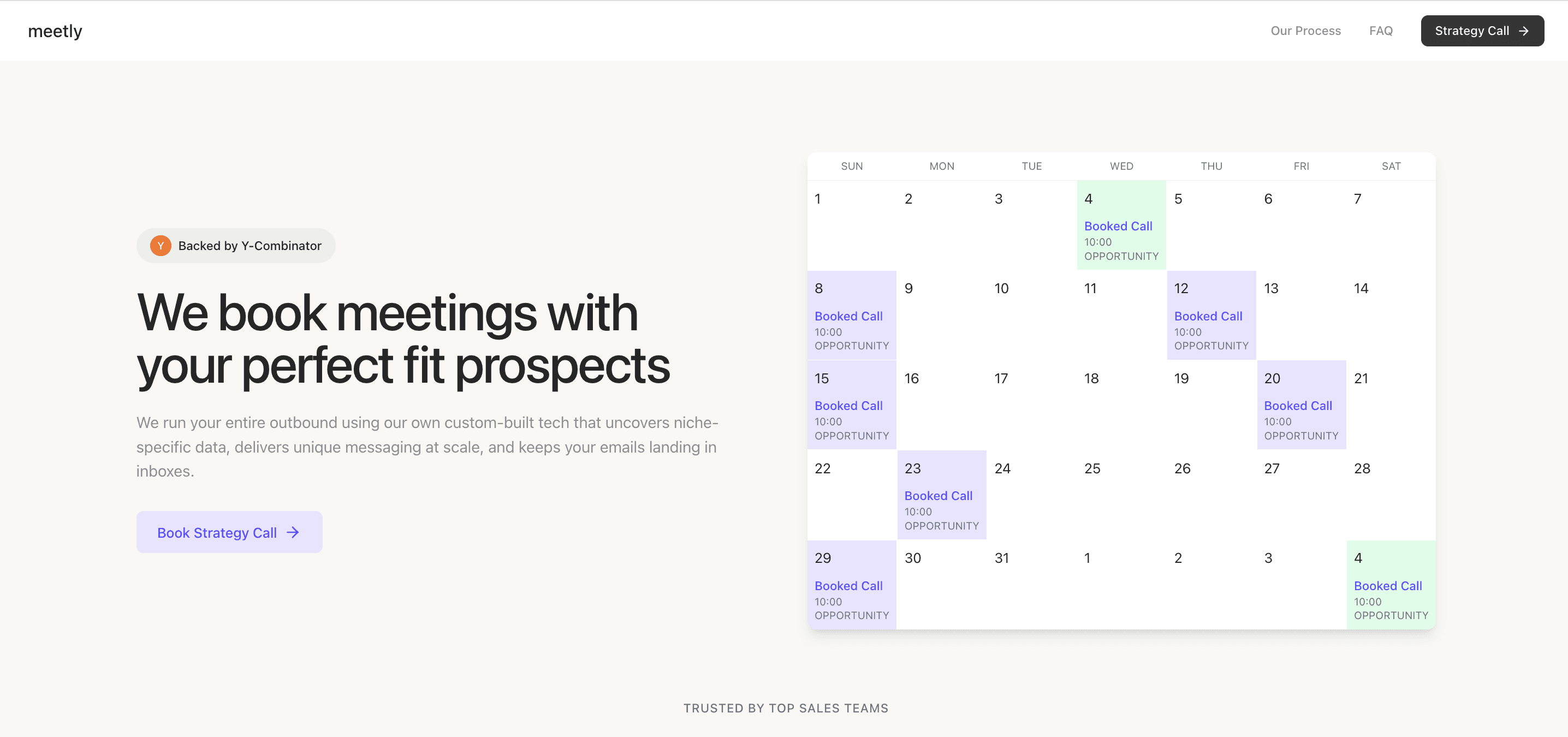
At its most basic, a call to action (CTA) is simply the instruction you give people on your website. It's the button or link that tells them exactly what to do next. Think of it as the moment you ask a passive browser to become an active participant.
Understanding the Role of a Call to Action

Picture your website as a conversation with a potential customer. You've made your case, explained what you do, and built some trust. A call to action is how you wrap up that chat by suggesting the next step. Without one, you leave your visitor hanging, thinking, "Okay... what now?" That hesitation is a missed opportunity.
Your CTA is like a helpful guide, smoothing out the user's journey and telling them where to go. It’s the bridge between someone’s interest and them actually doing something. Since a massive 96% of first-time visitors aren't ready to buy, CTAs offering other valuable things—like a free guide or a quick consultation—are critical for keeping that conversation going.
The Anatomy of an Effective CTA
A great CTA is more than just a button. It’s a mix of a few key ingredients working together to get someone to act. A well-designed call to action should be:
Action-Oriented: It needs to kick off with a strong, clear verb. Think "Get," "Start," "Download," or "Claim."
Visually Striking: The color, size, and shape should make it pop. You want it to be impossible to miss.
Clearly Worded: No one should have to guess what happens when they click. "Get Your Free Quote" is worlds better than a vague "Submit."
Strategically Placed: It has to show up right when a user is most convinced and ready to take the next step.
A call to action is the final nudge that turns curiosity into conversion. It's the simple instruction that turns your marketing goals into reality by telling people precisely where to go and what to do.
Ultimately, knowing what a call to action is means you understand its power to guide people and get results. Whether you want more leads, higher sales, or a bigger email list, the CTA is the engine that drives it all. It’s not just marketing jargon; it's a core piece of any successful online strategy, giving users the clarity they need to engage with your business.
Why Powerful CTAs Are Essential for Business Growth
Imagine building a beautiful storefront with stunning window displays, but you forget to install a front door or a cash register. It might draw a crowd, but it's not doing any business. A website without a clear call to action (CTA) works the same way—it fails to turn casual interest into meaningful action.
Beyond just being a button on a page, a good CTA is the engine that drives real business growth. It's the critical link that transforms someone passively browsing your site into an active, engaged customer. This is how you turn a digital brochure into a machine that generates leads, makes sales, and builds a loyal following.
Bridging the Gap Between Interest and Conversion
So, a visitor lands on your page. They read your content, and they're hooked. What now? Without a clear next step, all that hard-earned momentum just fizzles out. The user is left hanging, unsure what to do, and more often than not, they just leave.
A strong CTA cuts through that friction. It gives them a clear, simple path forward, like "Start Your Free Trial" or "Download the Guide." You're not just hoping they'll figure it out; you're taking them by the hand and showing them exactly where to go next.
This is especially important when you realize that an estimated 96% of first-time visitors aren't ready to buy anything. Giving them lower-commitment options, like downloading a resource, is how you capture their interest early on. To see how this fits into the bigger picture, you can explore these lead generation best practices.
Fueling Your Marketing and Sales Funnel
All your marketing efforts are designed to bring people to your site, but it's the CTAs that turn that traffic into results you can actually measure. They are the gears that move potential customers through your funnel, from the moment they first hear about you to the point where they're ready to make a decision.
Think about all the different things you want to accomplish:
Lead Generation: A "Download Our Free eBook" CTA is perfect for capturing contact info from curious prospects, filling your pipeline.
Sales Conversion: A direct "Buy Now" or "Get 50% Off Today" button closes the deal with visitors who are ready to commit.
Community Building: Even a simple "Follow Us on Instagram" CTA can extend the relationship beyond your website and build long-term loyalty.
Without these specific instructions, your audience just sits there. CTAs are what activate your marketing, turning passive views into tangible assets.
A well-crafted call to action doesn't just ask for a click; it provides clarity and direction, empowering users to solve their problems while simultaneously achieving your business objectives.
Ultimately, CTAs give you the hard data you need to know what’s working. Every time someone clicks "Request a Demo" or "Sign Up," it’s a trackable event. This information is gold, telling you which pages are performing and which messages are resonating. Flying blind without effective CTAs means you're just guessing—and leaving countless growth opportunities on the table.
Exploring the Different Types of Calls to Action
Think of a marketer's toolkit. Just like a carpenter wouldn't use a hammer for every single job, you can't just slap the same "Buy Now" button everywhere and expect it to work. The most effective call to action is always the one that matches your specific goal and, more importantly, where your visitor is in their journey with you.
It's all about context. You wouldn't propose on a first date, right? In the same way, you don't ask for a big sale the second someone lands on your blog. The trick is to match your request to their current level of interest and trust, gently guiding them from one stage to the next.
This flowchart illustrates how all these different CTAs work together, building on each other to drive real business growth.

As you can see, every well-placed CTA—whether it's for collecting data, nurturing leads, or closing a sale—is a crucial building block for sustainable growth.
To help you choose the right tool for the job, let's look at the most common types of CTAs and what they're designed to accomplish.
Common CTA Types and Their Primary Goals
CTA Type | Primary Goal | Common Format | Example Phrase |
|---|---|---|---|
Lead Generation | Capture contact info | Button, Form | Download Your Free Guide |
Sales/Conversion | Drive a purchase or signup | Button | Start Your Free Trial |
Lead Nurturing | Move leads down the funnel | Link, Button | Read the Case Study |
Community Building | Increase social engagement | Icon, Link | Follow Us on Instagram |
Each of these CTA types plays a unique role in your marketing strategy. Let’s dive a little deeper into how they work.
CTAs for Lead Generation
Think of these as your digital handshake. The goal here isn't to close a sale; it's to start a conversation by capturing a visitor's contact information. This is absolutely critical because an estimated 96% of people visiting your website for the first time aren't ready to buy anything yet.
The strategy is simple: offer something of value for free in exchange for their email address. This could be a helpful ebook, a checklist, or access to an exclusive video. The key is making sure the offer is genuinely useful.
Download Your Free Template: Gives them a practical tool they can use right away.
Get a Free Consultation: Offers personalized, expert advice with zero commitment.
Access the Exclusive Webinar: Provides deep-dive knowledge on a topic they’re already interested in.
A killer lead generation CTA makes the visitor feel like they're getting an amazing deal. The value they receive should feel way bigger than the "cost" of typing in their email.
CTAs for Sales and Conversions
Alright, your visitor is warmed up and ready to make a move. This is where your sales CTA comes in, and it needs to be direct, confident, and crystal clear. You're asking for the sale, the sign-up, or the subscription. There's no time to be vague—the user needs to know exactly what happens when they click.
These CTAs often lean on a sense of urgency or a powerful benefit to nudge people into action. Using words like "Now" and "Today" or highlighting a limited-time offer can make a huge difference.
Examples in Action:
Get 50% Off Now: A classic that combines a clear command with a compelling reason to act.
Start Your 14-Day Free Trial: This is brilliant because it completely removes the risk of purchase.
Add to Cart: It’s simple, universally understood, and the standard for a reason.
CTAs for Lead Nurturing and Engagement
Not every click has to lead to a sale. Sometimes, the goal is just to keep the relationship going and build more trust. Lead nurturing CTAs are designed to guide existing prospects a little further down the path or re-engage people who have gone cold.
These CTAs are all about lower-commitment actions. You're inviting them to consume more of your content, learn about your brand, or see your product in a new light. It's about deepening the connection over time.
Read the Full Case Study: Perfect for leads in the consideration phase who need to see proof.
Join Our Next Webinar: A great way to educate an audience that's already shown interest.
Take the Product Tour: Lets people see your solution in action without any sales pressure.
CTAs for Community Building and Social Sharing
Finally, some CTAs are all about extending your brand's influence beyond the borders of your website. These prompts encourage your audience to connect with you on social media or, even better, share your content with their own networks. This is how you build a loyal tribe of fans.
These CTAs are usually very low-friction and tap into our desire to belong to a community. They work best when placed right after a user has enjoyed a particularly insightful or entertaining piece of content.
Follow Us on Instagram: A simple, friendly invitation to stay in the loop.
Share This Post on Twitter: Makes it easy for readers to become brand advocates.
Join the Conversation in the Comments: A great way to foster engagement right on your own site.
How to Craft High-Converting CTAs

Knowing the different types of CTAs is a good start, but actually creating one that people want to click is part art, part science. It’s all about weaving persuasive language and smart design together to create a prompt so irresistible that your user naturally wants to take the next step. A high-converting CTA isn't just a button; it's a carefully crafted invitation that speaks directly to what your visitor needs and wants.
The heart of any great CTA is its copy. The words you choose have to be clear, concise, and compelling enough to make someone act right away. Those old, vague phrases like "Click Here" or "Submit" just don't cut it anymore—they offer zero value.
A great CTA should complete the sentence, "I want to..." from your user's point of view. For instance, instead of a flat "Download," try something like "Get My Free Guide." It’s a subtle shift, but it’s powerful. It frames the action around the user's goal, making the click feel like a logical next step, not just a command.
Use Strong and Actionable Language
The best CTAs kick off with a strong, action-oriented verb. Words like "Get," "Start," "Claim," "Join," or "Discover" are commands, sure, but they also promise a clear benefit. They build momentum and tell the user exactly what’s in it for them.
To make it even more effective, pair those verbs with first-person language. This creates a feeling of ownership. A visitor is much more likely to click on "Claim My Discount" than "Claim Your Discount" because it feels personal and immediate. For a deeper dive into writing copy that really connects, check out our guide on https://www.alpha.page/blog/how-to-write-website-copy.
A call to action is the moment you translate your website’s value into a tangible next step for the visitor. The right words don't just ask for a click—they promise a solution.
Create a Sense of Urgency or Scarcity
One of the oldest tricks in the marketing book is tapping into the fear of missing out (FOMO), and it works for a reason. By introducing a little urgency or scarcity, you can nudge users to act now instead of putting it off. This can be as simple as adding time-sensitive language or hinting at limited stock.
Here are a few ways to light a fire:
Time-based offers: "Get 50% Off—Today Only!"
Limited availability: "Only 3 Spots Left!"
Benefit-driven urgency: "Start Saving Before Prices Go Up!"
These tactics are effective because they cut through our natural tendency to procrastinate. When someone feels they might lose out on a good deal, they're much more likely to make a decision on the spot.
Design Your CTA for Maximum Impact
While the words are critical, the visual design of your call to action can absolutely make or break its performance. The goal is simple: make your CTA impossible to miss without being obnoxious. This comes down to a careful balance of color, size, shape, and placement.
Your CTA button's color should contrast sharply with the rest of the page to make it pop. There's no single "best" color for conversions, but it has to grab the user's eye. The button also needs to be large enough to be easily tapped—especially on mobile—but not so huge that it feels aggressive.
The space around the button is just as important as the button itself. Clean, uncluttered design and a personal touch can have a massive impact. Personalized CTAs, for instance, convert up to 202% better than generic ones. And giving your button plenty of white space can boost conversions by a staggering 232%.
It's all part of a bigger picture. To learn more about the broader strategies that make CTAs succeed, learning how to improve website conversion rates is essential. After all, a brilliant CTA works best when the entire page is designed to guide the user toward that final, all-important click.
Strategic CTA Placement for Maximum Visibility

You can craft the most brilliant, high-converting call to action in the world, but if it’s buried where no one sees it, it’s useless. Getting the words and design right is only half the battle. The strategy behind where and when you place your CTAs is every bit as critical as the CTA itself.
Think of your website like a physical store. You wouldn't hide the cash register in a locked closet—you’d put it right where people are ready to buy. The same logic applies online. Strategic placement means your prompt shows up at the exact moment a user’s interest is at its peak, making the decision to act feel completely natural.
The best placement always follows the user's journey down the page. Someone just landing on your site needs a very different prompt than someone who has read everything and is now wondering, "What's next?"
Above the Fold: The Powerful First Impression
The term “above the fold” is a throwback to old-school newspapers. It was the top half of the front page that everyone saw first on the newsstand. On a website, it’s everything you can see without scrolling. Placing your main CTA here is a classic, powerful move.
This prime real estate is perfect for grabbing immediate attention. It’s most effective for clear, simple offers where the value proposition is obvious from the get-go.
Who it’s for: Visitors who land on your page with a specific goal in mind or who are already familiar with what you do.
Best CTAs: Think "Start Your Free Trial," "Get a Demo," or "Shop Now."
A bold CTA in your hero section acts like a giant, friendly signpost, pointing visitors directly to the most important action they can take.
Strategic placement isn't just about visibility; it's about timing. A well-placed CTA meets the user exactly where they are in their decision-making process, turning a moment of interest into a decisive action.
Of course, not every visitor is ready to commit the second they arrive. For anyone who needs a little more convincing, placing CTAs further down the page is absolutely essential.
Mid-Content and End-of-Page CTAs
As someone scrolls down your page, they're becoming more invested in your content. Placing CTAs within or at the end of key sections gives them a logical next step right when their interest is highest. Think of an in-line CTA in a blog post offering a related ebook, or a button at the end of a product description that seals the deal.
The data backs this up, big time. For instance, putting CTAs at the end of product pages can boost conversions by a staggering 70%. Why? Because by that point, the user has all the information they need and is ready to make a choice. And don't forget mobile—mobile-friendly CTAs have been shown to improve conversion rates by 32.5%. You can explore additional call-to-action statistics to see how placement and other factors drive results.
Sticky Bars and Pop-Ups
What about an offer that needs to stay visible no matter how far a user scrolls? That's where a sticky bar or a well-timed pop-up can work wonders. A sticky bar that stays fixed to the top or bottom of the screen keeps your CTA front and center without being obnoxious.
These persistent CTAs are perfect for site-wide offers like:
Announcing a limited-time sale
Promoting a webinar sign-up
Encouraging newsletter subscriptions
By thoughtfully considering where you place each call to action, you create a smooth, intuitive path for your users. You’re essentially guiding them from initial curiosity to that final, satisfying click, making sure no opportunity to engage is missed.
How to Measure and Optimize Your CTA Performance
https://www.youtube.com/embed/vV3g5VuSrIQ
Putting a call to action on your page is just the beginning. The real work—and the real results—come from what you do next. You have to stop guessing what works and start using data to find out for sure. This is how you take a decent CTA and turn it into a conversion machine, systematically improving your results over time.
Think of your first CTA as a strong first draft. Now it’s time to edit it into a masterpiece.
This whole process kicks off by tracking the right numbers. Without data, you’re just flying blind. The two most critical metrics you need to keep your eyes on are your Click-Through Rate (CTR) and your Conversion Rate.
Click-Through Rate (CTR): This is simply the percentage of people who saw your CTA and actually clicked it. It’s a direct report card on how well your CTA grabs attention.
Conversion Rate: This is the percentage of people who clicked the CTA and then went on to complete the goal (like signing up or buying something). This tells you if your CTA is attracting the right kind of attention.
These two numbers give you a clear baseline. If your CTR is low, your button probably isn't persuasive or visible enough. If your CTR is high but your conversion rate stinks, there’s likely a disconnect between what your CTA promises and what the next page delivers. See these metrics as clues telling you where to investigate.
The Power of A/B Testing
By far, the best way to improve your CTAs is with A/B testing. It's a simple, powerful method: you create two versions of your CTA, show version A to half your audience, and version B to the other half. Then you sit back and see which one gets more clicks or conversions. It's that straightforward.
A/B testing takes the guesswork out of the equation. Instead of relying on gut feelings or what you think looks good, you let your audience’s actions tell you what they actually prefer. This leads to data-backed decisions that drive real growth.
This scientific approach lets you test one change at a time. And trust me, small changes can have a huge impact. For example, data across multiple client sites shows that full-page pop-up CTAs for content downloads can hit a 13.6% conversion rate. A similar offer placed in a mid-page banner? That converts at just 3.8%. You can discover more insights on how CTA style impacts conversions on First Page Sage.
What to Test on Your CTA
To get clean, reliable data, you need to test one element at a time. It can be tempting to change everything at once, but then you'll never know what actually made the difference.
Here’s a good starting list of things to experiment with:
Button Copy: Try different verbs ("Get" vs. "Start"). Test first-person language ("Claim My Spot" vs. "Claim Your Spot"). Add a little urgency ("Shop Now" vs. "Shop Today's Deals"). The words you choose matter immensely.
Color and Design: Pit a bold, high-contrast color against something more subtle that fits your brand. Test different button shapes (rounded corners vs. sharp squares) or play with the size to see what draws the eye most effectively.
Placement: Where you put your CTA is critical. Test it above the fold versus at the very end of the page. Or try a sticky banner that stays with the user as they scroll.
By constantly testing and refining, you turn your website into a living laboratory for improvement. This is what smart marketing is all about. For a deeper dive, check out our guide on conversion rate optimization strategies. Each small tweak can stack up to produce massive gains over time, ensuring your CTAs are always working as hard as possible for your business.
Got Questions About CTAs? We’ve Got Answers.
Even after you've got the basics down, a few common questions always pop up when you start putting CTAs into practice. Getting the little details right is often what separates a CTA that gets clicks from one that gets ignored. Let's tackle some of the most frequent sticking points.
How Many CTAs Should I Put on a Page?
This is a big one. While there isn't a single magic number that works for every page, the golden rule is to have one primary CTA. This is your main event, the single most important action you want someone to take.
Of course, you can have secondary CTAs. Think of a product page where "Buy Now" is the primary goal, but a "Learn More" or "See Specs" link serves visitors who aren't quite ready to pull the trigger. The trick is to avoid decision fatigue. Make your main CTA the most visually dominant thing on the page so there’s no confusion about what to do next.
What’s the Difference Between a CTA and a UVP?
It's easy to get these two mixed up, but they play very different roles. Your Unique Value Proposition (UVP) is your big promise—it tells people why they should care about what you offer. It answers the "Why you?" question.
A CTA, on the other hand, is the action. It tells them how to get that promised value. It's the "What now?" part of the conversation.
Think of it like this: a UVP for a budgeting app might be, "Finally, a simple way to master your money." That creates the desire. The CTA is the clear next step: "Start Your Free 30-Day Trial." One builds the interest, the other gives that interest somewhere to go.
Should My CTA Button Open in a New Tab?
The answer here boils down to one thing: don't interrupt the user's journey. Your goal is a smooth, logical flow.
Here’s a simple rule of thumb:
External Links: If your CTA sends someone to a different website, a PDF download, or another domain entirely, always open it in a new tab. You don't want them to lose their place on your site.
Internal Links: If the CTA just moves them to another page on your own site (like from a blog post to a pricing page), keep it in the same tab. This makes their navigation feel seamless and connected.
Nailing these details helps sharpen your strategy. When your CTAs are clear, focused, and user-friendly, they can finally do their job: turning visitors into customers.
Ready to build a website with CTAs that actually convert? With Alpha, you can use AI to generate a stunning, professional site in hours. Our templates and easy-to-use design tools help you place powerful calls to action right where they’ll have the biggest impact. Start building for free.
Build beautiful websites like these in minutes
Use Alpha to create, publish, and manage a fully functional website with ease.