How to Create Website Mockups People Actually Love
Learn how to create website mockups that bridge the gap between idea and reality. Our guide covers tools, principles, and developer handoff.

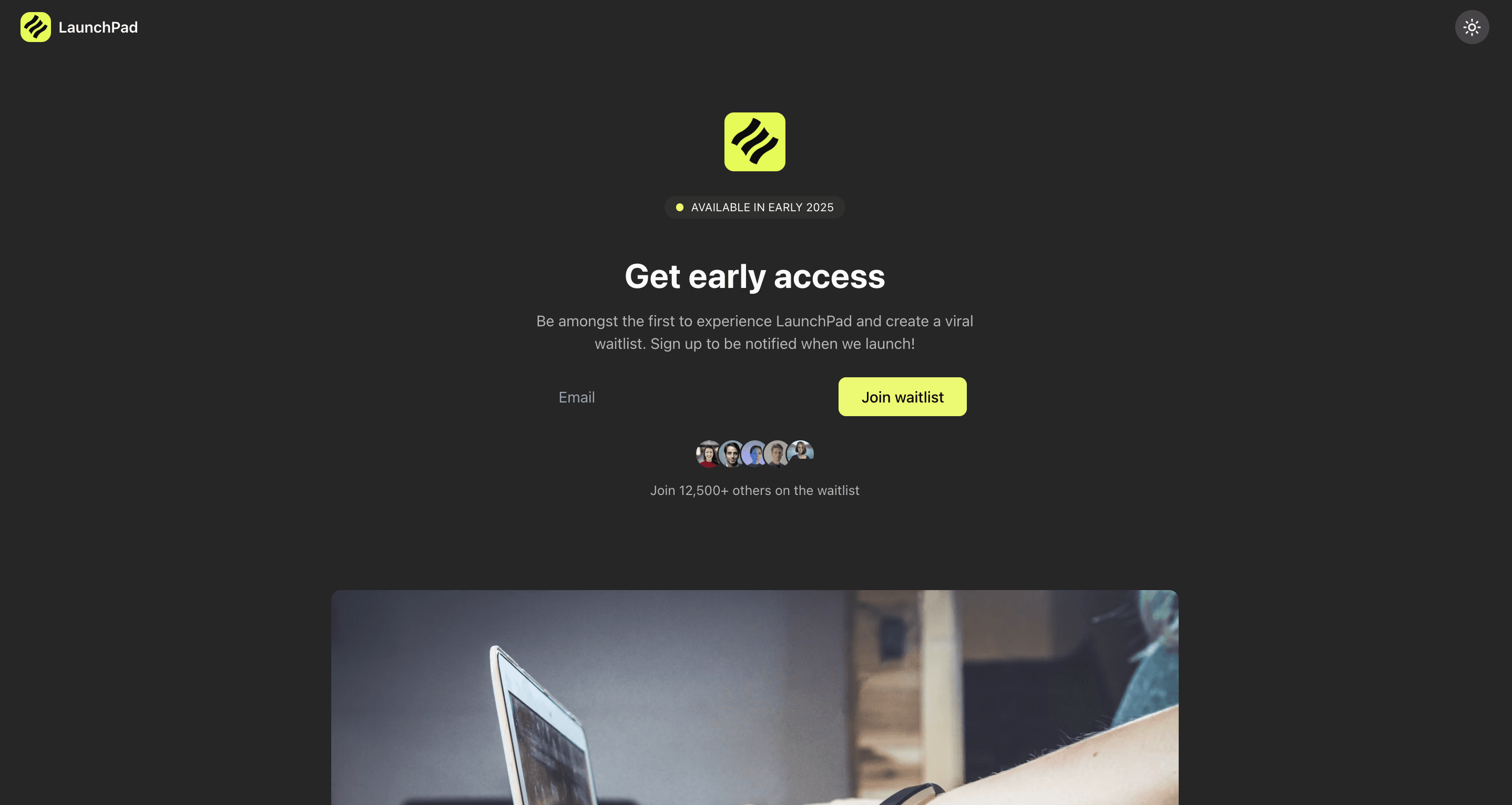
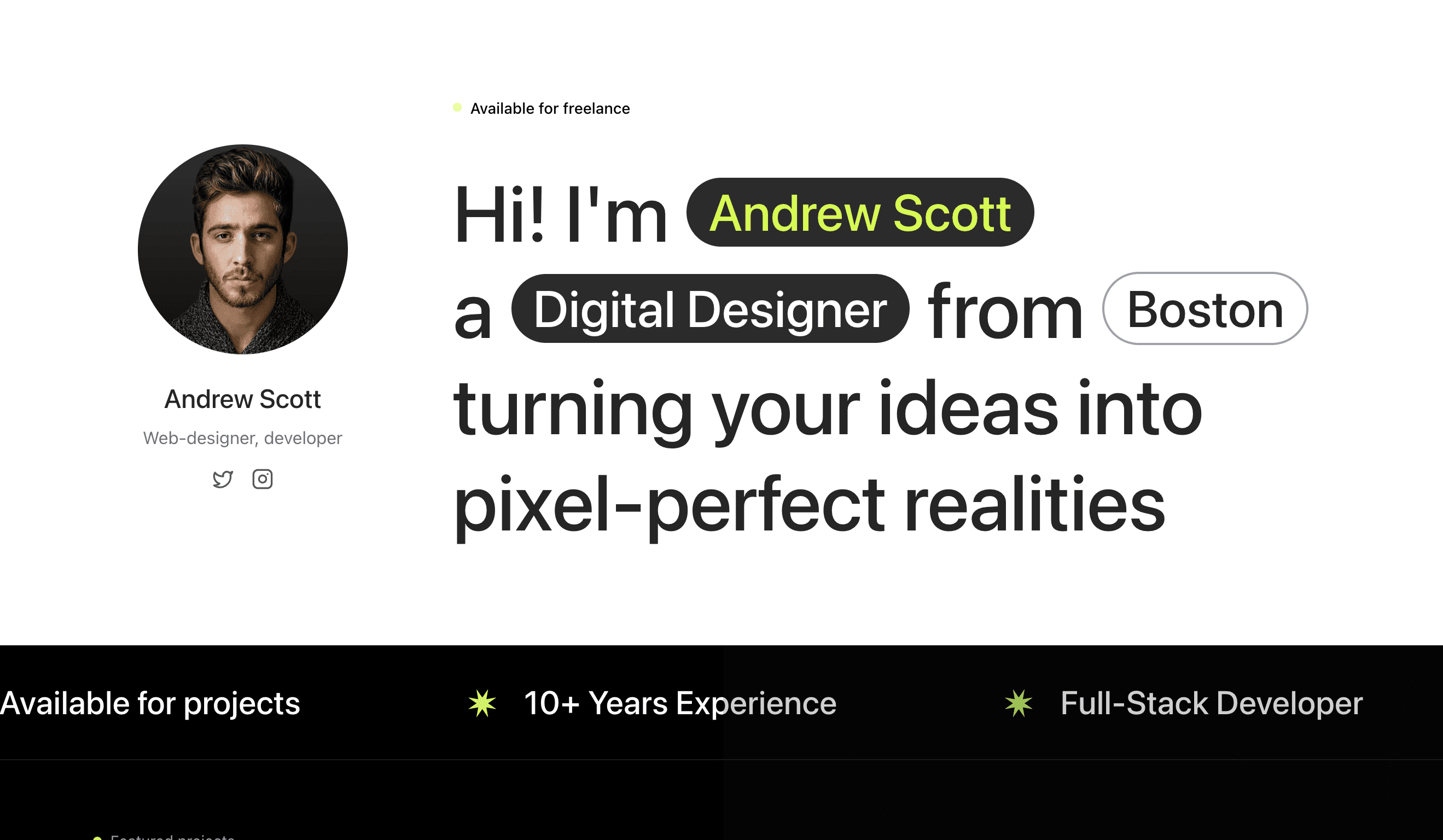
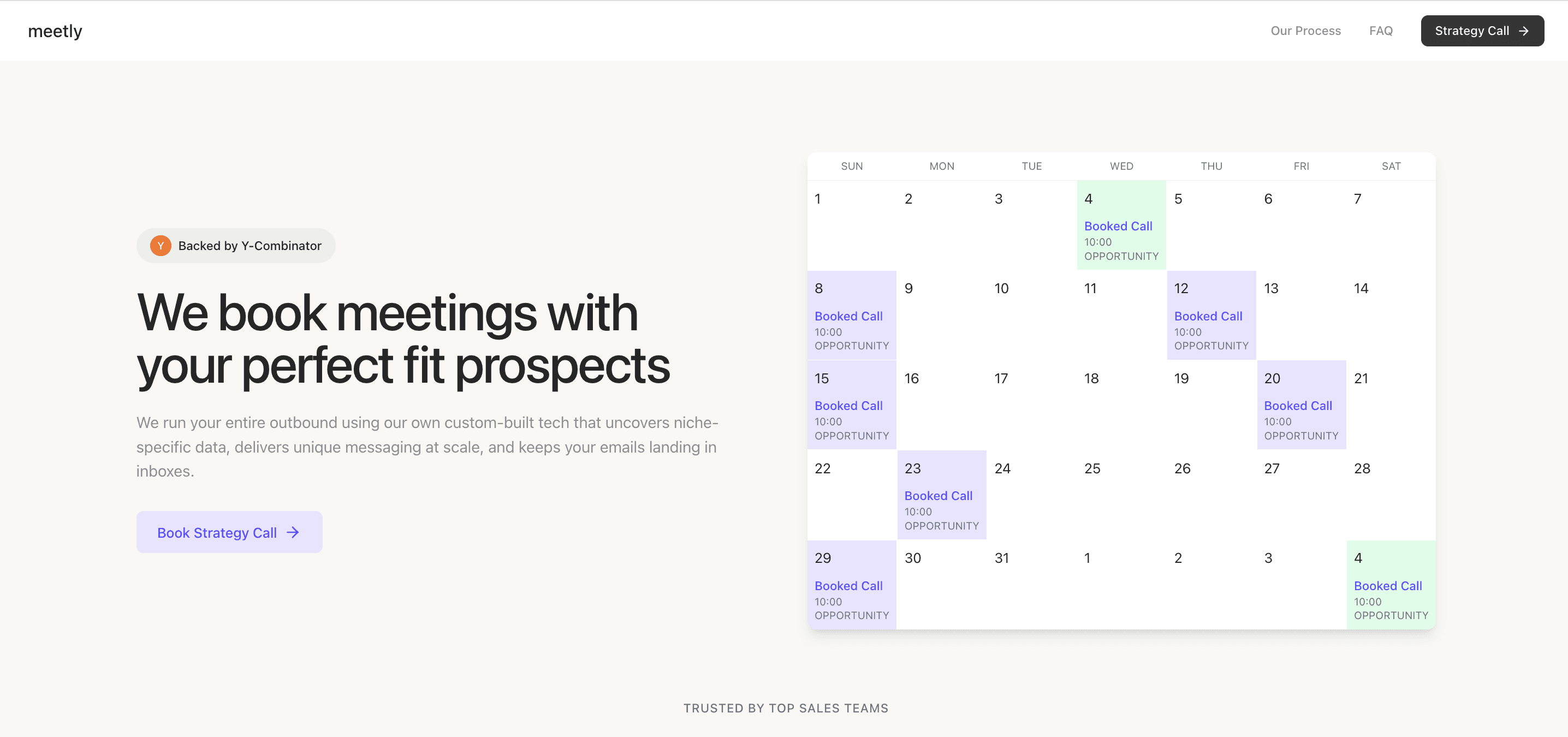
Build beautiful websites like these in minutes
Use Alpha to create, publish, and manage a fully functional website with ease.


Welcome to the new era of digital marketing, where artificial intelligence isn't just a buzzword, it's your competitive edge. From automating repetitive tasks to uncovering deep customer insights, AI tools for digital marketing are fundamentally changing how businesses connect with their audiences and drive growth. The challenge, however, is navigating the crowded marketplace of platforms all promising to revolutionize your workflow. Which ones actually deliver on that promise?
This guide cuts through the noise. We have meticulously researched and compiled a definitive list of the most effective AI-powered platforms designed to streamline your operations in 2025. Instead of generic feature lists, we provide a practical breakdown of each tool, complete with real-world use cases, integration tips, honest pros and cons, and clear pricing information. You’ll find direct links and screenshots to help you visualize how each platform works within a modern marketing stack.
Our goal is to help you find the right AI tools for digital marketing to solve specific problems, whether that's enhancing your content strategy, optimizing ad spend, or personalizing customer communications at scale. While this article covers a broad spectrum of marketing functions, creating compelling content remains a cornerstone of any successful strategy. For a more focused look at that specific area, this comprehensive guide on AI content creation tools offers a deeper dive into platforms built specifically for generating text and visuals. This curated list will equip you, whether you're a solopreneur or part of a larger team, to build a more intelligent, efficient, and impactful marketing engine. Let's explore the tools that will define the next wave of digital marketing success.
1. Alpha
Best For: Rapid Website Creation & Conversion Optimization
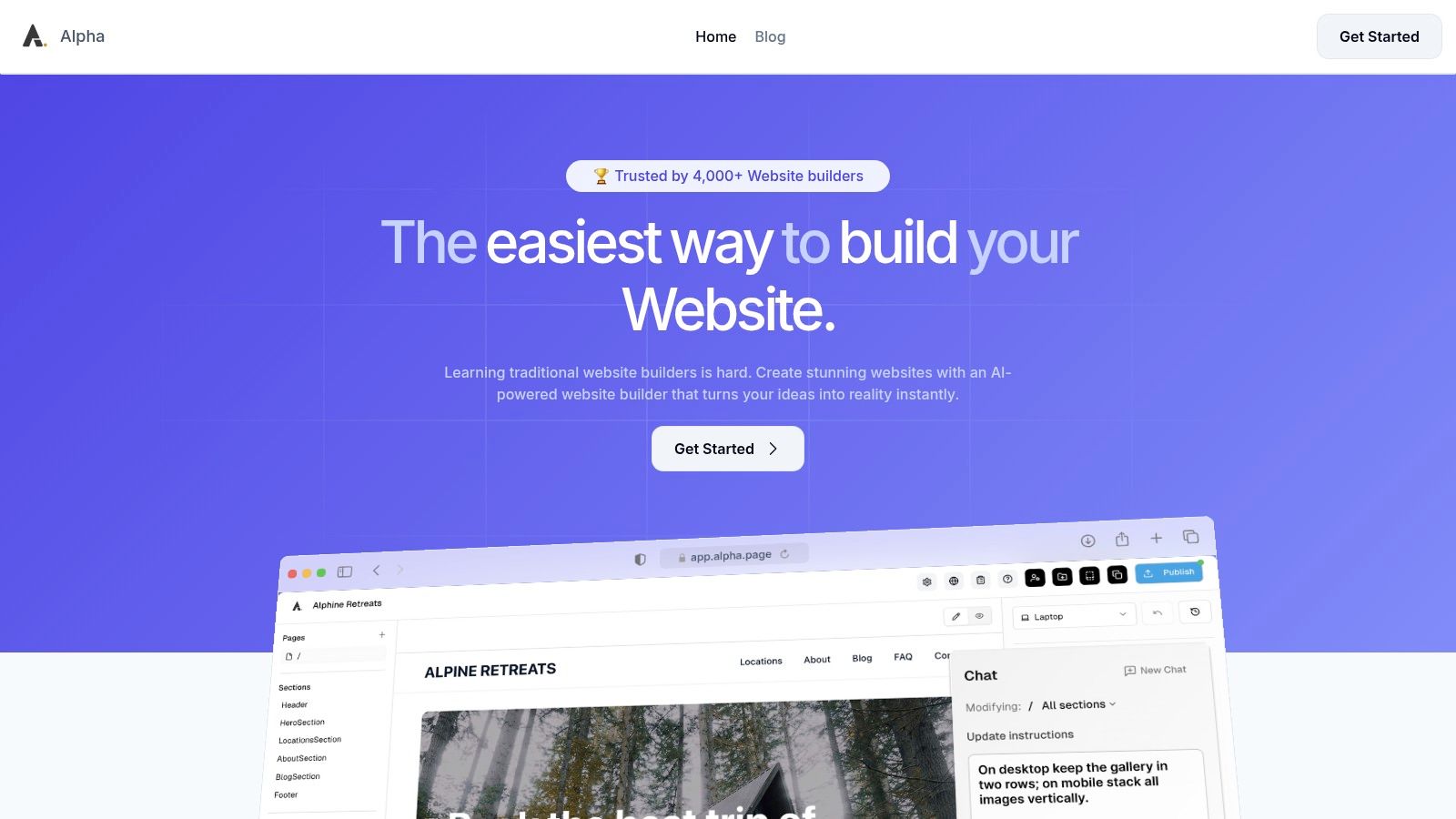
Alpha stands out as a premier AI tool for digital marketing, specifically for entrepreneurs and small businesses needing to establish a professional, conversion-focused online presence with unprecedented speed. It moves beyond traditional drag-and-drop builders by leveraging AI to turn a simple idea, or even an existing website URL, into a fully functional, mobile-optimized site in hours. This makes it an invaluable asset for marketers who need to launch campaigns, landing pages, or entire business websites without the typical delays associated with web development.
The platform’s core strength lies in its unique AI-driven design process. Users can provide any URL as a design reference, and Alpha’s AI will analyze its layout, style, and structure to generate a personalized, editable template. This feature is a game-changer for those who have a clear vision inspired by another site but lack the technical skills to replicate it.
Key Features & Use Cases
Alpha is engineered for practical marketing applications, not just aesthetics. Its feature set is designed to directly support lead generation and business growth.
URL-to-Design Import: A standout capability where you can drop a link to any website, and Alpha’s AI uses it as a blueprint. This is perfect for creating high-quality landing pages for a new PPC campaign by modeling them after proven, high-converting designs in your industry.
Natural Language Editing: Instead of hunting through menus, you can simply type commands like, “Change the hero button color to blue” or “Add a three-column section with customer testimonials.” This dramatically lowers the learning curve and speeds up iterations.
Built-in Growth Tools: The platform includes essential marketing components out-of-the-box. Integrated forms, lead tracking, SEO optimization settings, and real-time analytics are all included, eliminating the need for multiple third-party plugins.
Pricing Structure
Alpha offers a flexible pricing model that scales with your needs, making it accessible for businesses at any stage.
Plan Name | Monthly Price | Key Features |
|---|---|---|
Starter | Free | 1 page, published on an |
Mini | $9/month | Custom domain, 2 pages, 100 chat credits |
Basic | $25/month | Up to 15 pages, 300 chat credits, CMS support (beta) |
An annual subscription provides a 20% discount.
Pros and Cons
Pros:
Unmatched Speed: The AI-powered URL import and design generation create functional websites in a fraction of the time of traditional builders.
Intuitive Editing: Natural language commands make the platform accessible to non-technical users.
Conversion-Focused: Built-in tools for lead capture, SEO, and analytics support marketing goals from day one.
Affordable: A free entry point and low-cost plans make it ideal for startups and solopreneurs.
Cons:
Tier Limitations: The free and lower-cost plans have strict page limits, requiring an upgrade for larger sites.
Developing CMS: The more advanced Content Management System (CMS) is still in beta, which might be a limitation for content-heavy sites needing complex functionality.
Website: https://www.alpha.page
2. HubSpot Marketing Hub
HubSpot Marketing Hub integrates powerful AI capabilities directly into a comprehensive, CRM-driven marketing automation platform. Rather than offering standalone AI gadgets, HubSpot embeds artificial intelligence into existing workflows, making it one of the most practical ai tools for digital marketing for teams seeking an all-in-one solution. Its "Campaign Assistant" can generate entire multi-channel campaigns, from landing page copy and emails to social media posts and ad creative, all based on a single prompt.
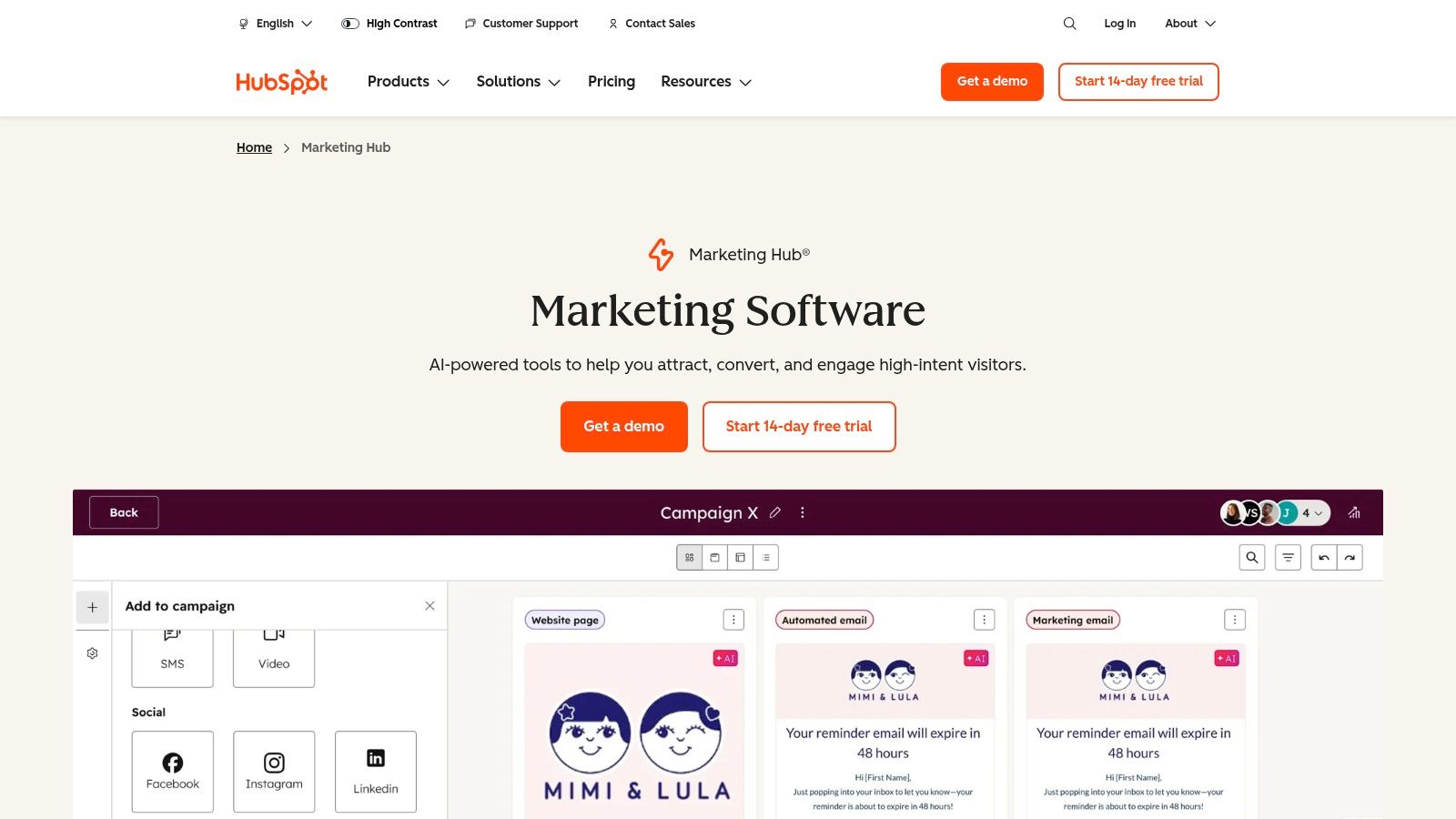
What makes it unique is the deep connection to the HubSpot CRM. AI-powered analytics and predictive lead scoring analyze customer data to forecast conversion likelihood and identify high-value segments for smarter targeting. This closed-loop system allows marketers to not only create AI-driven content but also measure its direct impact on revenue and customer lifecycle progression.
Key Features & Use Cases
AI Content Assistant: Instantly generate blog post ideas, draft social media updates, write email subject lines, and create website copy directly within the content editor.
Predictive Analytics: Leverage AI to score leads, predict customer lifetime value, and identify at-risk contacts before they churn.
Campaign Orchestration: Use AI to build and A/B test campaign assets, ensuring messaging is optimized across every channel from a central hub.
CRM Integration: All AI functions pull from and feed into the central CRM, providing a single source of truth for all marketing and sales activities.
Pricing & Platform Details
Tier | Starting Price (Annual Billing) | Key AI & Marketing Features |
|---|---|---|
Starter | $15/month | Basic content AI, email marketing, landing pages. |
Professional | $800/month | Full marketing automation, AI campaign assistant, A/B testing. |
Enterprise | $3,600/month | Predictive lead scoring, custom objects, advanced analytics. |
Pros: Deep, native CRM integration provides unparalleled data for AI. The platform scales from free tools to a robust enterprise suite.
Cons: The learning curve can be steep due to its extensive feature set. Higher-tier plans (Pro and Enterprise) often require mandatory onboarding fees, and costs increase significantly with more contacts.
Website: https://www.hubspot.com/products/marketing
3. Jasper
Jasper is an AI content platform built specifically for marketing teams that need to produce high-quality, on-brand content at scale. Unlike more general-purpose AI writers, Jasper excels at maintaining brand consistency across all outputs. Its "Brand Voice" feature analyzes your style guides, product catalogs, and existing content to create a unique AI model that sounds exactly like your brand, making it one of the most reliable ai tools for digital marketing for consistent messaging.
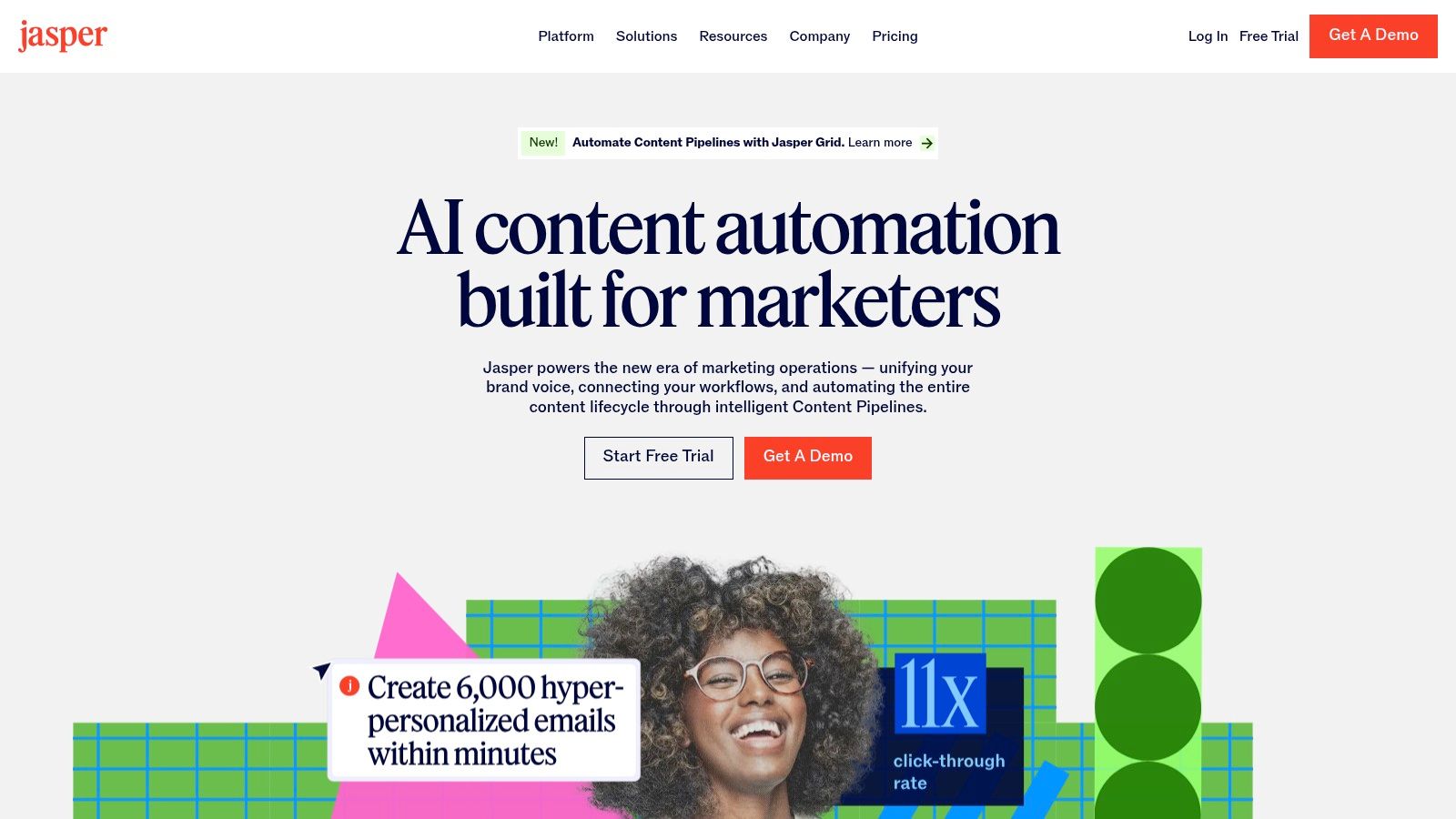
What makes it unique is its focus on campaign execution and workflow automation. Using features like the Jasper "Canvas" and "Studio," marketing teams can create comprehensive campaigns, from ad copy and social media posts to blog articles and emails, all connected within a single collaborative space. This approach transforms AI from a simple writing assistant into a central hub for content strategy and production, ensuring every piece of content aligns with a larger marketing objective.
Key Features & Use Cases
Brand Voice & Knowledge Base: Train Jasper on your company's specific tone, style, and product details to ensure all generated content is perfectly on-brand.
Campaign Workflows: Use the Canvas to map out and generate all assets for an entire marketing campaign in a single, unified workflow.
Team Collaboration: Provides features designed for marketing teams to create, edit, and approve content in a shared environment.
Scalable Content Production: Leverage AI "Agents" and content pipelines to automate repetitive content tasks and scale creation for SEO or social media.
Pricing & Platform Details
Tier | Starting Price (Annual Billing) | Key AI & Marketing Features |
|---|---|---|
Creator | $39/month | 1 Brand Voice, 50 Knowledge Assets, SEO Mode. |
Pro | $59/month | 3 Brand Voices, 150 Knowledge Assets, 3 Seats, Campaign Workflows. |
Business | Custom Pricing | Unlimited features, custom AI models, API access, advanced analytics. |
Pros: Excellent brand consistency controls are ideal for established businesses. The platform is purpose-built for marketing and campaign workflows, not just one-off content pieces.
Cons: Business and enterprise-level pricing is custom and can become expensive for larger teams. The full potential is unlocked in higher-tier plans, which may be out of reach for smaller operations.
Website: https://www.jasper.ai/
4. Semrush
Semrush has evolved from a pure SEO toolkit into a comprehensive online visibility management platform, integrating AI to enhance its core strengths in competitive analysis and content marketing. While traditionally known for its powerful data, Semrush now embeds AI into features like its SEO Writing Assistant and ContentShake AI, making it one of the most data-rich ai tools for digital marketing for teams focused on organic growth. It helps marketers move from raw keyword data to creating optimized content that ranks.
What makes Semrush unique is its blend of unparalleled market and competitor data with practical AI content tools. Instead of just generating text, its AI provides real-time feedback based on top-ranking competitors for a target keyword. This allows you to check for readability, tone of voice, keyword density, and overall SEO potential directly within your workflow, bridging the gap between analytics and creation. For those looking to deepen their understanding, you can learn more about the fundamentals of search engine optimization.
Key Features & Use Cases
AI Writing Assistant: Get real-time recommendations to optimize your content for SEO, readability, and tone of voice as you write.
ContentShake AI: Quickly find high-potential content ideas, generate articles, and publish them to your blog or schedule social media posts.
Competitor Analysis: Use its vast database to analyze competitors' keywords, backlinks, and ad strategies to inform your own AI-driven campaigns.
Site Audits & Position Tracking: Monitor your website's technical SEO health and track keyword rankings to measure the impact of your AI-optimized content.
Pricing & Platform Details
Tier | Starting Price (Annual Billing) | Key AI & Marketing Features |
|---|---|---|
Pro | $129.95/month | SEO Writing Assistant, 10 AI-powered topic ideas, keyword & competitor analysis. |
Guru | $249.95/month | Content Marketing Platform, 800 SEO content templates, historical data access. |
Business | $499.95/month | Advanced analytics, API access, Share of Voice metric. |
Pros: Market-leading data depth for SEO and competitive intelligence. Extensive educational resources and a strong community make it a standard for agencies.
Cons: The platform can feel overwhelming for beginners due to its vast feature set. Costs can escalate quickly, especially with add-ons and higher user limits.
Website: https://www.semrush.com/
5. Canva
Canva has evolved from a simple design tool into a powerful creative production platform, solidifying its place among essential ai tools for digital marketing. Its "Magic Studio" suite integrates AI directly into the design workflow, enabling teams to generate images and videos, automate background removal, and instantly resize assets for multiple channels. This makes it ideal for marketing teams that need to produce a high volume of on-brand visuals for social media, ads, and presentations without a steep learning curve.
What makes Canva unique is the seamless combination of its massive template library with user-friendly AI features. Marketers can start with a professionally designed template, use AI to generate custom visuals or copy, and then apply their brand kit with a single click. This streamlined process dramatically cuts down the time from concept to a finished, channel-ready creative, making high-quality design accessible even to non-designers. The collaborative features, which include real-time commenting and approval workflows, also make it a strong choice for team-based content production. For a deeper dive into visual creation, explore some website design best practices.
Key Features & Use Cases
Magic Studio AI: Generate images from text, create short videos, translate designs, and write copy with AI prompts directly within the editor.
Template & Media Libraries: Access millions of templates, stock photos, videos, and graphics to kickstart any creative project.
Brand Kit Controls: Centrally manage brand colors, fonts, and logos to ensure all team-created assets remain consistent.
One-Click Resizing & Edits: Use "Magic Switch" to instantly resize a design for different platforms (e.g., from an Instagram post to a Facebook banner) and "Magic Eraser" to remove unwanted objects from photos.
Pricing & Platform Details
Tier | Starting Price (Annual Billing) | Key AI & Marketing Features |
|---|---|---|
Free | $0/month | Basic AI tools (Magic Write), limited templates, and 5GB storage. |
Pro | $12.99/month (per person) | Full Magic Studio suite, Brand Kit, 100M+ stock assets, 1TB storage. |
Teams | $25/month (per person) | All Pro features plus team collaboration, approval workflows, and reporting. |
Pros: Extremely user-friendly interface allows for rapid content creation with minimal design experience. The affordable Pro plan offers incredible value with extensive AI features and asset libraries.
Cons: AI-generated content can sometimes lack the nuance of a professional designer and may require manual polishing for high-stakes campaigns. Recent pricing changes for the Teams plan have been a point of contention for some users.
Website: https://www.canva.com/
6. Hootsuite + OwlyWriter AI
Hootsuite elevates its mature social media management platform by integrating OwlyWriter AI directly into the content creation workflow. This makes it one of the most cohesive ai tools for digital marketing for teams that live and breathe social media. Instead of switching between apps, users can generate post captions, come up with new ideas from a URL, or repurpose top-performing content with a single click, all within the Hootsuite composer.
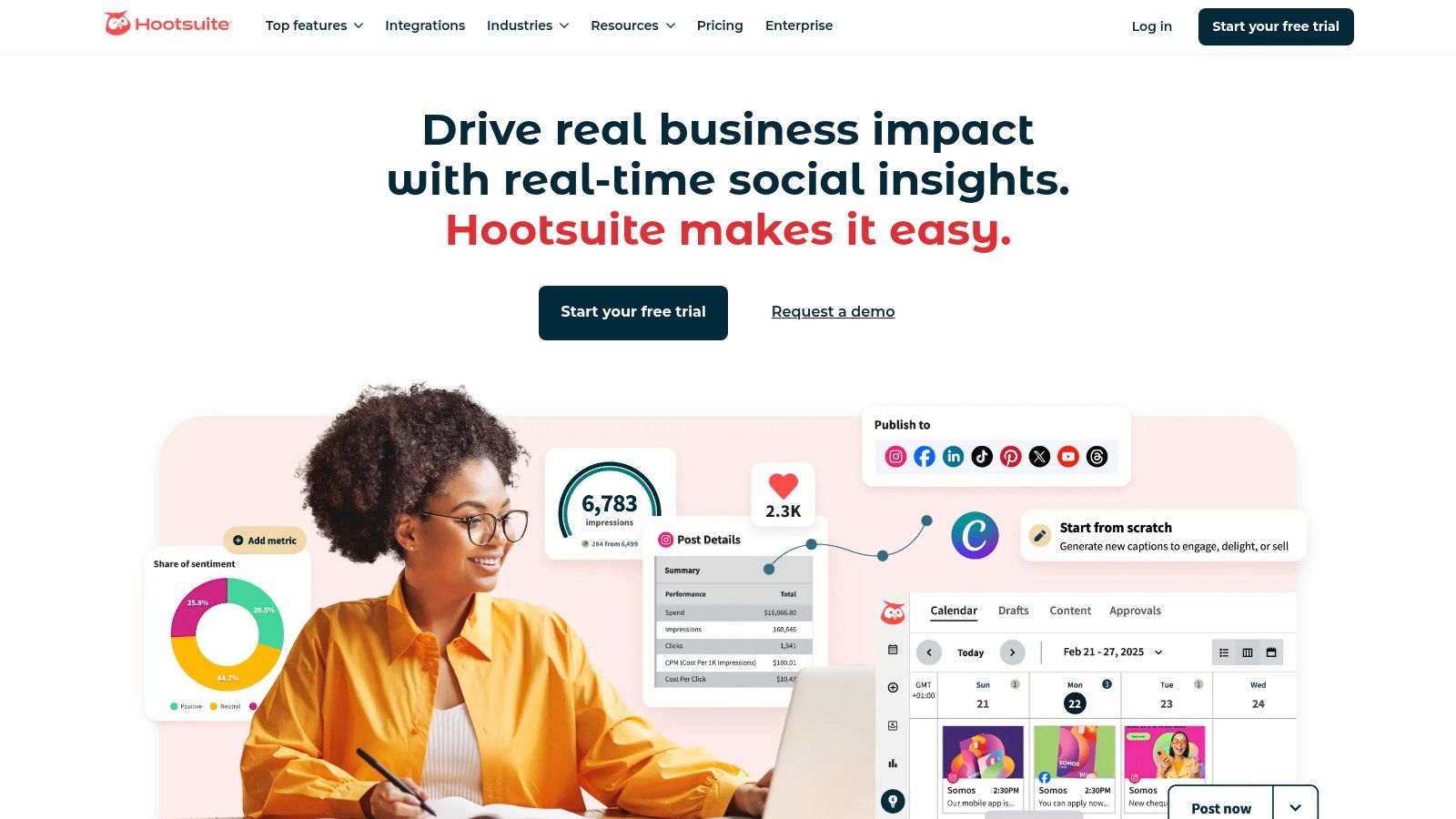
What makes Hootsuite’s approach unique is how the AI complements its core scheduling and analytics engine. AI-powered "Best Time to Post" recommendations analyze your specific audience’s engagement patterns to maximize reach. This combination of AI-driven content creation and data-backed publishing strategy provides a powerful, end-to-end solution for social media managers looking to save time and improve performance simultaneously.
Key Features & Use Cases
OwlyWriter AI Content Creation: Instantly generate social media captions, hashtag suggestions, and post ideas based on simple prompts, links, or top-performing content.
AI-Powered Scheduling: Automatically schedule posts at optimal times based on historical audience engagement data for each specific social profile.
Unified Social Inbox & Listening: Manage comments and messages from all channels in one place and monitor brand mentions and industry conversations.
Creative Integrations: Seamlessly connect with tools like Canva, DALL·E, and Adobe Express to create or source visuals directly within the platform.
Pricing & Platform Details
Tier | Starting Price (Annual Billing) | Key AI & Social Features |
|---|---|---|
Professional | $99/month | 1 user, 10 social accounts, OwlyWriter AI, optimal publishing times. |
Team | $249/month | 3 users, 20 social accounts, team assignments, custom analytics. |
Enterprise | Custom Pricing | 5+ users, 50+ accounts, social listening, employee advocacy, advanced support. |
Pros: Deeply integrates AI into a proven, all-in-one social media management workflow. The platform is robust, reliable, and offers clear plan structures.
Cons: Advanced AI features and analytics are reserved for higher-tier plans. Costs can escalate quickly when adding more users or social profiles.
Website: https://www.hootsuite.com/
7. Mailchimp
Mailchimp has evolved from a simple email newsletter tool into a robust marketing platform, embedding practical AI features directly into its core email and automation workflows. Known for its user-friendly interface, it leverages AI to help small and medium-sized businesses enhance their campaigns without a steep learning curve. The platform's "Creative Assistant" can instantly generate on-brand designs, while its content optimizer provides AI-driven suggestions to improve copy, making it one of the most accessible ai tools for digital marketing for teams focused on email.
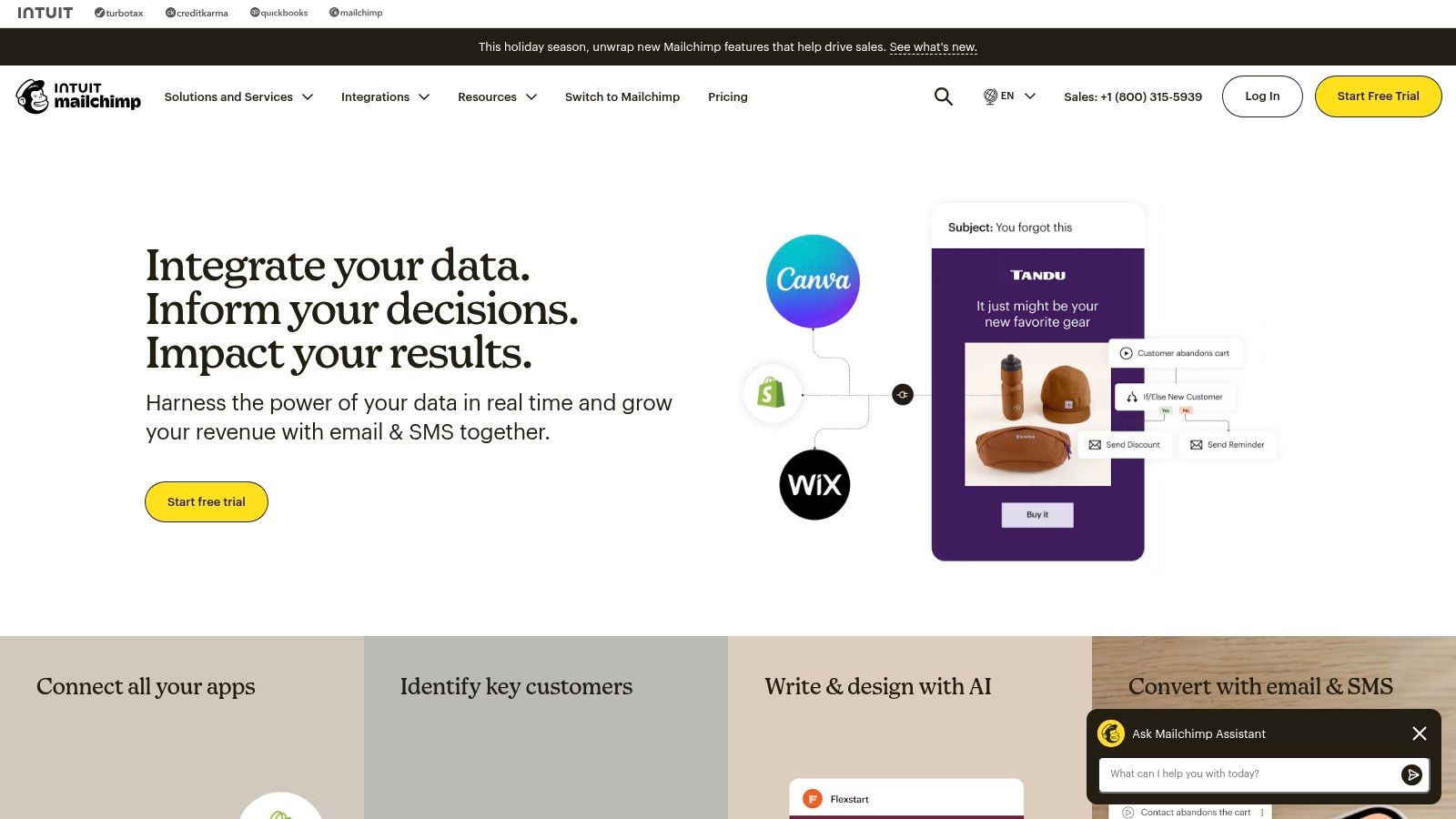
What makes Mailchimp stand out for SMBs is its focus on predictive analytics. Features like send-time optimization and predictive segmentation analyze user behavior to determine the best time to send emails and identify which contacts are most likely to purchase. This allows marketers to automate smarter decisions, boosting engagement and driving sales directly from their email campaigns. For those new to email marketing, our guide on building an email list offers a great starting point.
Key Features & Use Cases
Content Optimizer & Creative Assistant: Generate email copy, subject lines, and entire visual designs based on your brand assets and campaign goals.
Predictive Segmentation: Automatically create audience segments based on predicted lifetime value and purchase likelihood, enabling hyper-targeted campaigns.
Send-Time Optimization: Uses AI to analyze individual open-time habits and deliver emails when each contact is most likely to engage.
AI-Powered Product Recommendations: For e-commerce stores, Mailchimp can automatically suggest relevant products to customers within email campaigns.
Pricing & Platform Details
Tier | Starting Price (Monthly) | Key AI & Marketing Features |
|---|---|---|
Free | $0/month | Basic email builder, limited templates, Creative Assistant. |
Standard | $20/month | Send-time optimization, A/B testing, pre-built automations. |
Premium | $350/month | Predictive segmentation, multivariate testing, advanced reporting. |
Pros: Very user-friendly with an intuitive interface and extensive templates. Strong analytics provide clear insights into email performance.
Cons: Pricing becomes expensive as your contact list grows. Some users report issues with spam sign-ups on native forms, which may require extra security measures.
Website: https://mailchimp.com/
8. Google Ads – Performance Max
Google Ads’ Performance Max (PMax) represents a significant shift towards AI-driven advertising, consolidating access to all of Google's inventory into a single, automated campaign. Instead of manually managing separate campaigns for Search, Display, YouTube, and others, PMax uses Google AI to automate bidding, targeting, and creative combinations. It is one of the most powerful ai tools for digital marketing for advertisers focused on maximizing conversions and reaching customers across the entire Google ecosystem.
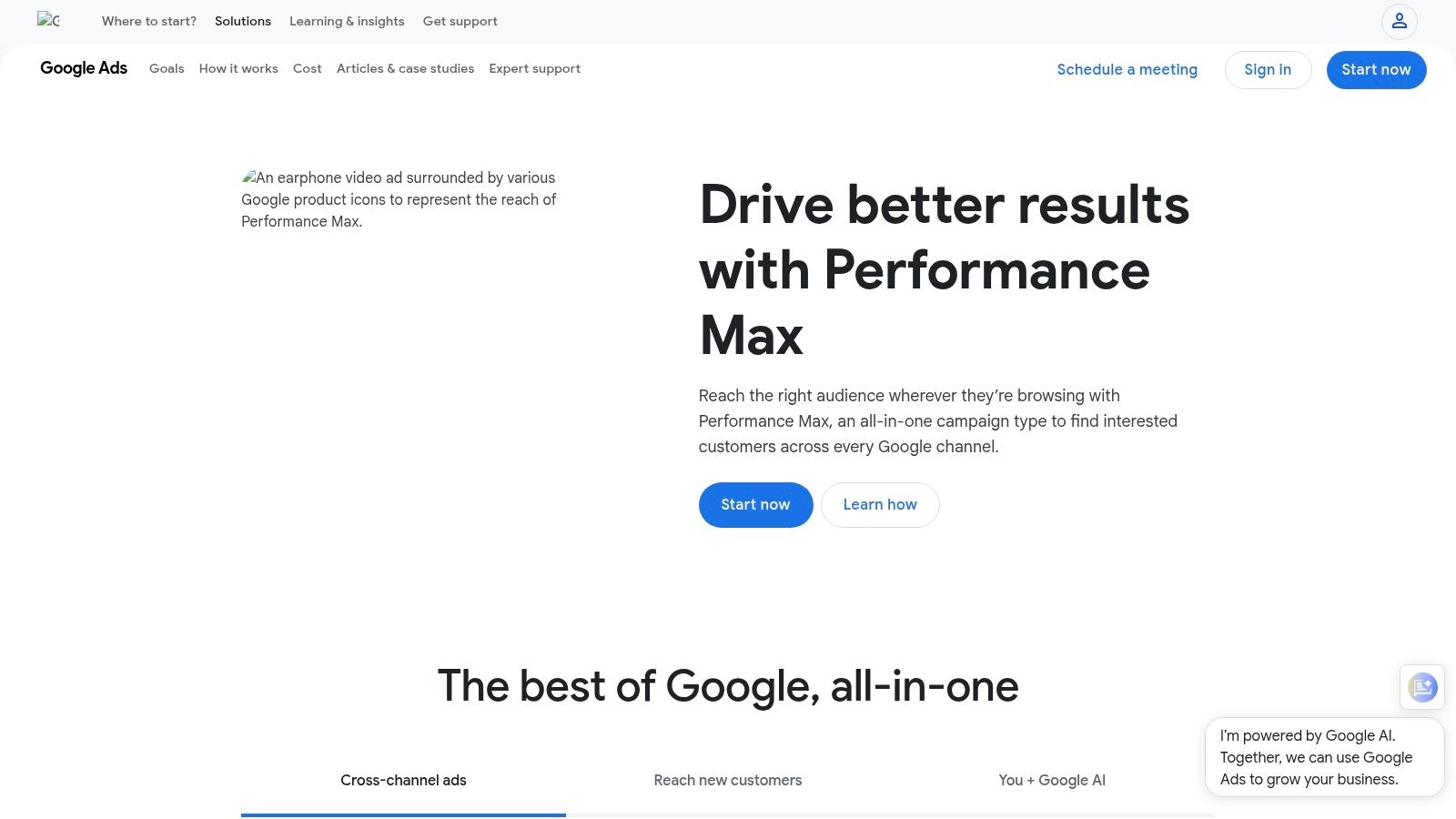
What makes it unique is its goal-oriented approach. You provide business objectives (like sales or leads), creative assets (text, images, videos), and audience signals, and Google's AI handles the rest. It dynamically tests different asset combinations and placements to find the most effective path to conversion, learning and optimizing in real-time based on performance data. This simplifies campaign management while leveraging Google's vast machine learning capabilities.
Key Features & Use Cases
Goal-Based Optimization: Set specific conversion goals (e.g., online sales, lead generation) and let AI optimize bids and placements across all channels to achieve them.
Automated Asset Remixing: Supply a variety of text headlines, descriptions, images, and videos, and PMax will automatically generate and test ads for every platform.
Audience Signal Guidance: Provide first-party data like customer lists or insights on your ideal audience to steer the AI's targeting decisions without restrictive manual settings.
Unified Cross-Channel Reach: Run a single campaign that automatically serves ads on Search, YouTube, Display, Discover, Gmail, and Maps.
Pricing & Platform Details
Tier | Starting Price (Annual Billing) | Key AI & Marketing Features |
|---|---|---|
PMax | Pay-Per-Click (No Platform Fee) | Full access to Google's ad inventory with automated bidding and creative optimization. |
Advanced | Varies by Ad Spend | Access to more sophisticated features like brand safety controls and advanced reporting. |
Pros: Massive reach with powerful, automated conversion optimization. It continuously improves with Google's latest AI advancements and simplifies multi-channel advertising.
Cons: Limited transparency and control compared to manual campaigns, making it difficult to diagnose specific performance issues. Creative control is evolving but can feel constrained.
Website: https://ads.google.com/home/campaigns/performance-max/
9. OpenAI
OpenAI provides foundational models that power countless applications, but it's also a powerful direct-to-consumer tool for marketers. Through ChatGPT for daily tasks and its APIs for custom integrations, OpenAI offers unparalleled flexibility. It functions as both a ready-to-use assistant for brainstorming ad copy or social media calendars and a core building block for developing proprietary ai tools for digital marketing, such as automated lead qualification bots or programmatic SEO content engines.
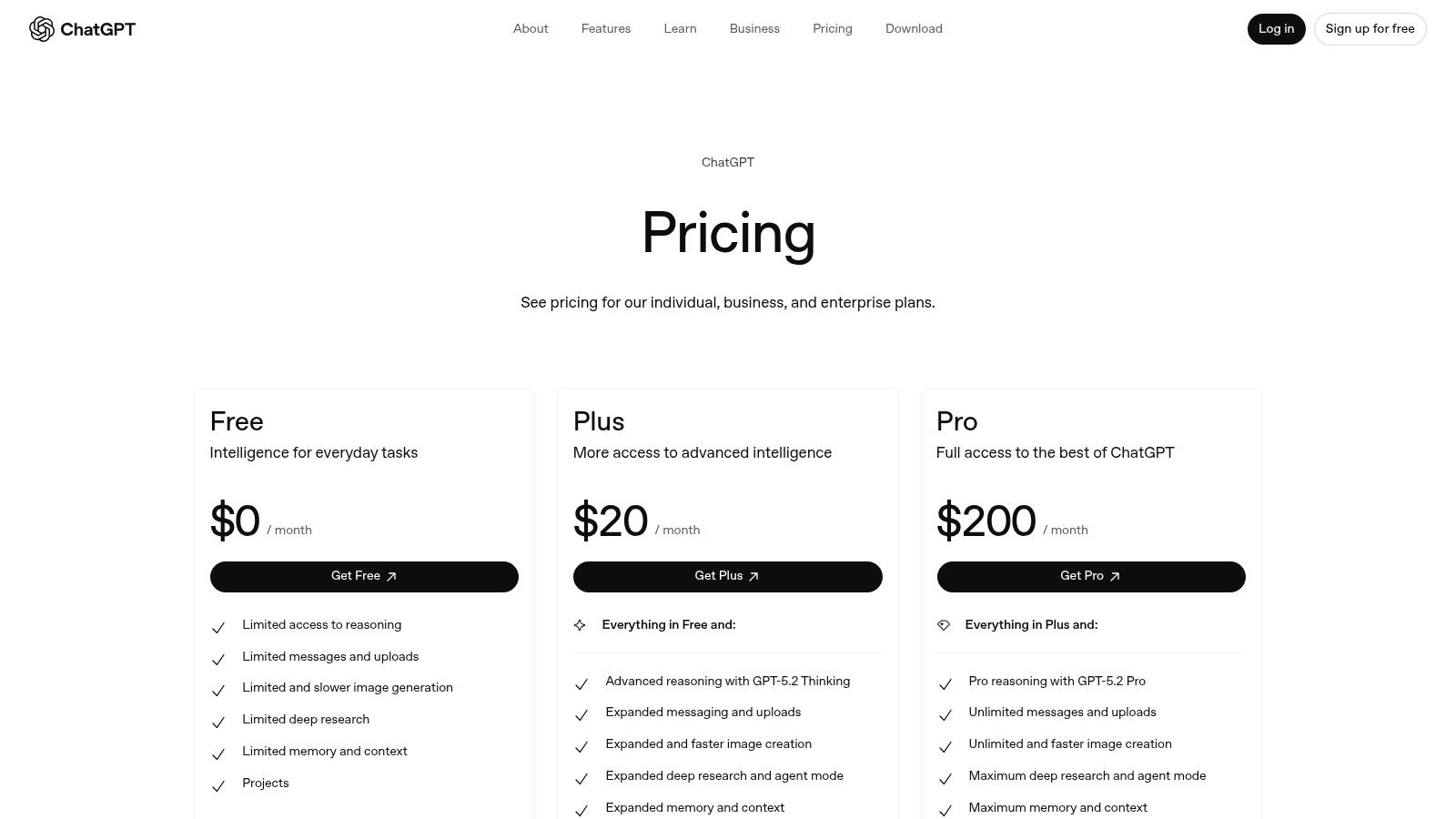
What makes OpenAI unique is this dual-access model. A marketing team can use the ChatGPT interface with built-in tools like Code Interpreter and Web Search for quick research and content generation. Simultaneously, their development team can leverage the same underlying models via the API to build custom, scalable marketing automation workflows that are perfectly tailored to their specific operational needs and data.
Key Features & Use Cases
ChatGPT Interface: A user-friendly chat environment for brainstorming marketing strategies, drafting content, analyzing data sets with Code Interpreter, and performing real-time web research.
Powerful APIs (GPT-4o, etc.): Integrate state-of-the-art language and multimodal models into your own applications for content operations, lead generation, customer support, and analytics.
Custom GPTs: Build no-code, specialized versions of ChatGPT trained on your marketing documentation, brand guidelines, and performance data for consistent, on-brand outputs.
Agentic Workflows: Use the API to create autonomous agents that can perform multi-step marketing tasks, such as competitor analysis or campaign reporting, with minimal human intervention.
Pricing & Platform Details
Tier | Starting Price | Key AI & Marketing Features |
|---|---|---|
Free | $0/month | Access to GPT-3.5 model in ChatGPT. |
Plus | $20/month | Full access to GPT-4o, web browsing, DALL-E 3, data analysis. |
Team | $25/user/month | Higher message caps, secure workspace, admin console. |
API | Pay-as-you-go | Usage-based pricing for tokens and tool usage. |
Pros: Highly flexible with both an easy-to-use chat interface and a robust API for custom solutions. Access to the latest models and a strong developer ecosystem.
Cons: API costs can be unpredictable and require careful monitoring in production. Governance and brand safety controls depend entirely on how the models are implemented.
Website: https://openai.com/chatgpt/pricing
10. Zapier
Zapier acts as the connective tissue for a modern marketing stack, and its new AI capabilities supercharge this role. While not a standalone content creator, it excels at automating workflows between your favorite ai tools for digital marketing and other essential apps. With Zapier Agents, you can now give natural language instructions to perform tasks like researching leads, summarizing articles, and then routing that data into your CRM or email platform automatically.
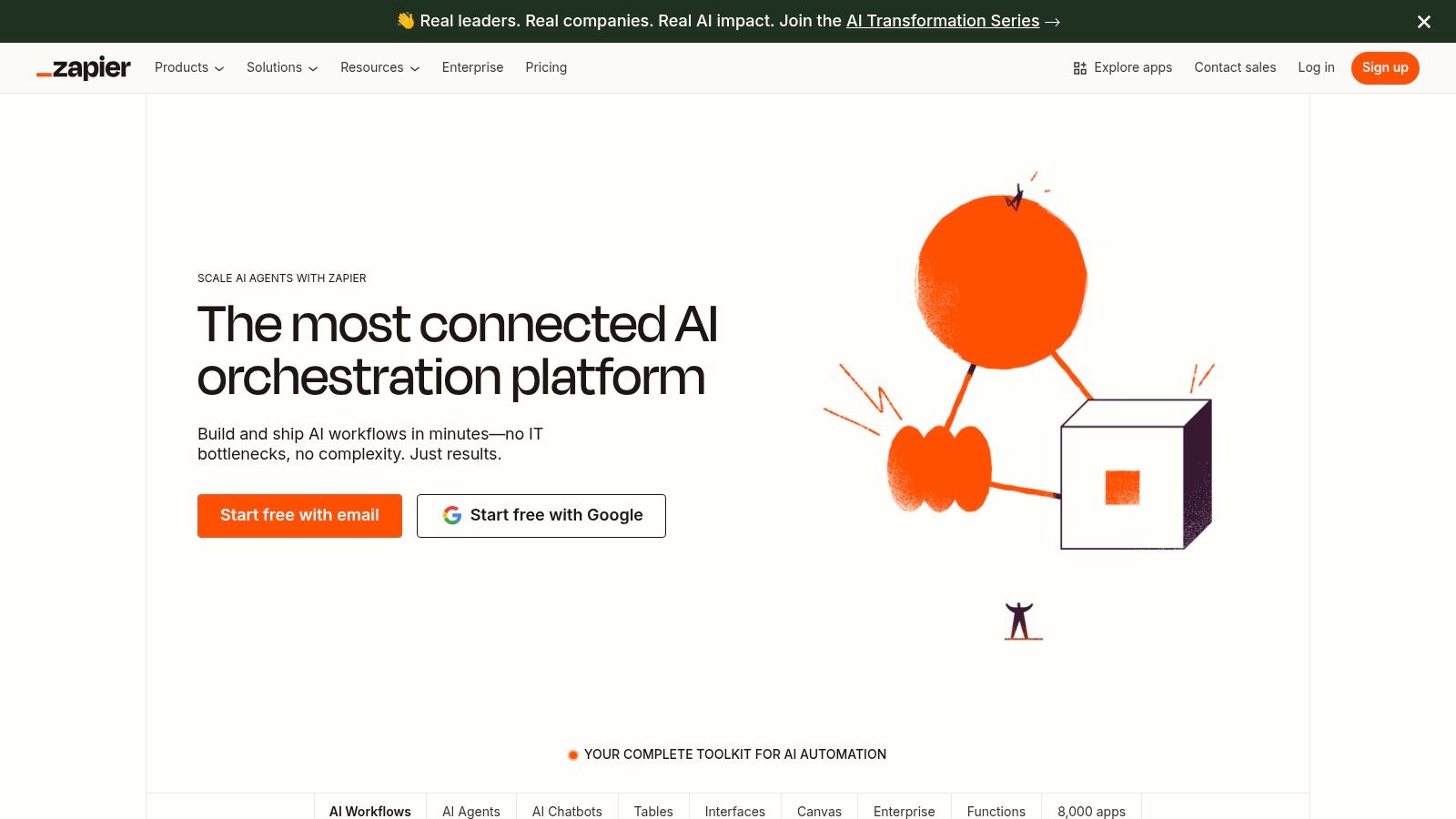
What makes it unique is its sheer breadth of integrations combined with its emerging agentic AI. You can create a "Zap" that triggers when a new lead comes in, uses an AI step to enrich the contact data with company information, then adds the enriched lead to a specific email sequence in Mailchimp and notifies your sales team in Slack. This level of process automation, powered by AI actions, saves countless hours of manual work without needing to write a single line of code.
Key Features & Use Cases
Zapier Agents: Instruct AI agents to research prospects, draft outreach emails, or manage data across multiple connected apps using simple prompts.
6,000+ App Integrations: Connect virtually any marketing tool, from Google Ads and Facebook Lead Ads to your CRM and analytics platforms.
Multi-Step Logic: Build complex, conditional workflows that execute different AI-powered actions based on specific triggers and data points.
Automated Reporting: Automatically pull performance data from various ad platforms and analytics tools into a centralized Google Sheet or data warehouse for unified reporting.
Pricing & Platform Details
Tier | Starting Price (Annual Billing) | Key AI & Marketing Features |
|---|---|---|
Free | $0/month | 100 tasks/month, single-step Zaps. No AI features. |
Starter | $19.99/month | 750 tasks/month, multi-step Zaps, basic app connections. |
Professional | $49/month | 2,000 tasks/month, unlimited premium apps, basic AI credits. |
Team | $69/month | 2,000 tasks/month per user, team collaboration, more AI credits. |
Pros: Incredibly fast to implement with the broadest app coverage available. New AI Agents significantly reduce manual research and execution work.
Cons: Pricing scales with task usage and can become expensive for high-volume workflows. Very complex automations might still require developer oversight for optimal reliability.
Website: https://zapier.com/
11. Shopify App Store
The Shopify App Store is less a single tool and more of a vast ecosystem where merchants can discover thousands of specialized ai tools for digital marketing designed specifically for e-commerce. Instead of offering one integrated solution, it provides a marketplace of plug-and-play apps that inject AI into every part of the customer journey, from product discovery and personalization to automated customer service and ad campaign management. This makes it an essential resource for store owners looking to enhance their operations without complex custom development.
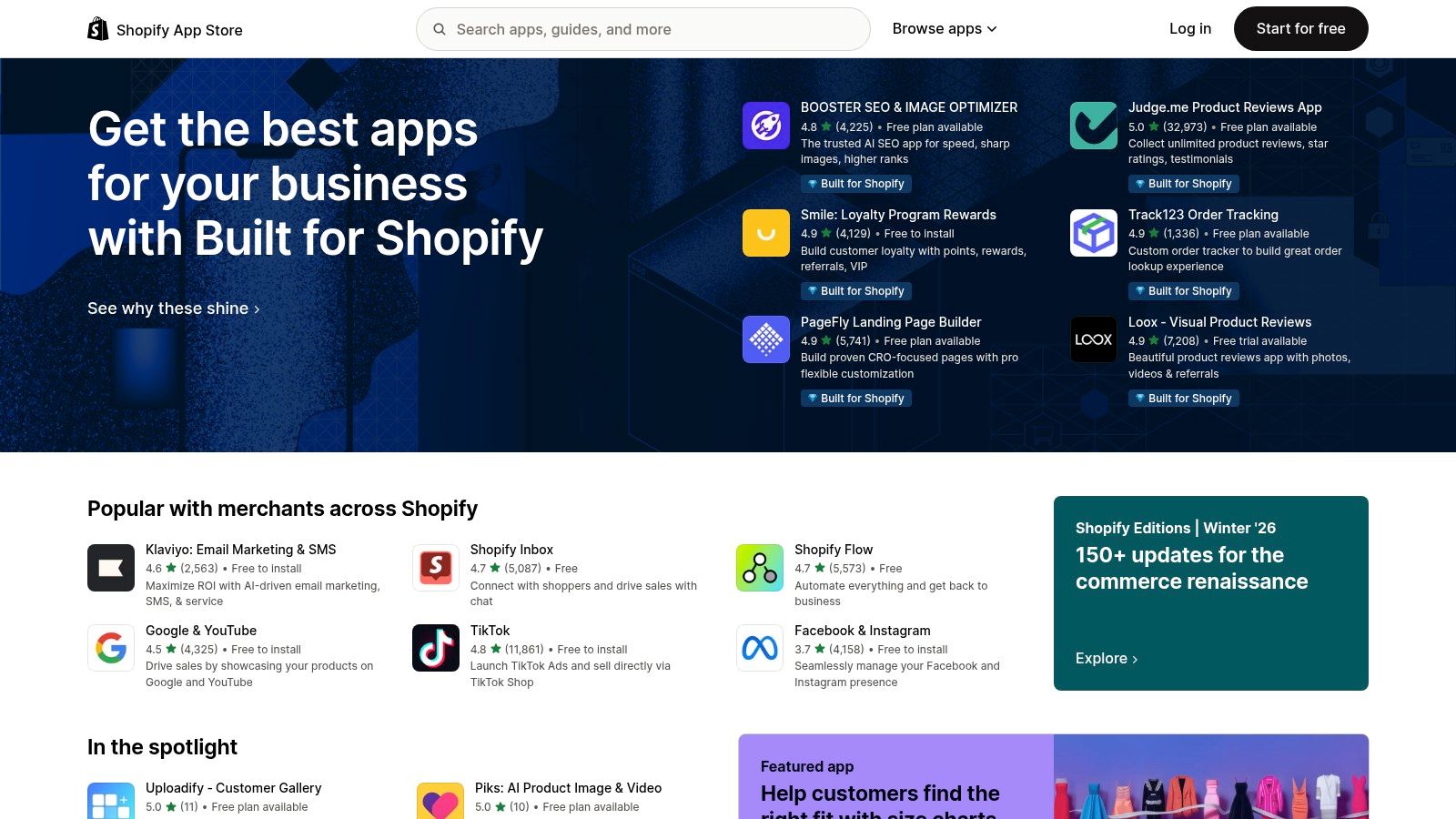
What makes this platform unique is its direct integration with the Shopify backend. Apps can access product catalogs, customer data, and order history to deliver highly relevant experiences. For example, an AI-powered merchandising app can automatically reorder product collections based on real-time sales trends, while an AI chatbot can pull order information to provide instant customer support. This deep-seated connection allows for a level of automation and personalization that is difficult to achieve with external tools.
Key Features & Use Cases
AI-Powered SEO: Install apps that automatically generate and optimize product descriptions, meta tags, and alt-text to improve search engine visibility.
Personalization & Merchandising: Use AI to recommend products, create personalized shopping experiences, and dynamically sort product collections to maximize conversions.
Ad Creative & Management: Find tools that generate ad copy, video creatives, and manage paid campaigns on platforms like Meta and Google directly from Shopify.
AI Chatbots & Customer Service: Deploy intelligent chatbots that handle customer inquiries, track orders, and provide 24/7 support, freeing up human agents.
Pricing & Platform Details
Tier | Starting Price (Annual Billing) | Key AI & Marketing Features |
|---|---|---|
Varies by App | Free plans available | Most apps offer a freemium model with basic AI features. |
Varies by App | $10 - $50/month | Mid-tier plans unlock advanced automation and more usage credits. |
Varies by App | $100+/month | Enterprise-level apps for high-volume stores with advanced personalization. |
Pros: Seamless, e-commerce-ready integrations require minimal technical setup. The wide choice of specialized AI tools allows merchants to solve specific problems effectively.
Cons: Discovery can be noisy; vendors should be vetted carefully by checking reviews and ratings. Stacking multiple paid apps can significantly increase monthly costs and may lead to overlapping functionality.
Website: https://apps.shopify.com/
12. G2
While not an AI tool itself, G2 is an indispensable B2B software marketplace for discovering, comparing, and validating the right ai tools for digital marketing. It serves as a crucial research hub where marketers can filter through hundreds of options in categories like AI Writing Assistants, SEO Platforms, and Social Media Management. The platform aggregates user reviews, pricing snippets, and feature lists into digestible comparison grids, saving countless hours of manual research.
What makes G2 unique in this context is its "Grid" system, which visually maps out tools based on market presence and user satisfaction. This allows you to quickly identify industry leaders, niche innovators, and emerging AI solutions. By leveraging user-generated reviews and detailed feature comparisons, you can shortlist tools that fit your specific use case and budget before ever visiting a vendor's website.
Key Features & Use Cases
Category-Based Discovery: Browse specific categories like "AI Content Creation" or "Predictive Analytics" to find and compare relevant tools.
Comparison Grids: Use filters to create side-by-side comparisons of features, pricing models, and user satisfaction scores for your top choices.
Verified User Reviews: Read detailed feedback from real users to understand the practical pros and cons of a tool beyond its marketing claims.
Market Trend Tracking: Identify emerging AI marketing technologies and high-momentum products based on real-time market data and review trends.
Pricing & Platform Details
Tier | Starting Price | Key Features |
|---|---|---|
User Access | Free | Browse categories, read reviews, and compare software. |
G2 Track | Contact Sales | For businesses to manage their software stack and spend. |
G2 Marketing | Contact Sales | For vendors to list their product and generate leads. |
Pros: Broad, comprehensive coverage of the martech landscape for quick tool comparison. User reviews provide a valuable layer of validation to shortlist tools before buying.
Cons: Some user reviews may be incentivized, requiring a critical eye. Vendor-provided feature lists can be marketing-heavy and need cross-verification.
Website: https://www.g2.com/
Top 12 AI Tools for Digital Marketing — Quick Comparison
Product | Core features | Quality ★ | Price & Value 💰 | Target & USP 👥✨ |
|---|---|---|---|---|
Alpha 🏆 | AI design, URL→layout import, NL edits, forms, SEO, analytics | ★★★★★ — fast & intuitive | 💰 Starter Free; Mini $9/mo; Basic $25/mo; Annual -20% | 👥 Entrepreneurs & SMBs; ✨ URL import + natural‑language editing |
HubSpot Marketing Hub | CRM-native marketing automation, landing pages, AI assistants | ★★★★☆ — enterprise-ready | 💰 Free→Enterprise; onboarding fees on Pro/Ent | 👥 Mid→large teams; ✨ Closed‑loop CRM + campaign orchestration |
Jasper | AI content, Brand Voices, Agents, pipelines, Canvas | ★★★★☆ — content scale | 💰 Paid plans; Business/custom pricing for teams | 👥 Marketing teams; ✨ Brand-consistent scalable content |
Semrush | SEO, keyword research, site audits, AI content tools | ★★★★☆ — data depth | 💰 Paid tiers; add-ons increase cost | 👥 Agencies & SEO pros; ✨ Market & competitor intelligence |
Canva | Magic Studio AI, templates, media libs, collaboration | ★★★★☆ — fast creative output | 💰 Free→Pro; affordable Pro | 👥 Designers & non-designers; ✨ Rapid on‑brand visuals |
Hootsuite + OwlyWriter AI | Social scheduling, listening, AI captions, analytics | ★★★★☆ — mature social suite | 💰 Paid tiers; pricing varies by profiles/seats | 👥 Social teams; ✨ Unified social + AI content suggestions |
Mailchimp | Email automation, AI copy, segmentation, send-time opt | ★★★★☆ — easy start | 💰 Free→Paid; scales with contact list | 👥 SMBs & ecommerce; ✨ Simple email automation + AI assist |
Google Ads – Performance Max | Goal-based cross-channel campaigns, Smart Bidding, asset gen | ★★★★☆ — high reach, less transparency | 💰 Budget-based CPC/CPA; performance-driven spend | 👥 Advertisers; ✨ Automated cross‑surface conversion optimization |
OpenAI | ChatGPT, GPT APIs, Code Interpreter, realtime tools | ★★★★★ — flexible & powerful | 💰 Free→Pro/Enterprise; API usage-based pricing | 👥 Developers & teams; ✨ Versatile models & developer ecosystem |
Zapier | 6,000+ integrations, multi-step automations, Agents | ★★★★☆ — broad connectivity | 💰 Free→Paid; scales with tasks/usage | 👥 Ops & marketers; ✨ No-code automations & agentic workflows |
Shopify App Store | Marketplace of ecommerce apps (AI SEO, ads, personalization) | ★★★★☆ — ecommerce ecosystem | 💰 App pricing varies; trials & paid apps | 👥 Ecommerce merchants; ✨ Quick plug‑in AI tools for stores |
G2 | Review marketplace, category pages, grids & pricing snippets | ★★★★☆ — wide coverage | 💰 Free to browse; vendor-paid features available | 👥 Buyers & shortlisters; ✨ User reviews for vendor validation |
Putting AI to Work: Your Next Steps to Smarter Marketing
Navigating the expansive landscape of AI tools for digital marketing can feel overwhelming, but the journey from exploration to implementation is more manageable than it seems. We've explored a powerful suite of platforms, from foundational content creators like Jasper to comprehensive marketing hubs like HubSpot, and specialized tools like Semrush for SEO and Google's Performance Max for advertising. The common thread is clear: AI is no longer a futuristic concept but a practical, accessible force multiplier for businesses of all sizes.
The true takeaway isn't just about adopting new software; it's about shifting your mindset. It’s about moving from manual, time-intensive tasks to automated, data-driven strategies that free up your most valuable resource: your creativity and strategic thinking. By leveraging these tools, you can generate higher-quality content faster, gain deeper insights into your audience, optimize campaigns with precision, and ultimately, drive more meaningful results.
Creating Your AI-Powered Marketing Stack
The right combination of AI tools for digital marketing will be unique to your business. A startup might prioritize a powerful foundational tool like Alpha to quickly establish a professional online presence, while a larger enterprise may focus on integrating advanced analytics or CRM capabilities. The key is to avoid "tool fatigue" by being strategic and incremental in your adoption.
Here’s a simple framework to guide your next steps:
Identify Your Biggest Bottleneck: Where do you spend the most time for the least return? Is it writing blog posts, designing social media graphics, analyzing campaign data, or managing leads? Pinpoint your primary pain point.
Start with One Core Tool: Select a single tool from our list that directly addresses that bottleneck. If content is your challenge, pilot Jasper. If social media management is a time-sink, explore Hootsuite’s OwlyWriter AI. Focus on mastering one platform before adding another.
Establish a Strong Foundation: For many businesses, the central hub of all marketing activity is the website. A platform like Alpha can be a game-changer here, using AI to rapidly build a conversion-focused site. This gives you a solid base to drive traffic to, capture leads from, and build your brand upon, without the traditional technical hurdles.
Connect and Automate: Once you have a few core tools in place, use a connector like Zapier to create automated workflows. Imagine a new lead from your Alpha-built website automatically being added to your Mailchimp list and a notification sent to your sales team. This is where you unlock exponential efficiency gains.
Measuring Success and Looking Ahead
Implementing these tools is just the beginning. The final, critical step is to measure their impact. Define clear key performance indicators (KPIs) before you start. Are you aiming to increase website traffic, improve conversion rates, reduce your cost per acquisition, or boost social media engagement? Use the analytics features built into these platforms, along with Google Analytics, to track your progress and justify the investment.
The world of AI is evolving at an incredible pace. What seems cutting-edge today will be standard tomorrow. Staying informed is crucial for maintaining a competitive edge. To keep abreast of the latest trends and deepen your understanding of digital marketing and AI, explore the articles on Branditok's marketing blog. Continuous learning will ensure your strategy remains relevant and effective.
Embrace this technological shift not as a replacement for human marketers, but as a powerful partner. By thoughtfully integrating the right ai tools for digital marketing into your workflow, you can build a smarter, more efficient, and more impactful marketing engine for 2025 and beyond.
Ready to build the foundation for your AI-powered marketing strategy? With Alpha, you can generate a professional, high-converting website in minutes, letting you focus on growth from day one. See how our AI can build your brand's digital home by visiting Alpha and launching your site today.
Build beautiful websites like these in minutes
Use Alpha to create, publish, and manage a fully functional website with ease.