
How to Create Website Mockups People Actually Love
Learn how to create website mockups that bridge the gap between idea and reality. Our guide covers tools, principles, and developer handoff.
Build beautiful websites like these in minutes
Use Alpha to create, publish, and manage a fully functional website with ease.
An "About Us" page isn't just a box to check. It's where you get to tell your story, introduce the real people behind the curtain, and lay out what you stand for. You're not just listing facts; you're humanizing your brand to build genuine trust. The best pages I've seen masterfully blend a compelling narrative with real-world proof, forging a connection that goes beyond a simple transaction.
Your About Us Page Is A Powerful Sales Tool
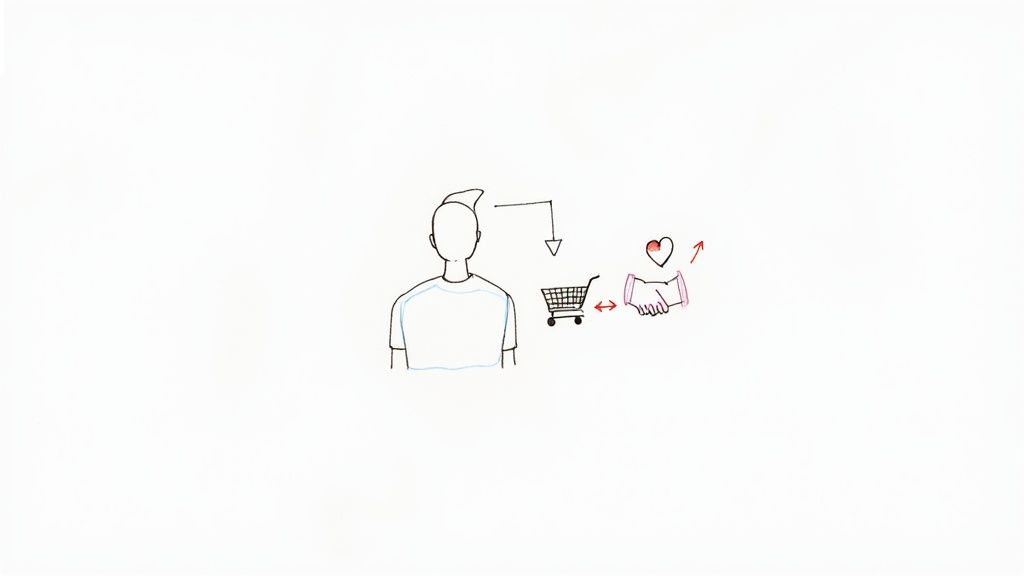
It’s easy to treat the About Us page as an afterthought—a dusty corner of your website nobody visits. That’s a massive mistake. In reality, it’s one of the most crucial pages on your entire site. It's the quiet workhorse that validates a customer's decision to trust you with their money.
Think about it: 52% of people want to see the About Us page the moment they land on a new website. They aren't looking for a dry corporate history. They're searching for a reason to believe in you. This page is where you stop selling things and start building a real relationship.
Your About Us page is working hard behind the scenes, answering the subconscious questions every single visitor has:
Who are these people? Putting faces to a name instantly builds trust. It makes your company feel less like a faceless corporation and more like a group of approachable humans.
What do they stand for? Your mission and values are a magnet for the right customers. A staggering 63% of consumers prefer buying from brands that are purpose-driven.
Can I actually trust them? Your origin story, team bios, and a little transparency provide the social proof needed to nudge a hesitant browser into becoming a confident buyer.
Why Your Story Is A Conversion Tool
A product description lists features and specs. An About Us page tells a story that hits on an emotional level. It answers the why—the frustrating problem you wanted to solve, the passion that gets your team out of bed, and the vision you have for making your customers' lives better. This is what sets you apart from a sea of competitors who all seem to offer the same thing.
A well-crafted About Us page doesn't just inform; it persuades. Research shows that visitors who view an About Us page spend 22.5% more than those who don't. They're more invested, more loyal, and more likely to become brand advocates.
By humanizing your brand, you lower the perceived risk for anyone thinking about buying from you for the first time. They see real people, a clear mission, and a story they can connect with. All of this makes them feel much more secure about their decision to click "buy."
The Core Components of a High-Impact About Us Page
To transform this page from a simple placeholder into a genuine conversion asset, you need to be strategic. It’s not just about what you say, but how you structure it to build trust and guide visitors toward what’s next.
Here’s a quick-reference summary of the essential elements every compelling About Us page should include to build trust and drive action.
Core Components of a High-Impact About Us Page
Component | Purpose | Key Takeaway |
|---|---|---|
Authentic Story | Creates an emotional connection and explains your "why." | Share your origin, struggles, and the mission that drives you. |
Human Element | Builds trust and makes your brand relatable. | Showcase your founders and team with real photos and bios. |
Clear Mission | Aligns with customer values and builds loyalty. | State what you believe in and the impact you aim to make. |
Social Proof | Validates your claims and builds credibility. | Include testimonials, awards, or press mentions. |
Call to Action (CTA) | Guides the visitor's next step. | Nudge them toward your products, newsletter, or social channels. |
Ultimately, learning how to write an About Us page is really about learning how to build a bridge of trust between your business and your audience. To get the most out of it, explore these proven conversion rate optimization tips that can help turn that trust into tangible results.
Finding and Crafting Your Authentic Brand Story
Every business has a story. It’s not just a timeline of when you were founded and what you sell—it's the spark that ignited the idea, the late nights spent turning a dream into reality, and the core purpose that gets you out of bed in the morning. This narrative is the absolute heart of your About Us page, turning a bland company description into a genuine connection.
Your story is the human element that makes your brand relatable. It’s what separates you from a dozen other companies selling similar things but lacking a compelling reason to exist. Remember, people don’t just buy what you do; they buy why you do it.
Unearthing Your Origin Story
Before you write a single word, you have to do a little digging. Think of yourself as a journalist investigating your own company, trying to uncover the authentic, sometimes messy, details that make your journey one-of-a-kind.
Start by asking a few key questions:
What was the "aha!" moment? Try to pinpoint the exact instance the idea for your business was born. Was it a personal frustration you couldn't solve, a gap you spotted in the market, or a passion project that just kept growing?
What problem are you really solving? Every successful business eases a pain point. Get crystal clear on the challenge your customers face and how your company showed up as the solution.
What were the biggest hurdles? Don’t shy away from the struggles. Sharing the challenges you overcame—whether it was a shoestring budget, a skeptical market, or a technical nightmare—adds real depth and vulnerability to your story. It makes you human.
These aren't just fluffy brainstorming prompts. They are the building blocks of a narrative that will resonate with anyone who has ever tried to build something from scratch.
Defining Your Mission and Core Values
Once you have the backstory, it’s time to articulate what you stand for. Your mission isn't just a corporate-sounding sentence to stick on a plaque. It should be a clear, concise declaration of your purpose—the north star for every decision you make.
Your mission statement should be simple enough for a new hire to get it instantly and powerful enough to inspire a customer to stick with you for life. It’s the anchor of your entire brand.
This mission is propped up by your core values. Think of these as the non-negotiable principles that shape your company culture and how you treat people. Are you all about sustainability? Radical transparency? Over-the-top customer service? Write them down.
For example, instead of a vague value like, "We pursue excellence," try something more specific and full of personality, like, "We sweat the small stuff so our customers don't have to." That kind of language is far more memorable. Honing this skill is a huge part of learning how to write website copy that actually connects with people.
From Jargon to a Genuine Voice
With your story and values in hand, the next step is to translate them into a narrative that doesn’t put people to sleep. The biggest mistake brands make here is falling back on cold, impersonal corporate jargon. Words like "synergy," "leverage," and "optimize" don't build connection; they create distance. Your job is to pull people closer.
Write like you speak. A great trick is to read your draft out loud. Does it sound like a real person talking, or does it sound like a press release spit out by a robot? Use simple, direct language.
Show, don't just tell. Instead of saying your company is "innovative," tell the story of how your team spent six months locked in a room to develop a feature that solved a problem no one else could touch. Let your actions tell the story for you.
To get even clearer on your core message, it can be a huge help to look at examples of powerful brand positioning statements. This exercise can really sharpen your focus and make the whole writing process much easier.
Structuring Your Narrative for Impact
A good story has a beginning, a middle, and an end. The same goes for your About Us page. You want to guide the reader on a journey.
The Hook: Kick things off with the core problem you solve or your unique take on the industry. Grab their attention right away.
The Journey: This is where you share your origin story. Talk about the struggles and the breakthroughs that got you here.
The Mission: State your purpose clearly. This is where you connect with your audience on a deeper, values-based level.
The Vision: End by looking forward. Where are you headed? How will you continue to serve your customers and make an impact?
By following this simple flow, you create a story that’s not only authentic but is also built to earn trust and forge a real connection with your audience.
Designing Your Page for Engagement and Trust
You've nailed down your authentic brand story. That's a huge step. But even the most captivating narrative will fall flat if it's just a wall of text. The design of your About Us page is just as important as the words themselves—this is where you turn your story into an experience that builds real trust.
The goal here is a balancing act: make your page scannable enough for someone in a hurry, yet compelling enough to invite them to stay. Visitors should get the gist in seconds, but also feel a pull to dive deeper. Thoughtful layout, visual storytelling, and a clear, logical flow are your best friends here.
Crafting a Powerful Opening Hook
You've got maybe three seconds. Seriously. That's how long you have to convince someone to keep reading. The space they see without scrolling—what we call "above the fold"—is prime real estate. Don't waste it with a sleepy "About Our Company" headline.
You need to lead with a hook that grabs them immediately.
Your Mission Statement: Go bold. Something like, "We're on a mission to make sustainable living simple for everyone."
Your Unique Value Proposition: What makes you you? "Handcrafted leather goods designed to last a lifetime, not just a season."
A Relatable Problem: Hit them with the pain point you solve. "We were tired of project management software that created more work."
That first impression sets the entire tone. It gives people a damn good reason to scroll down and find out who's behind the big promise.
Sequencing Your Narrative for Maximum Impact
Once you’ve hooked them, don't just throw random facts at them. Guide them through your story logically. Think about it like a real conversation. You wouldn't open with your company's founding date, right? You'd start with something interesting.
A structure that works time and time again follows a natural progression:
The "Why": Kick off with your purpose or the problem you're here to fix.
The "How": This is your origin story. Share the journey that brought you here.
The "Who": Put faces to the name. Introduce the people who make it all happen.
The Proof: Back it all up. Show off testimonials, awards, or key data.
The Future: Give a quick glimpse of your vision and where you're headed.
This flow is powerful because it takes the reader from an emotional connection ("I get their 'why'") to a logical one ("I see the proof"), building a rock-solid foundation of trust.
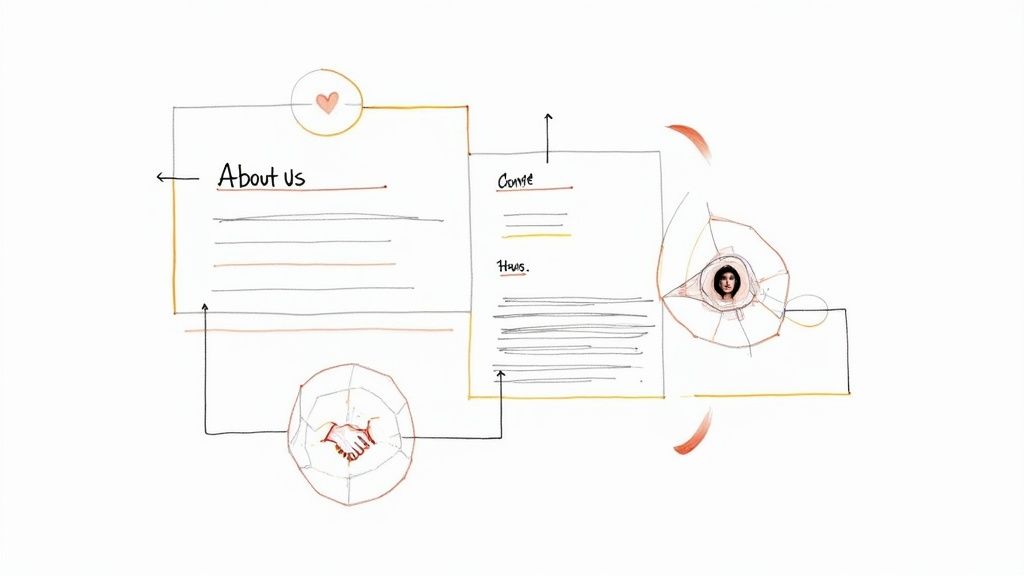
This simple process is key to getting your story from an idea to a finished piece.
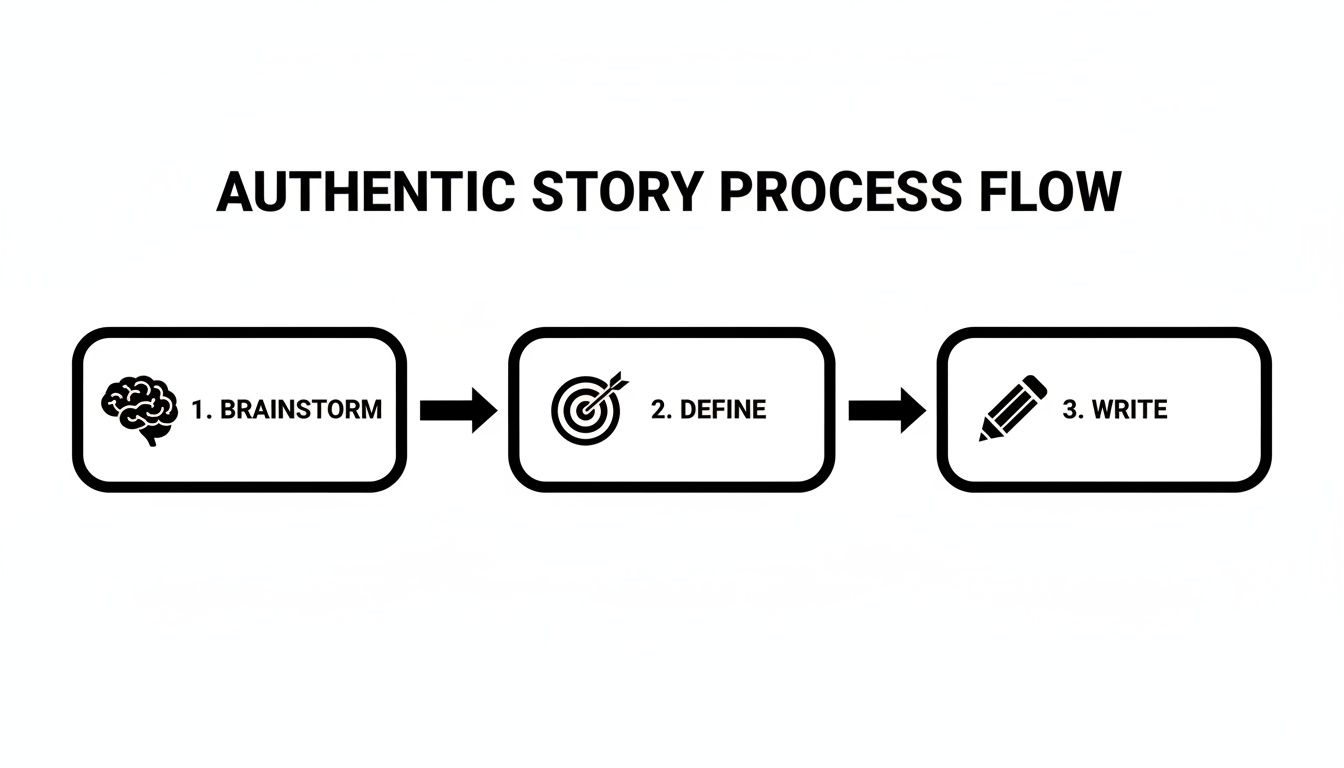
It all starts with brainstorming, gets focused through defining your core message, and comes to life in the writing.
Humanize Your Brand with Faces and Bios
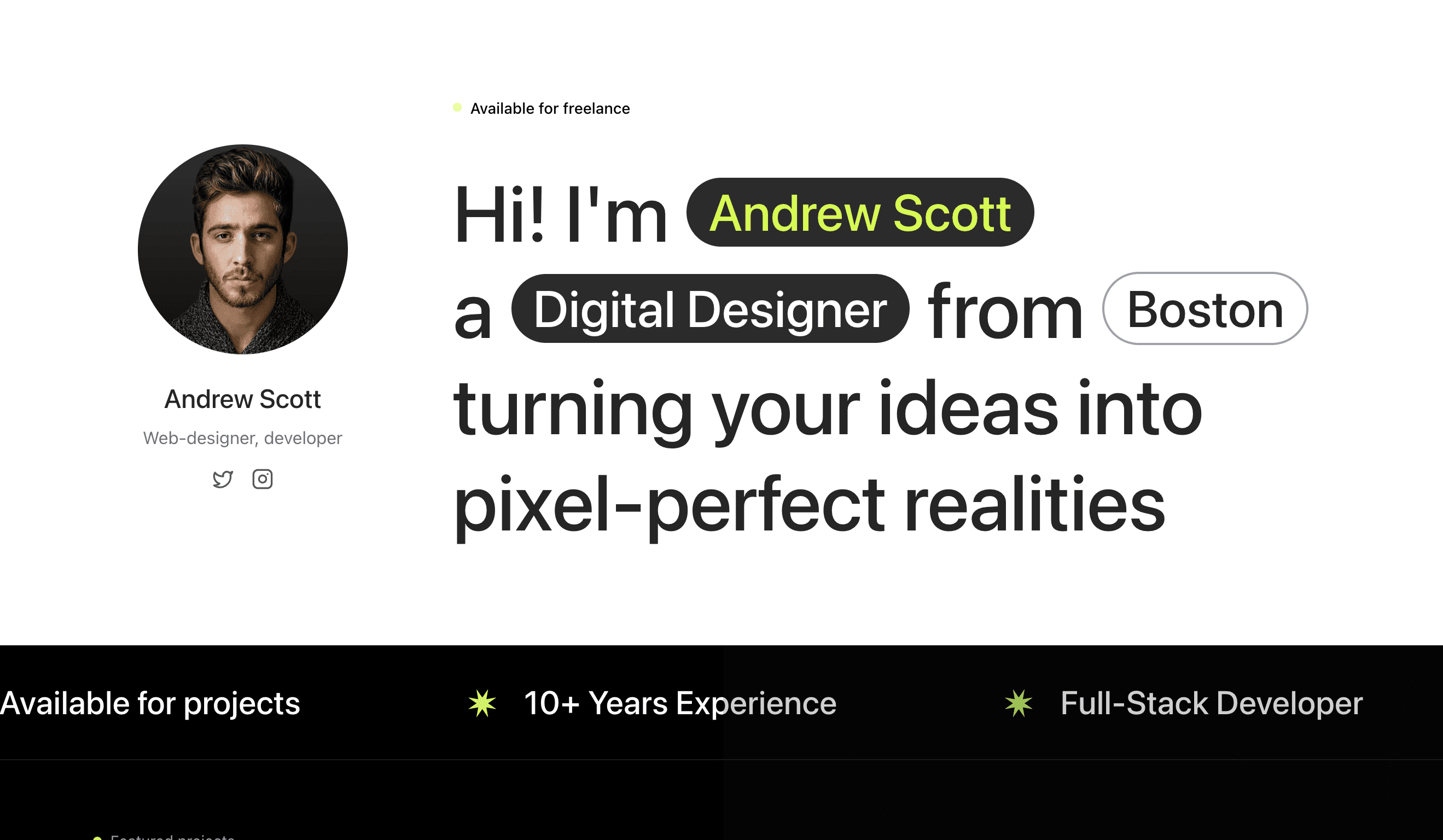
Nothing builds trust faster than seeing the actual people behind the curtain. Stock photos are an instant credibility-killer—everyone can spot them a mile away. Please, invest in good, authentic photos of your founder and team.
When you showcase your team, give them brief, personable bios that do more than state a job title. A great bio might include:
A quick line about their role and expertise.
A fun fact or something they're passionate about outside of work.
A link to their LinkedIn so people can connect.
This simple touch transforms your business from a faceless logo into a group of relatable people. It makes it so much easier for customers to feel a genuine connection.
Integrate Social Proof to Build Credibility
Your story is compelling, but people are naturally skeptical. Claims are always more powerful when you can back them up. Weaving social proof into your About Us page design is how you validate your narrative and earn trust.
Social proof isn't just a marketing gimmick; it's a core part of how we make decisions. When we see other people trust a brand, it makes us feel safer about trusting them, too.
Here are a few great ways to display it:
Customer Testimonials: Short, powerful quotes with a name and a photo are gold.
"As Seen In" Logos: If you've been featured in the press, show it off.
Awards and Certifications: Display any industry recognition you've earned.
Key Stats: Numbers talk. "Over 10,000 Happy Customers" or "Featured in Forbes" are hard to ignore.
Here's a little industry insight: the median conversion rate for landing pages hovers around a respectable 6.6%. But companies that truly invest in their About Us pages with great stories and trust signals often see a major lift. They reduce bounce rates and keep people on their site longer. A great page could be the difference between a standard 4-5% and an elite 10%+.
End with a Clear and Natural Call to Action
After all that, don't just leave your visitors hanging. They've just connected with your story, so guide them to the next logical step. The call-to-action (CTA) here shouldn't be an aggressive "Buy Now." That feels jarring.
Instead, go for a softer CTA that invites them to continue the relationship. Try one of these:
"Meet the Rest of the Team"
"Explore Our Products"
"Follow Our Journey on Instagram"
"Read Our Founder's Blog"
"Get in Touch"
By giving them a clear next step, you keep the conversation going and gently guide them deeper into your world.
Getting Your About Us Page to Rank in Search Engines
So you've poured your heart into crafting the perfect brand story. Now, you need to make sure people can actually find it. The About Us page is too often an afterthought in an SEO strategy, but it’s a goldmine for ranking in searches and proving your authority.
This isn't just about cramming your company name everywhere. A great About Us page skillfully weaves important keywords into the narrative, making it crystal clear to both people and Google what you're all about.
Weave Keywords into Your Narrative
Think bigger than just your brand name. Your About Us page is the perfect place to naturally sprinkle in keywords related to your industry, your founders, your values, and what you actually do. This helps Google draw a line between your brand and the topics you want to dominate.
Imagine you run a sustainable fashion brand. Instead of just stating when you were founded, you'd want to naturally work in terms like:
"ethical manufacturing"
"organic cotton sourcing"
"slow fashion movement"
"founder Jane Doe's passion for eco-friendly design"
This gives search engines context. It shows them you’re a real player in a specific niche. For a more detailed walkthrough on this, our guide on how to add keywords to a website is a great starting point.
The Technical SEO Bits That Matter
A few small technical details on the backend can make a huge difference in how search engines view your page. These are simple but powerful steps that give search crawlers the structured information they need.
Page Title and Meta Description
Your page title is one of the most important SEO signals you have. Make it count.
A simple, effective formula is: About [Your Brand Name] | Our Mission & Story. It gets your brand name in there and adds keywords people might use when they're looking you up. The meta description should be a quick, compelling summary of your story that makes people want to click.
Image Alt Text
Every photo of your team, your office, or your products is another chance to improve your SEO. Use descriptive alt text instead of generic file names.
Weak:
team.jpgStrong:
alt="The marketing team at [Your Company] collaborating in our Austin office"
This not only helps search engines understand what your images are about but can also help you show up in image searches for your team members or location.
Structured Headings
Use headings (H1, H2, H3) to create a clear hierarchy. Your main page title is the H1. Then, use H2s for major sections like "Our Story" or "Meet the Team" and H3s for anything underneath those. This makes the content scannable for your visitors and much easier for search engines to crawl and index properly.
Internal Linking
Your About Us page shouldn't be a dead end. Use it as a central point to link out to other important pages on your site, like key product pages, popular blog posts, or your careers page. This spreads link authority around your site and keeps visitors engaged, which sends strong positive signals back to Google.
Common Mistakes and Pro Tips for a Memorable Page
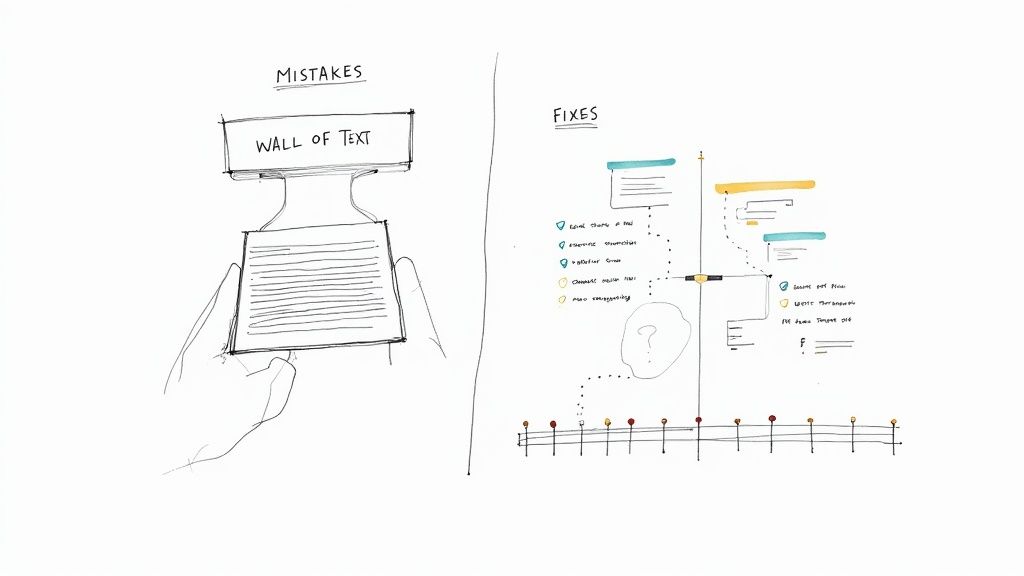
It’s easy to get the About Us page wrong. I've seen countless companies fall into the same traps, ending up with a page that’s either painfully boring, completely self-obsessed, or just… forgettable.
But here’s the thing: those pitfalls are surprisingly easy to sidestep. Once you know what to look for, you can make a few smart adjustments that will transform your page from a corporate afterthought into a powerful tool for building real trust and connection.
Avoiding the Classic Pitfalls
The number one mistake? Drowning your story in corporate jargon. Phrases like "synergy," "value-added solutions," and "market leader" are instant turn-offs. They don’t resonate with real people; they just make your brand feel stuffy and out of touch.
Another common blunder is making the page all about you. I know, it sounds backward—it’s called an "About Us" page, after all. But your visitors are there to figure out if you "get" them and their problems. If you're just listing your awards and accomplishments without tying them back to how you help customers, you’re missing the entire point.
And finally, so many pages just… end. You do all this work to tell a great story and build a connection, and then you leave your reader hanging at a dead end. Forgetting a clear call to action is like having a fantastic conversation and walking away without ever exchanging numbers.
Advanced Tips to Elevate Your Page
Got the basics down? Great. Now let’s talk about a few pro-level techniques to make your page truly stand out and feel authentic.
Bring in Video: A short, well-made video can do more than a thousand words of text. Think about a candid founder interview, a quick behind-the-scenes tour of your office, or a montage of video testimonials from happy customers. It adds a human element that’s impossible to fake.
Build an Interactive Timeline: Don't just write out your company history in a dense paragraph. A visual, interactive timeline is far more engaging. It lets people click on key milestones to explore the parts of your story that interest them most.
Feature Your Fans: Nothing builds trust faster than social proof. Dedicate a section to showcase user-generated content (UGC)—photos, social media posts, or reviews from your community. This instantly shifts the focus from "look at us" to "look at our amazing customers."
The most effective About Us pages are not static biographies; they are living documents that reflect a brand's personality and its relationship with its customers. They invite interaction and build a sense of community.
You should treat this page like a crucial landing page, because that’s what it is. It's there to convert visitors into believers. In fact, research shows that purpose-built landing pages can convert 160% better than generic pages. Considering how many visitors might be on the fence, your page needs to grab them immediately. This is where featuring UGC really shines; it’s a powerful way to show, not just tell, how much people trust their peers and love what you do. For a deeper dive, check out this landing page statistics report.
By ditching the corporate-speak, putting your customer at the center of the story, and adding these dynamic elements, you’ll turn your About Us page from a simple checkbox into one of your most valuable brand-building assets.
Answering Your Lingering Questions
Alright, you've got the blueprint, but a few questions always seem to pop up as you're putting the final pieces together. Nailing these details can be the difference between a page that's just "fine" and one that truly connects with your audience and builds real trust. Let's tackle some of the most common ones I hear.
How Long Should an About Us Page Actually Be?
There’s no magic number here, but I've found that the sweet spot for most impactful About Us pages is between 400 and 800 words. That's usually enough space to tell your story, introduce your key people, and share your mission without putting your readers to sleep.
The real goal is clarity, not a word count. Make every sentence earn its place on the page. Use sharp headings, short paragraphs, and great visuals to make the whole thing easy to skim and digest.
Should I Really Put Pictures of My Team on There?
Yes, absolutely. Photos of your founder and team are one of the fastest ways to put a human face on your brand. Using real, high-quality photos—not sterile stock images—shows there are actual people behind the scenes. It makes your company feel instantly more approachable.
If you're a small business, a few individual bios with a personal touch can work wonders. For larger companies, a fantastic group shot or even some candid photos of your team working together can do a great job of showing off your company culture.
A quick tip from experience: Authenticity beats polish every time. A real photo of your team in their natural element often builds more trust than a stuffy, professional headshot. People want to connect with other people, not a corporate facade.
What Kind of Call to Action (CTA) Should I Use?
Your CTA on this page shouldn't feel like a hard sell. It should feel like a natural next step in a conversation. Someone reading your About Us page is looking to connect, so a big, loud "Buy Now" button can feel completely out of place and even a bit jarring.
Instead, think about a softer invitation that keeps them in your orbit. Try something like:
Follow our story on social media.
Get our weekly insights delivered to your inbox.
Meet the rest of the team.
Check out our career openings.
The idea is to guide an already-interested person deeper into your world, not to shove a product in their face.
My Story Feels... Boring. How Can I Make It Stand Out?
Get personal and be honest. What was the real problem that pushed you to start your business in the first place? Was there a single "aha!" moment that changed everything? People are drawn to stories of passion and grit far more than a dry corporate timeline.
Don't shy away from the human side of your journey. Let your brand's unique personality come through in your writing. That's how a simple company history becomes a memorable story that sticks with people and truly sets you apart from everyone else.
Tired of staring at a blank screen and fighting with clunky design tools? Alpha uses AI to help you build a stunning, professional website—complete with a compelling About Us page—in hours, not weeks. Get started with Alpha.
Build beautiful websites like these in minutes
Use Alpha to create, publish, and manage a fully functional website with ease.