

How to Create Website Mockups People Actually Love
Learn how to create website mockups that bridge the gap between idea and reality. Our guide covers tools, principles, and developer handoff.

EXAMPLES
Build beautiful websites like these in minutes
Use Alpha to create, publish, and manage a fully functional website with ease.
Building an email list is all about gathering email addresses from potential and current customers to open up a direct line of communication. Forget renting space on social media; this is about owning your audience and creating a reliable, stable way to drive real traffic, sales, and engagement.
Why an Email List Is Your Most Valuable Asset
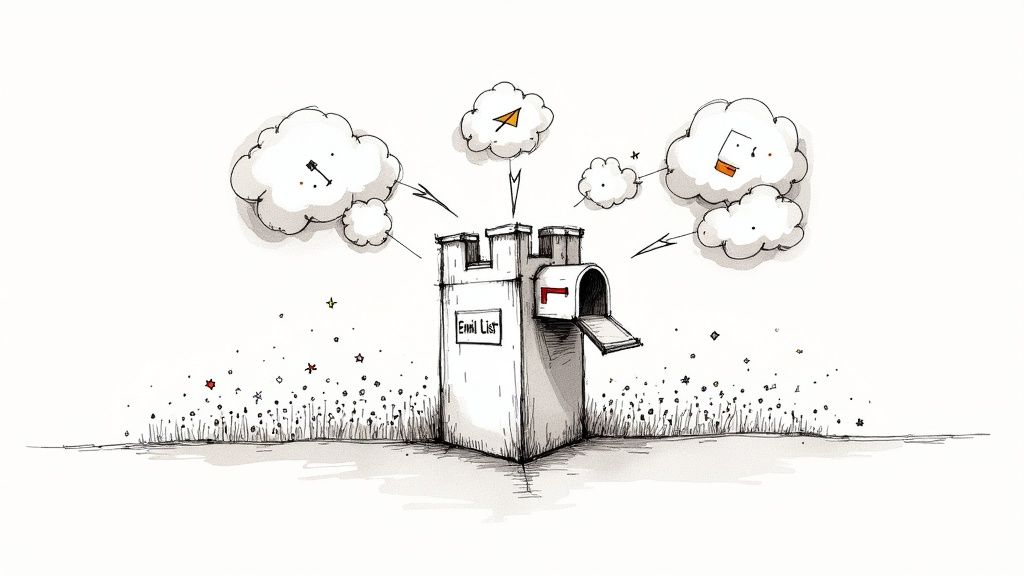
Let's be real for a second. If your entire business relies on social media algorithms, you're essentially building a house on someone else's land. One day, a single algorithm shift can tank your reach, leaving you cut off from the very people who want to hear from you. Building an email list is your way of declaring independence.
When you put your energy into growing an email list, you're doing more than just collecting contacts. You're forging a powerful, direct connection that you actually control. This isn't just another marketing channel—it's an asset that shields your business from rising ad costs and the whims of social platforms.
The Power of Direct Ownership
Picture this: you've spent months, maybe even years, building a huge following on a social platform. You launch a new product and post about it, but the algorithm decides to show it to only 5% of your followers. The other 95%? They never even know it exists. It’s an incredibly common and frustrating problem that exposes a major weakness for any business.
Now, think about the email alternative. You decide when your message goes out. You decide who sees it. Every single email lands directly in their inbox, ready to be opened. That level of control brings a stability to your marketing that you just can't get anywhere else.
The numbers don't lie. By 2025, an estimated 4.48 billion people will use email. That's nearly half the planet. This massive scale, combined with its direct-to-inbox nature, is why marketers have seen a mind-blowing 760% increase in revenue from well-segmented campaigns. You can discover more about the financial impact of email marketing and how it drives real growth.
"Your email list is one of the few online assets you truly own. Unlike a social media following, it can't be taken away by algorithm changes or platform policy updates. It’s your direct link to your customers."
Creating a Sustainable Engine for Growth
A healthy, growing email list quickly becomes a dependable engine for your business. It drives traffic, generates revenue, and builds a genuine community. Every subscriber is someone who has intentionally raised their hand and said, "Yes, I want to hear from you." That permission-based relationship is a world away from a passive social media follow.
This dedicated group of subscribers gives you a few key advantages that social media just can't match:
Higher Engagement: People are far more likely to see and engage with an email than with a social media post that disappears in a flash.
Deeper Personalization: You can easily segment your audience based on their interests and past behaviors, letting you send highly relevant content that actually connects.
Increased Conversions: Email consistently delivers one of the highest ROIs in marketing. Why? Because it’s built on trust and direct communication.
Instead of shouting into a crowded social feed and hoping someone hears you, building an email list lets you have meaningful, one-on-one conversations that can scale. It’s how you cultivate a community that trusts your brand, looks forward to your content, and is ready to act.
Creating Lead Magnets People Actually Want

If you’ve ever created a freebie that collected digital dust, you know the frustration. The secret to an email list filled with people who actually want to hear from you is to offer a lead magnet so good they'd consider paying for it. We're not talking about another generic checklist. This is about solving a real, pressing problem for your ideal customer.
The best lead magnets deliver a quick, tangible win. Forget the massive 100-page eBook that feels like a homework assignment. Your real goal is to provide a specific solution to a specific pain point, proving your value instantly and leaving them eager to see what’s next.
Pinpoint the Problem and Offer a Solution
Before you even think about design, you need to get inside your audience's head. What's the one nagging issue that keeps them up at night? A truly powerful lead magnet zeroes in on that single problem and gives them a clear, actionable way to solve it.
An easy place to start is your own content. Take a look at your most popular blog posts, videos, or social media updates. Those topics are already hitting the mark. You can take that proven content and level it up into something practical and downloadable, like a toolkit, a template, or a step-by-step guide.
For example, a marketing agency could turn a popular article on content calendars into a downloadable Trello board template. A fitness coach might take their most-viewed workout video and create a printable 7-day challenge planner. The idea is to add tangible value that goes beyond just reading or watching. To really make this work, you should also consider different strategies for attracting inbound leads to get your offer in front of the right people.
Brainstorming Irresistible Lead Magnet Ideas
Generic offers get you generic results. If you want to stand out, you have to get creative and design something that speaks directly to where your audience is in their journey.
Here are a few ideas I've seen work incredibly well across different fields:
Templates & Swipe Files: People love these because they save precious time. A SaaS company could offer a pre-built project management workflow, while a copywriter might share a swipe file of high-converting email subject lines.
Mini-Courses & Challenges: A short, multi-day email course or a 5-day challenge delivers incredible value while building a relationship. A business coach could run a "5-Day Client Attraction Challenge" that walks new subscribers through a core process.
Toolkits & Resource Guides: Become a trusted curator by bundling the best tools, articles, and resources for a specific task. A web designer could create a "New Client Onboarding Toolkit" with checklists, questionnaires, and proposal examples.
A great lead magnet isn't about giving away everything for free. It’s about giving away the right thing—a specific, high-impact solution that demonstrates your expertise and leaves the subscriber wanting more.
Think about the immediate relief or progress your audience will feel after using your freebie. That's the feeling that gets you the sign-up. For even more inspiration, check out our complete guide on lead generation best practices.
Choosing the Right Lead Magnet for Your Audience
Not all lead magnets are created equal. The best option hinges on what your audience needs and how much time and effort you can realistically invest. A complex eBook is overkill if your audience just needs a quick fix, while a simple checklist won't cut it for a B2B audience looking for deep, industry-specific expertise.
To help you decide, I've put together a table that breaks down the most common types of offers and where they shine.
Choosing the Right Lead Magnet for Your Audience
Lead Magnet Type | Creation Effort | Best For Audience | Example Use Case |
|---|---|---|---|
Checklists & Cheatsheets | Low | Beginners looking for a quick, actionable win. | A productivity coach offering a "Weekly Planning Checklist." |
Templates & Worksheets | Medium | Users who need a practical framework to act on. | A financial advisor providing a "Debt Repayment Worksheet." |
eBooks & White Papers | High | Audiences seeking in-depth, expert knowledge. | A B2B software company publishing a "State of the Industry" report. |
Webinars & Mini-Courses | High | People wanting guided, interactive learning. | A SaaS company hosting a live demo on advanced features. |
Think of this table as a starting point. The real magic happens when you pair the right format with a deep understanding of what your specific audience is struggling with. Get that combination right, and you'll be on your way to building a list that truly drives your business forward.
Where to Place Your Opt-In Forms for Maximum Impact

Crafting a killer lead magnet is only half the battle. If nobody sees it, it won't matter how great it is. This is where strategic form placement comes in—it's just as crucial as the offer itself.
Simply sticking a sign-up form in your website’s sidebar and calling it a day is a massive missed opportunity. To really grow your email list, you need to think like your visitors. You have to present your offer at the exact moment they’re most engaged and looking for a solution.
Every page on your site serves a different purpose, and your forms should too. A visitor deep into a technical blog post has a completely different mindset than someone browsing your pricing page. By placing forms where they make sense, you meet people where they are, making the decision to subscribe feel like a natural next step, not a jarring interruption. This approach turns your entire website into a list-building engine.
The Ever-Present Header and Footer Bars
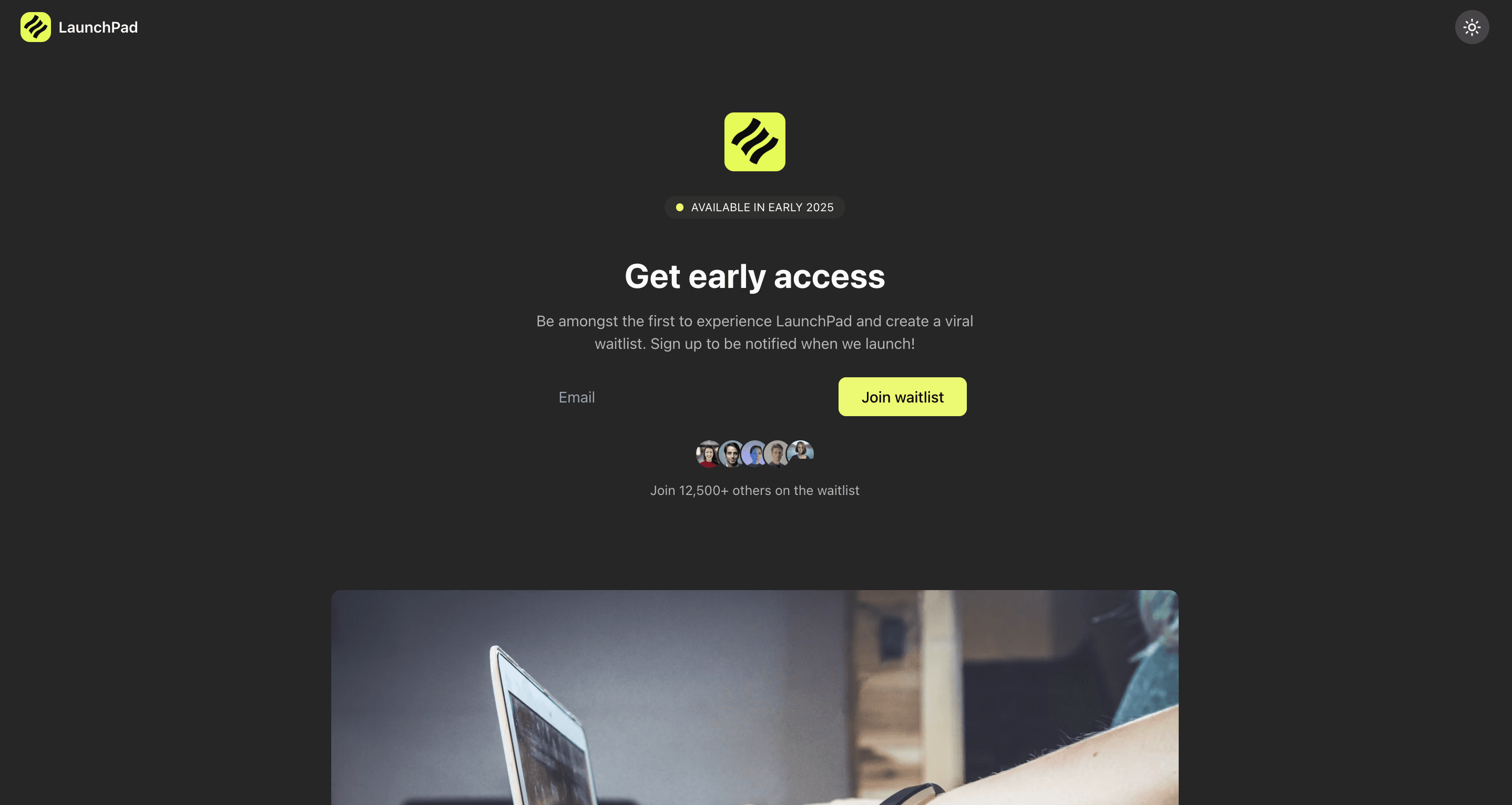
One of the easiest wins is placing a form in your header bar, often called a "hello bar" or "sticky bar." This is that thin strip at the very top of your site that stays put as users scroll. It keeps your call-to-action in sight without being obnoxious.
This spot is perfect for site-wide offers, like a general newsletter subscription or a juicy discount. An e-commerce store, for example, could have a header bar that says, “Get 15% off your first order. Sign up and we’ll email your code instantly.” It's direct, valuable, and impossible to ignore.
Don't sleep on the website footer, either. It’s prime real estate. Anyone who scrolls all the way to the bottom of a page is clearly interested. Placing a simple sign-up box here—something like, "Get our best tips and updates delivered weekly"—is a brilliant way to capture this highly motivated segment of your audience.
In-Content Forms That Feel Like Part of the Story
Embedding an opt-in form directly within your content is a powerhouse move. It lets you capture readers at their absolute peak interest. Think about it: when someone is absorbed in a blog post about a specific problem, an offer directly related to that topic feels less like an ad and more like a helping hand.
Let’s say you’ve just written a detailed guide on creating a social media content calendar. Halfway through, you could embed a form offering a free, downloadable content calendar template. The copy could be as simple as, “Want to put this into practice? Grab our free Trello template and get started in minutes.”
By aligning the offer with the surrounding content, you provide an immediate, practical solution to the very problem the reader is trying to solve. This contextual relevance can make your conversion rates skyrocket.
This tactic works so well because it builds on the reader's momentum. They already see you as a credible expert because they're learning from your content. Offering them a relevant tool at that exact moment is one of the most effective list-building techniques out there. It's a fundamental part of a broader approach, and you can dive deeper into similar tactics in our guide to conversion rate optimization strategies.
Popups That Add Value, Not Annoyance
Popups get a bad rap, but that’s because most are poorly executed. When used intelligently, they are list-building goldmines. The secret is all in the timing and relevance. Instead of blasting a popup the second someone lands on your site, use smart triggers based on user behavior.
Here are a few types of popups that actually work:
Exit-Intent Popups: This is your last-ditch effort to win someone over. When their cursor moves toward the exit or back button, a popup appears with one last compelling offer. A SaaS company might offer an extended free trial; a blogger could offer their most popular e-book.
Time-Based Popups: These are set to appear after a visitor has been on a page for a specific amount of time, like 45 seconds. This gives them a chance to get a feel for your content before you ask for their email.
Scroll-Based Popups: These trigger only after a user has scrolled a certain percentage down the page, which is a strong signal that they're invested in what you have to say.
In all of this, remember that your forms have to look great and work flawlessly on every device. Today, over half of marketers (54%) personalize their email content. When emails are responsively designed, that corresponds with a 15% increase in unique mobile clicks. This shows that a mobile-first approach to your forms isn't just a "nice-to-have"—it directly impacts your results. The goal is to make signing up completely effortless, no matter where your visitor is coming from.
How to Segment Your List from Day One
A lot of people treat segmentation like an "advanced" tactic—something they’ll get around to eventually. Frankly, that’s one of the biggest mistakes you can make.
Starting to segment from day one isn't just a smart move; it’s a foundational habit that pays off immediately. It’s the difference between shouting into a void with generic email blasts and starting a real, one-on-one conversation.
When you segment early, you start understanding your subscribers from their very first click. That initial bit of information is pure gold. It lets you send a hyper-relevant welcome email that speaks directly to their needs, proving instantly that you're worth their attention. This simple act dramatically boosts engagement and slashes unsubscribe rates right out of the gate.
Let Your Subscribers Segment Themselves
The easiest way to get started? Let new subscribers do the work for you. You don’t need complicated tools or a data science degree—you just need to offer clear choices. One of the most effective ways to do this is by creating different lead magnets for different interests or skill levels.
For example, imagine a digital marketing blogger. They could offer two separate guides: one called "The Beginner's Guide to SEO" and another titled "Advanced Link Building Strategies."
When someone downloads one of those guides, you automatically tag them. Just like that, you know who’s a beginner and who’s an expert, all without having to ask a single question. This simple tag allows you to tailor all your follow-up communication perfectly.
Segmentation isn’t about creating more work for yourself. It’s about creating more relevant experiences for your audience, which in turn makes your marketing more effective and your life easier.
That initial tag can shape their entire journey with you. The "beginner" gets a welcome series breaking down core concepts, while the "advanced" subscriber receives emails on nuanced tactics and fresh industry news. Both people feel understood and get immediate, tangible value.
Use Your Signup Forms to Gather Intel
Here’s another incredibly simple yet powerful strategy: add one insightful question to your opt-in form. The key is to keep it brief and optional, but make it count. The goal is to collect one piece of data that tells you why they’re signing up.
A business coach, for instance, could add a simple multiple-choice question to their form: "What's your biggest business challenge right now?"
Finding more clients
Improving my productivity
Scaling my operations
Boom. Every new subscriber is instantly categorized by their main pain point. This lets you create customized content paths that actually solve their problems. Someone who picked "Finding more clients" can receive case studies and lead generation tips, while the person focused on "Scaling" gets content about systems and hiring.
This approach works. Marketers who really want to stand out focus on segmentation—in fact, it's been identified as the most effective tactic by 78% of professionals. The proof is in the numbers: segmented email campaigns generate 30% more opens and a whopping 50% more click-throughs. It’s clear that relevance drives results. You can discover more statistics about email marketing effectiveness to see just how powerful this is.
Why Early Segmentation Is Crucial for Long-Term Growth
By implementing these small steps from the beginning, you set a powerful precedent for your business. You aren't just building an email list; you're building a rich database of individual preferences, needs, and interests. As your list grows, this data becomes one of your most valuable assets.
Think about it. A year from now, when you're launching a new product, you won't have to send a generic announcement to everyone. Instead, you can send a perfectly tailored message to the exact segment of your audience that’s most likely to buy. This kind of precision leads to higher conversion rates, more revenue, and a much stronger relationship with your subscribers because you consistently respect their inbox.
So, where do you start?
Offer varied lead magnets: Create distinct offers that appeal to different parts of your audience.
Add a single question to forms: Ask about their biggest challenge, their role, or their primary interest.
Tag subscribers based on behavior: If you're using a platform like Alpha, you can tag users based on the page they signed up on, giving you immediate clues about their interests.
Make segmentation a non-negotiable part of your list-building process from day one. You'll be creating a sustainable system for growth that’s built on relevance and trust.
Growing Your Email List Beyond Your Website

If your website is the only place people can sign up for your email list, you're leaving a ton of growth on the table. Think of it this way: your website is your home base, but your audience is scattered all over the internet. To really accelerate your list growth, you need to go meet them where they already hang out.
Relying solely on website visitors means you’re playing a passive game, waiting for people to find you. The real magic happens when you start actively fishing in other ponds—social media, other people’s blogs, and collaborative events.
Turn Social Media Profiles into Subscriber Magnets
Your social media profiles are some of the most valuable, underused real estate you own. That little "link in bio" section? It’s a direct pipeline to your email list. Instead of just sending people to your generic homepage, point that link to a landing page with your absolute best lead magnet.
I've seen coaches, for instance, swap out their homepage link on Instagram for a free "5-Day Mindset Challenge." The offer is punchy, relevant to their content, and gives followers an immediate reason to click and subscribe. It transforms your profile from a simple gallery into a lead-generating machine.
Don't just set it and forget it, though. You need to actively promote your lead magnets in your content. A few tactics that work really well are:
Post a sneak peek: Share a killer tip, a beautiful graphic, or a short excerpt from your guide. Then, tell people they can get the whole thing by hitting the link in your bio.
Run a quick poll: Ask your audience a question about a pain point they're facing. Once the results are in, follow up by offering your lead magnet as the perfect solution.
Use short-form video: Create a quick Reel or TikTok that breaks down the value of your free resource. A simple "Here are 3 things you'll learn..." can be incredibly effective at driving traffic to your sign-up page.
Tap into Other People's Audiences
Want the fast track to list growth? Get in front of an audience someone else has already spent years building. Strategic partnerships let you borrow credibility and reach a new, highly relevant group of people who are primed to be interested in your work.
Co-hosting a webinar is a classic for a reason. Find a business that serves a similar audience but isn't a direct competitor. For example, a web designer could team up with a copywriter for a joint webinar on "The Anatomy of a High-Converting Homepage." You both promote it to your lists, and you both get the registration list. It's a true win-win that can add hundreds of new subscribers overnight.
Guest posting is another fantastic way to tap into new audiences. But don't just write a great article and call it a day. The real power is in your author bio. Create an exclusive freebie just for that blog's audience and link to it there.
This simple act of customization shows you went the extra mile. If you write a guest post for a major marketing blog, for instance, your bio could offer a unique "Advanced SEO Checklist" that's not available anywhere else. This targeted approach gives readers an irresistible reason to subscribe, turning a single piece of content into a steady stream of high-quality leads.
Tracking and Optimizing Your List Building Efforts
Throwing up a sign-up form and hoping for the best is a rookie mistake. The real magic in list building happens after the setup—when you start paying close attention to what’s working and what’s not, then tweaking your approach based on real data.
This isn’t about drowning in spreadsheets or tracking every possible metric under the sun. It's about focusing on a few key numbers that tell you the real story of your list growth.
Key Metrics That Actually Matter
At the end of the day, you just need to know one thing: how good are you at turning a casual visitor into an engaged subscriber? That story starts with your opt-in forms.
Here are the numbers I always keep an eye on:
Opt-In Form Conversion Rate: This is your north star. It's simply the percentage of people who see your form and decide to sign up. If 1,000 people see your pop-up and 50 subscribe, you have a 5% conversion rate.
Conversion Rate by Form Type: Don't lump everything together. You need to know how your different forms are performing against each other. It’s common to find that an in-content form converts at 7%, while that old sidebar form is sitting at a dismal 1%.
New Subscriber Engagement: What happens after they sign up? Pay attention to the open and click-through rates on your first few welcome emails. If people are opening them right away, you know you’re attracting the right crowd.
A low conversion rate on a specific form is a signal. It might mean the copy is weak, the design is clunky, or the offer just isn't hitting the mark. Digging into these numbers moves you from guesswork to strategy. You can get a much deeper look into this process by learning how to analyze website traffic.
The Power of A/B Testing
Once you have a baseline, it's time to start improving. This is where A/B testing (or split testing) comes in. It sounds technical, but it’s a simple idea: create two versions of the same form, show each to a different group of visitors, and see which one gets more sign-ups.
The secret to effective optimization is to test one small change at a time. If you change the headline, button color, and image all at once, you’ll have no idea which element was responsible for the lift in conversions.
Start with your highest-impact elements. Your headline is a great place to begin. Imagine you're testing the headline on your most popular blog post's opt-in form:
Version A (The Original): "Join Our Newsletter"
Version B (The Challenger): "Get Our 10 Best SEO Tips Instantly"
Let the test run for a week or two, and the data will give you a clear winner. Even a seemingly small bump from a 3% to a 4% conversion rate can translate into hundreds of new subscribers over a few months.
Once you have a winning headline, you can move on to testing the button text, the imagery, or even the lead magnet itself. This constant cycle of testing and improving is what really builds momentum and drives unstoppable list growth.
Got Questions About List Building? We've Got Answers.
As you dive into growing your email list, you're bound to run into a few common questions. I see them pop up all the time. Let's walk through some of the most frequent ones so you can move forward with a clear plan.
How Often Should I Actually Email My List?
There’s no single right answer here, but consistency is what really matters. If you're just starting out, aiming for one email a week is a solid baseline. It's frequent enough to keep you on your subscribers' radar without flooding their inboxes.
The real game-changer is making sure every single email delivers genuine value. Keep a close eye on your engagement rates. If your open and click rates are looking healthy, you might experiment with sending a little more often. But if you see those numbers start to slide, take it as a sign to ease up and double down on quality over quantity.
What’s the Deal with Single vs. Double Opt-In?
This is a classic debate, and it really comes down to a trade-off between speed and quality. With a single opt-in, someone is added to your list the second they hit that subscribe button. It's frictionless and fast, which helps your list grow quickly.
A double opt-in, on the other hand, adds an extra step. After subscribing, the person gets an email asking them to click a link to confirm they really want to be on your list.
While single opt-in gets you more subscribers faster, double opt-in builds a list of people who are genuinely more engaged. They've raised their hand twice, which leads to better deliverability and fewer people marking you as spam.
Is It Okay to Just Buy an Email List to Kick things Off?
Let me be crystal clear on this one: no. You should never, ever buy an email list. I can't stress this enough. These lists are almost always garbage—filled with stale contacts who never asked to hear from you.
Trying to email a purchased list is a recipe for disaster. You'll see:
Abysmal open and click-through rates.
A flood of spam complaints that will tank your reputation.
Your domain potentially getting blacklisted by email providers like Gmail and Outlook.
It’s a surefire way to poison your sender reputation for the long haul, making it nearly impossible to reach the inboxes of people who actually want your emails. Building your list organically is the only way to win this game.
Ready to put all this into action? With Alpha, you can use AI to get a beautiful, high-converting website up and running in just a few hours. It comes with optimized forms built right in, so you can start growing your email list from day one. Create your website with Alpha today.
EXAMPLES
Build beautiful websites like these in minutes
Use Alpha to create, publish, and manage a fully functional website with ease.