



How to Create Website Mockups People Actually Love
Learn how to create website mockups that bridge the gap between idea and reality. Our guide covers tools, principles, and developer handoff.
Build beautiful websites like these in minutes
Use Alpha to create, publish, and manage a fully functional website with ease.
So, how do websites actually make money? It's a question I get all the time. The simplest way to think about it is turning your website's traffic and content into a real-world asset.
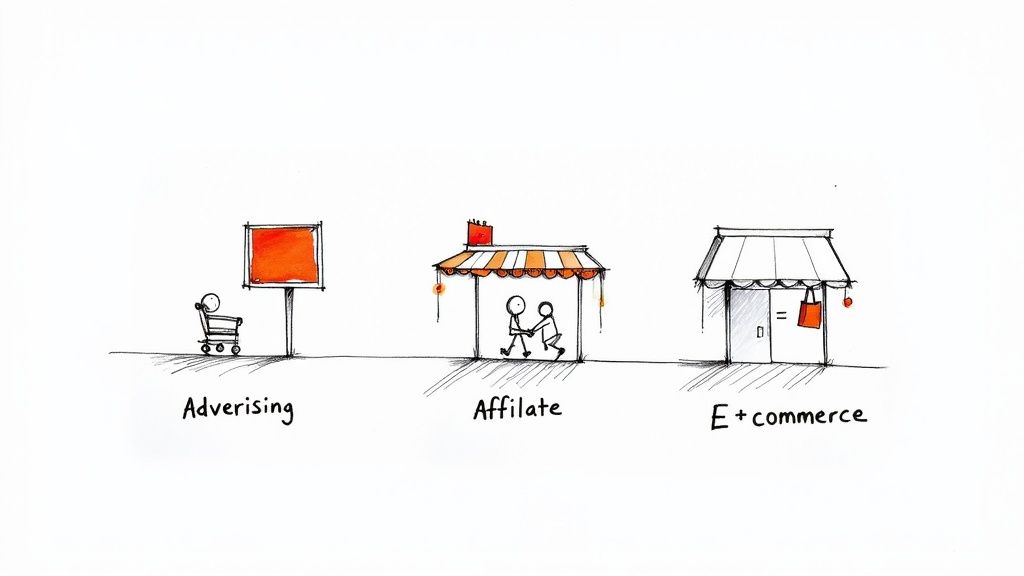
Imagine your website is a piece of prime real estate. You could rent out space for billboards (advertising), get a kickback for recommending the best coffee shop in town (affiliate marketing), or open your own boutique right on the corner (e-commerce). There's no single "right" way—it's all about finding the business model that fits your audience, your content, and your goals.
Your Quick Guide to Website Monetization
Ever found yourself scrolling through a favorite blog or using a handy online tool and wondered, "How do they keep the lights on?" It's not magic. It's a deliberate strategy, a specific business model chosen to turn visitors into revenue. At its heart, that's all website monetization is: the process of making an income from the people who visit your site.
But here’s the thing: the methods are incredibly varied. Getting a handle on how websites make money is your first real step toward building something profitable yourself. Each path has its own pros, cons, level of effort, and, of course, potential for income. Some models can become a nice source of passive income once set up, while others, like selling your own products, require constant hands-on work.
The journey starts when you stop seeing your site as just a collection of pages and start seeing it as a valuable digital asset. To help you figure out what makes the most sense for you, we'll walk through the most common and effective models out there.
For Content Creators: If you’re running a blog, a niche site, or a news hub, models like advertising and affiliate marketing are a natural fit. They play directly off the content you're already creating and the trust you've built with your audience.
For Entrepreneurs: Got a great product idea? Building an e-commerce store or selling digital goods gives you a direct line to your customers and much higher profit margins.
For Experts: If you're a specialist in your field, you can package that knowledge. Think consulting services, exclusive membership communities, or in-depth online courses that create a sustainable, high-value business.
To give you a bird's-eye view, I've put together a quick comparison table. It breaks down the most popular monetization strategies to help you see how they stack up against each other.
Website Monetization Models At A Glance
Choosing the right strategy really comes down to your niche, how much traffic you have (or plan to get), and how much time you can realistically commit. A viral entertainment blog might do brilliantly with display ads, whereas a site for a B2B consultant will almost certainly make more money by selling high-ticket services directly.
Monetization Model | How It Works | Revenue Potential | Effort Level |
|---|---|---|---|
Advertising | You sell space on your site for ads, usually managed by an ad network. | Low to High | Low |
Affiliate Marketing | You earn a commission for promoting another company's products or services. | Low to High | Medium |
E-commerce | You sell your own physical or digital products directly to your audience. | Medium to High | High |
Subscriptions | You charge a recurring fee for access to premium content, features, or services. | Medium to High | High |
This table is just the starting point. In this guide, we'll dive deep into each of these models, giving you the full picture so you can figure out which one aligns perfectly with your vision.
Turning Clicks Into Cash With Advertising
Advertising is the classic, time-tested answer to "how do websites make money?" The concept is simple: think of your website as prime digital real estate. By placing ads on your pages, you're essentially renting out small plots of that land to businesses eager to get in front of your audience.
For most website owners, the easiest on-ramp is an ad network. A platform like Google AdSense plays matchmaker, automatically filling your ad spaces with ads from its huge inventory. You just add a small snippet of code to your site, and the network handles all the heavy lifting—finding advertisers, serving the ads, and processing payments.
Understanding Ad Revenue Models
Not all ad clicks and views are created equal. Your earnings will almost always come from one of two models, and knowing the difference helps you forecast your potential income.
Cost Per Click (CPC): You get paid every time a visitor clicks an ad on your site. This works great if you have a highly engaged audience that's genuinely interested in the products and services being advertised.
Cost Per Mille (CPM): "Mille" is just a fancy word for thousand. With this model, you earn a set amount for every 1,000 times an ad is shown on your pages. This is a fantastic option for sites with tons of traffic, since you make money whether anyone clicks or not.
When you're starting out, a good ad network will usually figure out which model earns you more and optimize for it automatically. Down the road, as your site becomes more authoritative, you can even start making direct deals with brands for a flat monthly fee.
The real art of advertising is striking a balance between revenue and user experience. If you plaster your site with obnoxious ads, you'll drive people away. The goal is to weave ads into the experience, not let them sabotage the great content your visitors came for.
Getting Started With Ads On Your Site
Placing ads is technically easy, but making real money from them requires a bit of strategy. If you just slap them anywhere, you’ll run into "banner blindness," where people have trained themselves to completely ignore anything that looks like an ad.
Think about placement. Ads placed right in the middle of an article (in-content ads) or sticky banners that stay on the screen as someone scrolls tend to outperform the old-school sidebar ad. You have to keep an eye on your analytics to see which spots and formats bring in the most cash without annoying your users.
Better ad performance is directly linked to a better website. Brushing up on conversion rate optimization strategies can teach you how to design layouts that not only keep users happy but also make your ads more visible and clickable. And if your site relies heavily on video, it’s worth looking into technologies like dynamic ad insertion to serve more relevant ads to your viewers.
At the end of the day, advertising is a numbers game. While it’s one of the easiest models to set up, it takes a ton of traffic to generate significant income. Your first job is always to create amazing content that pulls in a crowd. Do that, and the ad revenue will naturally follow.
2. Earning Commissions Through Affiliate Marketing
Ever thought about getting paid just for recommending products you already use and love? That's the simple but powerful idea behind affiliate marketing. It’s easily one of the most popular ways to start making money with a website. You essentially act as a trusted guide for your audience, earning a commission whenever someone buys something through your unique referral link.
This model turns your content into a cash-generating machine without you ever having to create a product or handle inventory. If you run a blog about home coffee brewing, you can link to your favorite espresso machine. If your site reviews hiking gear, you can earn a cut from sales of the boots you recommend. It’s a perfect, natural fit for anyone who’s already creating helpful content.
How Does It Actually Work?
The mechanics are pretty simple. You start by joining an affiliate program—this could be a massive network like Amazon Associates or a smaller, direct program from a brand you admire. Once approved, you get special, trackable links for their products.
When a visitor clicks one of these links on your site, a small file called a cookie is saved on their browser. This cookie has a lifespan, often 30 to 90 days. If they make a purchase anytime within that window, the cookie tells the company that you sent them, and you get credit for the sale. Boom—commission earned.
It's a system that works best when it's built on a foundation of trust. You're not just pushing products; you're pointing your audience toward solutions you genuinely stand behind.
Affiliate marketing isn’t about plastering links all over your site. It’s about building authority and becoming the go-to resource in your niche. When your audience trusts your recommendations, they’ll actually want to buy through your links. It’s a win for you, a win for them, and a win for the merchant.
Finding the Right Affiliate Programs
Your success really comes down to choosing the right partners. Picking products that align with your audience and your content is non-negotiable. Promoting a random, high-commission product that doesn't fit your niche is a surefire way to lose the trust you've worked so hard to build.
Here’s where to look:
Large Affiliate Networks: Think of platforms like ShareASale, ClickBank, and CJ Affiliate as giant marketplaces. They connect you with thousands of brands under one roof, making it easy to find great products and manage all your partnerships in one dashboard.
Direct Brand Programs: Lots of companies—especially in the software and e-commerce space—run their own in-house affiliate programs. These can be a goldmine, sometimes offering higher commission rates because there’s no middleman network taking a slice of the pie.
Amazon Associates: As the biggest online retailer on the planet, Amazon’s program is a fantastic place to start. It’s easy to get approved, and you can promote millions of products. It’s so common, in fact, that a great first step is to learn how to make money with Amazon affiliate marketing.
Weaving Recommendations Into Your Content
The real trick to making this work is to make your affiliate links feel like a helpful, natural part of your content, not a disruptive sales pitch. Instead of just dropping a link, create content that solves a real problem for your reader. Think detailed reviews, in-depth tutorials, or "best of" comparison posts.
This is where a solid website platform makes all the difference. Modern content management systems (CMS) have completely changed the game, allowing creators to produce high-quality, monetizable content at scale. It’s no wonder over 76 million websites use a CMS, with WordPress alone owning a massive 62.9% market share. Platforms like these give you the power to seamlessly integrate your affiliate links into articles your audience will actually find valuable. You can dive deeper into the stats on the dominance of CMS platforms and their impact.
To hit the ground running, you can build your entire affiliate-focused website with Alpha. The platform's AI-powered design tools can help you whip up professional-looking review pages and listicles in minutes. Plus, its built-in SEO features will help ensure your content actually gets discovered by people who are ready to buy.
Selling Your Own Products and Services
While ads and affiliate links are great ways to get started, the real money often comes from selling your own stuff. This is where you shift from being a billboard for other companies to becoming a direct sales channel. It puts you in the driver's seat.
Yes, it's more work upfront. But the payoff can be massive, giving you full control over your brand, pricing, and—most importantly—your relationship with your customers.
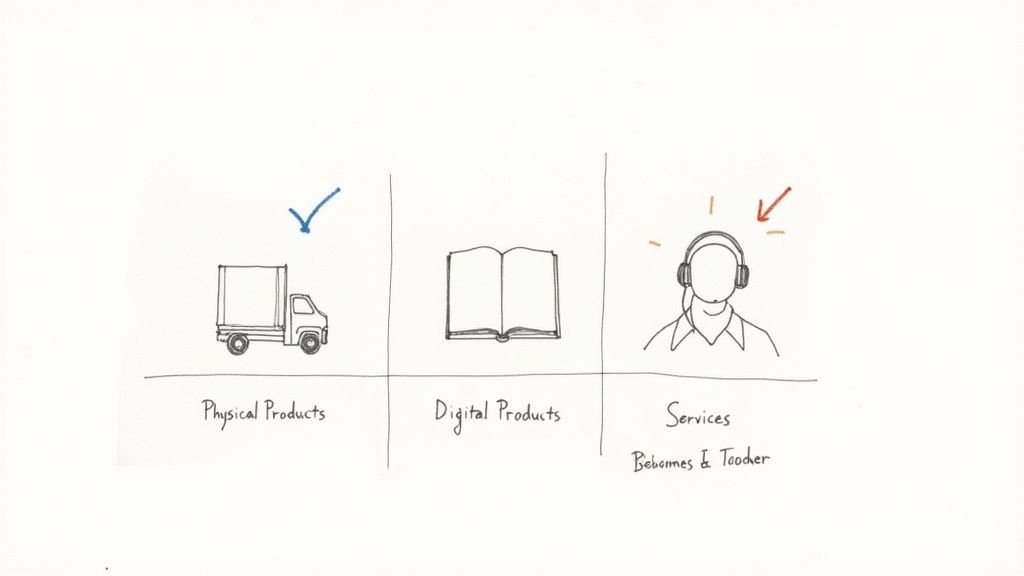
This path typically breaks down into three main roads: selling physical goods, digital products, or your own time and expertise as a service. Which one is right for you? That depends on your niche, your audience, and what you’re passionate about creating.
E-commerce and Physical Products
Let's start with the most traditional route: selling actual, physical things from an online store. We're talking about everything from t-shirts and handmade jewelry to curated subscription boxes. This means you'll be handling inventory, shipping, and customer service. It’s a real, tangible business.
The e-commerce world is booming. The global market is on track to blow past $6.86 trillion by 2025, and a mind-boggling 2,100 new online stores pop up every single day. The opportunity is huge. If you want to dive deeper into the numbers, you can review comprehensive e-commerce statistics and market insights.
Getting a storefront online is easier than ever. You just need a platform to manage your products, take payments, and track orders. To get started on the right foot, check out our guide to the best website builders for online stores to find a tool that fits your vision.
Digital Products for Infinite Scalability
Looking for a model with incredible profit margins? Digital products are your answer. You create something valuable once—an ebook, a video course, a software tool, or a pack of design templates—and you can sell it forever with almost zero overhead.
The magic here is in the margins. No shipping, no manufacturing, no inventory. Just pure profit after your initial time investment. It’s the perfect fit for experts who can package their knowledge into a downloadable solution that solves a real problem for their audience.
The secret to a winning digital product is simple: solve a specific pain point for your audience. Use your free content to build trust, then offer your digital product as the complete, structured solution they're happy to pay for.
Your main cost is the time and expertise you pour into creating a top-notch product. But once it's done, the sales process can run on autopilot, generating income for you 24/7.
Offering Your Professional Services
If you've already built up a reputation in your field, your website is the ultimate tool for selling your skills directly. This could be anything from consulting and coaching to freelance writing or web design. For many, it's the quickest way to start earning serious money, even with a smaller audience.
The trade-off is that you're selling your time, which has a natural ceiling—you can't clone yourself (yet!). The upside? It costs almost nothing to get started and allows you to build powerful, long-term relationships with clients who already see you as an expert.
Here are a few popular ways to sell your expertise:
Consulting: Offer one-on-one strategic advice in your area of expertise, whether it’s marketing, finance, or business growth.
Coaching: Provide personalized guidance to help people hit their personal or professional goals.
Freelance Work: Sell your skills on a per-project basis—writing blog posts, designing logos, or coding a custom feature for a client.
Think of your website as your digital handshake, portfolio, and sales pitch all rolled into one. With Alpha, you can easily set up a professional services page, add a booking calendar to manage appointments, and showcase glowing testimonials to win over new high-value clients.
To help you decide which path might be the best fit, here's a quick breakdown of how these three models stack up against each other.
Comparison of Direct Sales Models
Aspect | E-commerce (Physical) | Digital Products | Services |
|---|---|---|---|
Upfront Cost | Moderate to High (inventory, supplies) | Low to Moderate (your time is the main cost) | Very Low (mostly time and marketing) |
Scalability | Moderate (limited by inventory/shipping) | High (sell infinite copies with no extra cost) | Low (limited by the hours in your day) |
Profit Margins | Lower (cost of goods, shipping, storage) | Very High (minimal to no recurring costs) | High (trading expertise for money) |
Ongoing Management | High (order fulfillment, inventory, returns) | Low (mostly automated, some customer support) | High (direct client work, project management) |
Best For | Creators, curators, and brands with a tangible product | Experts, educators, and creators with knowledge to share | Experts, freelancers, and consultants with a specific skill |
Ultimately, the best model is the one that aligns with your strengths and what your audience truly needs. Whether you're shipping a physical product, selling a downloadable guide, or offering your expert advice, you're building a real business on the foundation of your website.
6. Building Recurring Revenue with Memberships
Imagine knowing, with a good degree of certainty, exactly how much money your website will make next month. That’s the real power behind the membership model. Instead of constantly chasing one-time sales, you’re building an exclusive club for your biggest fans, who happily pay a regular fee for ongoing value.
This approach brings a level of stability that most other monetization methods just can't touch. It flips your website from a simple content hub into a predictable, sustainable business. The whole game is about offering something so valuable that your audience sees it as a no-brainer to pay for it month after month.
But what does that "value" actually look like? It can take a few different forms, depending on what your audience truly needs.
What’s Your Membership "Thing"?
Not all membership sites are created equal. The ones that really crush it tend to zero in on one of three core promises. Figuring out which one fits your brand is the first step.
Access to a Tool (SaaS): This is the classic "Software as a Service" play. Members pay a recurring fee to use your software—think of a slick project management tool or a niche design app. The value here is pure utility.
Exclusive Content: This is all about putting your very best stuff behind a paywall. We're talking paid newsletters packed with deep industry insights, premium articles, or in-depth video courses that free users can't access.
A Private Community: Here, the value is all about connection. People pay for access to a private forum, a dedicated Slack channel, or a Discord server where they can network with peers, ask tough questions, and get direct access to you.
The psychology here is simple but powerful: you're creating a sense of belonging and providing a continuous solution to a nagging problem. Nail that, and your members will stick around for the long haul.
The goal of a membership model isn't just to get a customer; it's to keep one. Success hinges on consistently delivering value that outweighs the monthly cost, turning subscribers into long-term advocates for your brand.
Keeping Your Membership Growing
Getting a membership site off the ground is one thing. The real challenge—and where the money is truly made—is in attracting new members and keeping the ones you have. This means being smart about your pricing, engagement, and how you bring people in the door.
A fantastic strategy for this is the freemium model. You give away a basic version of your content or tool for free, which acts as a killer lead magnet. Once people get a taste of the value you provide, they're far more likely to pull out their wallets for the premium version.
Another piece of the puzzle is keeping members from leaving, a metric known as churn. High churn can absolutely sink a subscription business. To keep folks engaged, you have to keep the value flowing. That could mean adding fresh content, hosting members-only Q&A sessions, or sparking lively community discussions. You have to constantly remind them why their subscription is worth it.
Communicating all this value is crucial, and email is your best friend here. Our guide on building an email list lays out the exact steps for growing a subscriber base you can then nurture and convert into paying members.
With a tool like Alpha, you can easily spin up landing pages for your different membership tiers and plug in forms to capture leads for your freemium plan. Getting the tech side handled so smoothly lets you focus on what really matters: creating an amazing experience that keeps your members coming back.
6. Choosing the Right Monetization Strategy
Now that you've seen all the ways a website can make money, the big question looms: which one is right for your site? The truth is, there's no single "best" method. The secret lies in matching your strategy to four key things: your niche, your audience, your traffic levels, and what you personally want to achieve.
Think of it like picking the right tool for a job. You wouldn't use a sledgehammer to hang a picture frame. A high-traffic entertainment blog might thrive on ad revenue, while a site offering specialized business advice could make a fortune selling a high-ticket course. The right approach depends entirely on what you're building.
Start by Assessing Your Core Assets
Before you jump into a strategy, you need to get real about what you're working with. A hobby blog that gets tons of visitors is a completely different beast than a professional portfolio site with low, but highly targeted, traffic. They simply can't be monetized the same way.
Ask yourself these honest questions:
What's my niche? A blog about investing can earn way more from ads and affiliate links than a general-interest blog. Some topics are just naturally more profitable than others.
Who is my audience? Are they dropping by for a quick answer, or are they looking for an in-depth solution to a serious problem? Knowing their motivation is key to offering something they’ll actually pay for.
How much traffic do I have? Some models, like display ads, are purely a numbers game. You need thousands upon thousands of visitors for the pennies to add up. On the other hand, you could sell a specialized service and be profitable with just a few hundred visitors a month.
Answering these questions gives you a reality check. If you have a brand-new site with very little traffic, don't even think about ads yet. Instead, focus on strategies that don't rely on huge numbers, like affiliate marketing for a few specific products or offering your own freelance service.
The most common mistake I see new website owners make is chasing a monetization model that doesn't fit where they are right now. Putting ads on a site with 500 monthly visitors is a waste of time. Your energy is much better spent building a direct relationship with that small, dedicated audience.
Don't Put All Your Eggs in One Basket
Relying on a single income stream is a recipe for disaster. What happens if a Google update tanks your search traffic and your ad revenue evaporates? Or if your top affiliate program suddenly slashes its commission rates? The smart move is revenue diversification—building several different income streams.
This doesn't mean you should try to do everything all at once. That's a surefire way to burn out. It's about layering your strategies over time to build a more resilient business.
A travel blogger, for instance, might build their income like this:
Start with affiliate marketing: Recommend the hotels, travel gear, and booking sites they genuinely use and love.
Add display ads: Once their traffic hits a solid number, like 50,000 monthly sessions, they can apply to a premium ad network for much higher payouts.
Create a digital product: After building trust, they can sell their own city guides, packing checklists, or travel-planning templates directly to their audience.
This diagram shows a decision tree that can help you think through which membership model—a fantastic source of recurring revenue—might work for you based on what you offer.
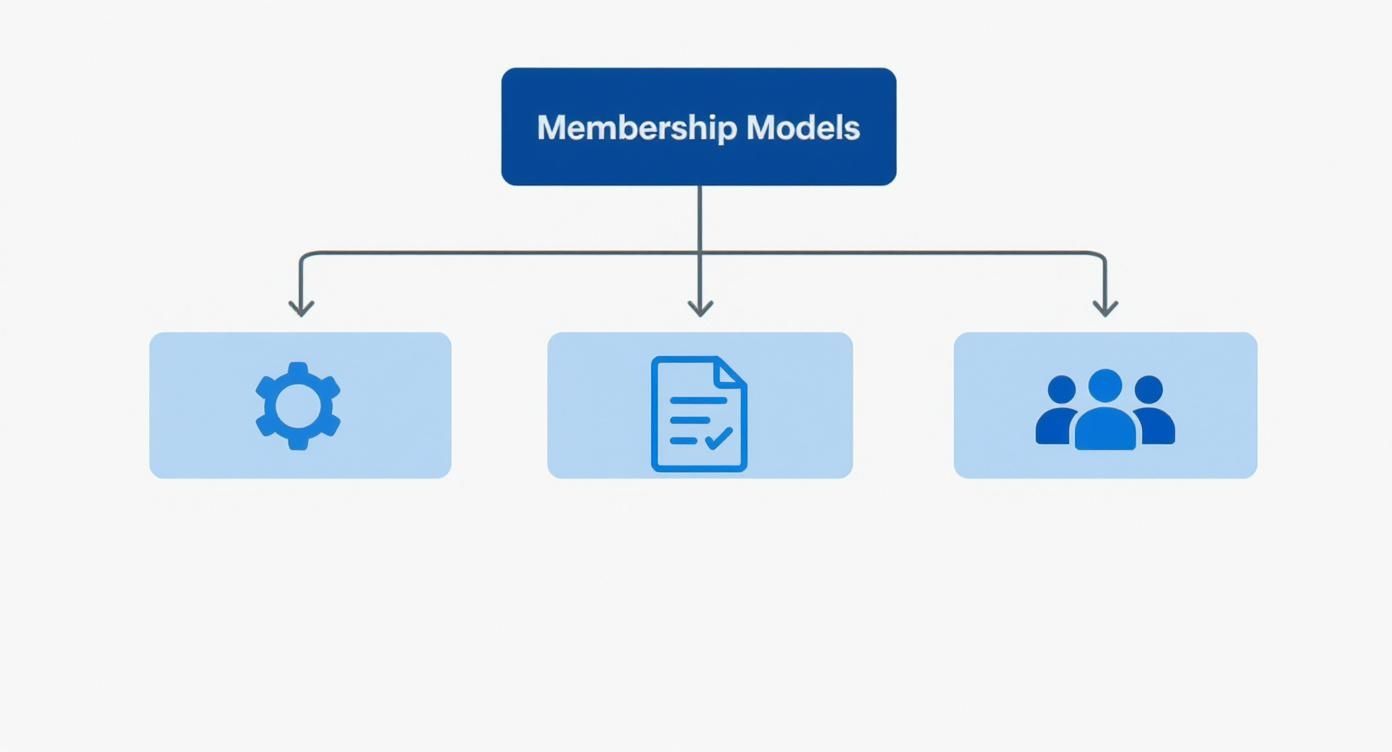
As you can see, the right model really depends on whether your core value comes from a tool, exclusive content, or building a community. Each path leads to a different, but powerful, way to earn recurring income.
The ultimate goal is to create a system where each revenue stream supports the others. This makes your website more stable and, ultimately, much more profitable. With Alpha, you can easily create the pages you need for any of these strategies—from in-depth affiliate reviews to high-converting sales pages for your digital products—all from one place.
Common Questions About Website Monetization
Jumping into the world of making money from your website can feel a little overwhelming. As you shift gears from building your site to actually earning from it, a few questions always pop up. Let's tackle the big ones head-on so you can move forward with confidence.
How Much Traffic Do I Need to Make Money?
There’s no magic number here, and honestly, anyone who gives you one is oversimplifying things. Your potential earnings are tied directly to how you choose to monetize, not just how many people show up. It's truly a case of quality over quantity.
If your game plan is display advertising, then yes, volume is the name of the game. You'll likely need tens of thousands of monthly visitors to see any meaningful income. Ad networks typically pay just a few dollars for every thousand views, so you need a lot of eyeballs for the math to work out.
But let's flip the script. Imagine you're selling a high-ticket online course or offering specialized consulting. You could build a very healthy business with just a few hundred dedicated visitors each month. In that scenario, a single sale is worth more than thousands of casual ad impressions.
The real key is to focus on the quality and engagement of your audience, not just the raw traffic stats. A small, loyal community that trusts your recommendations is almost always more valuable than a huge, passive crowd.
Can I Use Multiple Monetization Methods at Once?
Not only can you, but you absolutely should! This is called revenue diversification, and it’s one of the smartest moves you can make to create a stable, long-lasting online business. Putting all your eggs in one basket is just too risky.
Think about a successful food blogger. They often weave together several income streams seamlessly:
Display Ads: Bringing in passive income from all the people landing on their popular recipe pages.
Affiliate Links: Earning a commission by recommending the exact kitchen gadgets or specialty ingredients they use in their posts.
Digital Products: Selling their own e-cookbook directly to their most dedicated fans.
The trick is to make sure your methods work together and don't turn your site into a cluttered, confusing mess for your visitors. A good approach is to master one or two methods that feel natural for your content and audience. As you grow, you can layer in new income streams to build a much stronger financial foundation.
Which Monetization Model Is Best for a Beginner?
For most people just dipping their toes in the water, affiliate marketing is the most straightforward starting point. You don't have to worry about creating a product from scratch, managing inventory, or dealing with customer support. Your main job is to create fantastic content and recommend products you actually believe in.
Display ads, maybe through a network like Google AdSense, are also fairly simple to get up and running. But remember, they really only pay off once you have a good amount of traffic flowing in.
While those are great places to start, don't lose sight of the bigger picture. As you build your audience and establish your credibility, creating and selling your own digital product or service can be far more lucrative. It gives you total control over everything—your brand, your pricing, and your customer relationships. You go from being a promoter to a true business owner.
Ready to build a website that's perfectly designed for any monetization strategy? With Alpha, you can use AI to create stunning, professional pages for your blog, online store, or service business in just minutes. Turn your vision into a reality with Alpha today.
Build beautiful websites like these in minutes
Use Alpha to create, publish, and manage a fully functional website with ease.