
How to Create Website Mockups People Actually Love
Learn how to create website mockups that bridge the gap between idea and reality. Our guide covers tools, principles, and developer handoff.
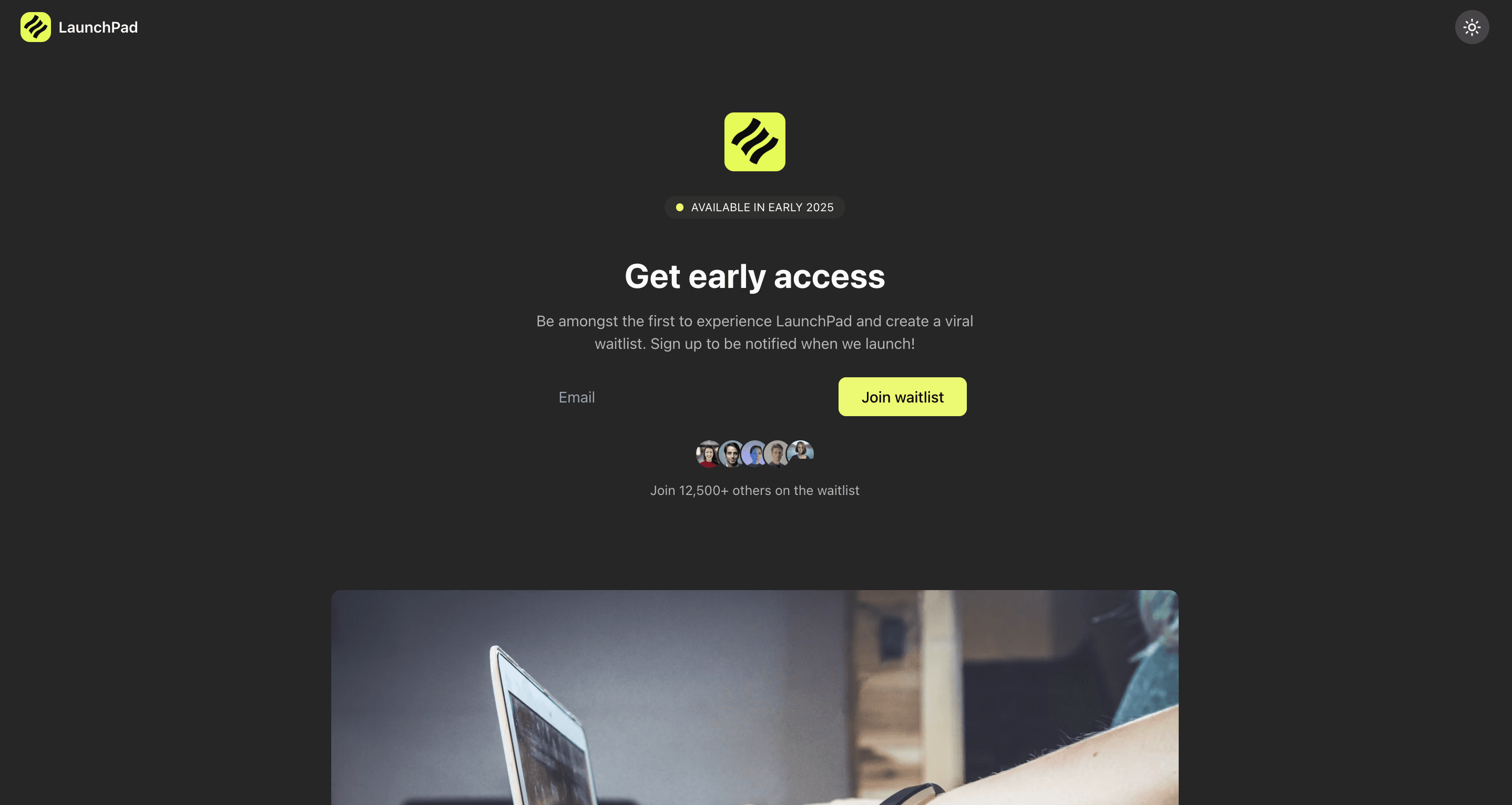
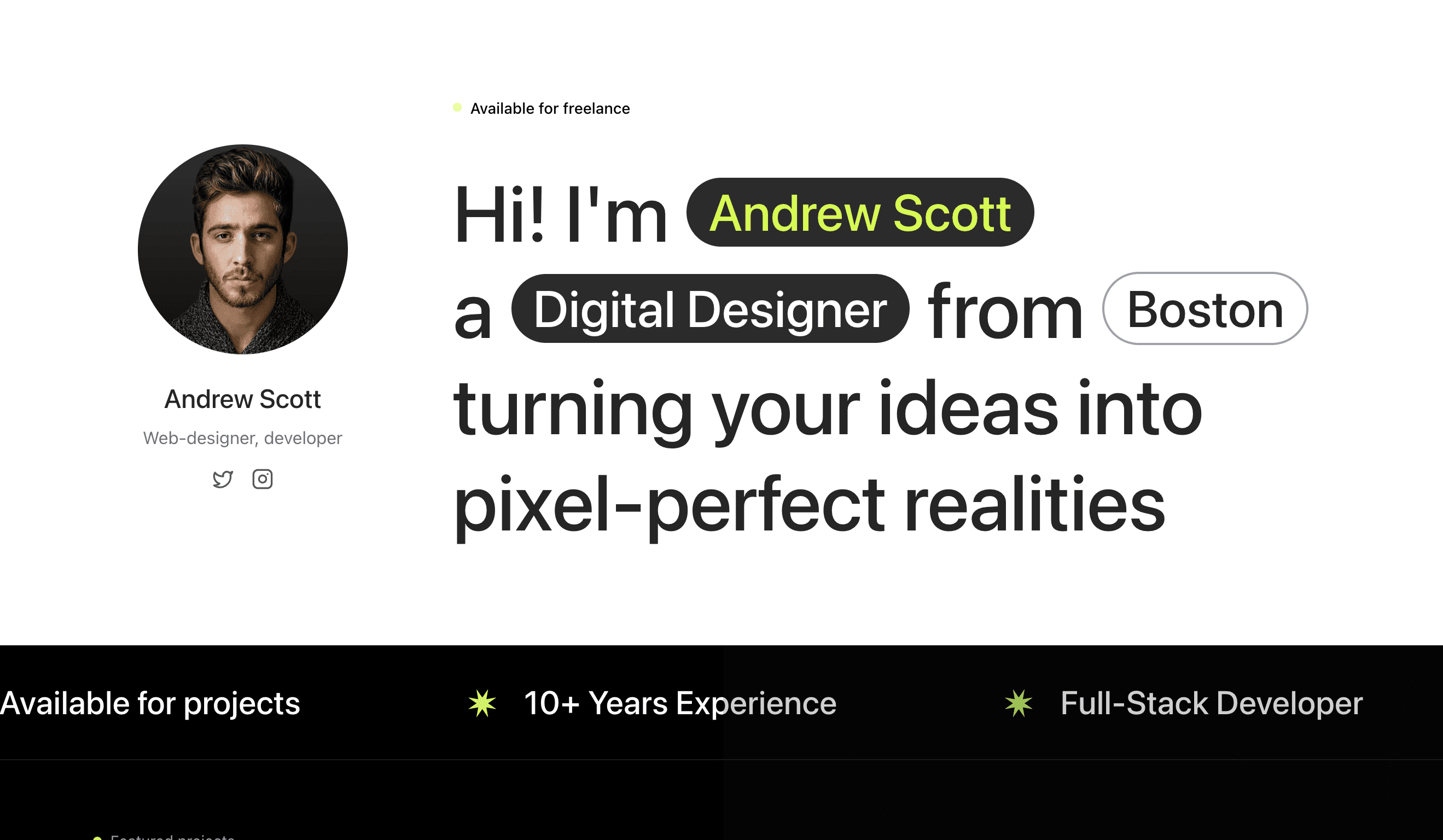
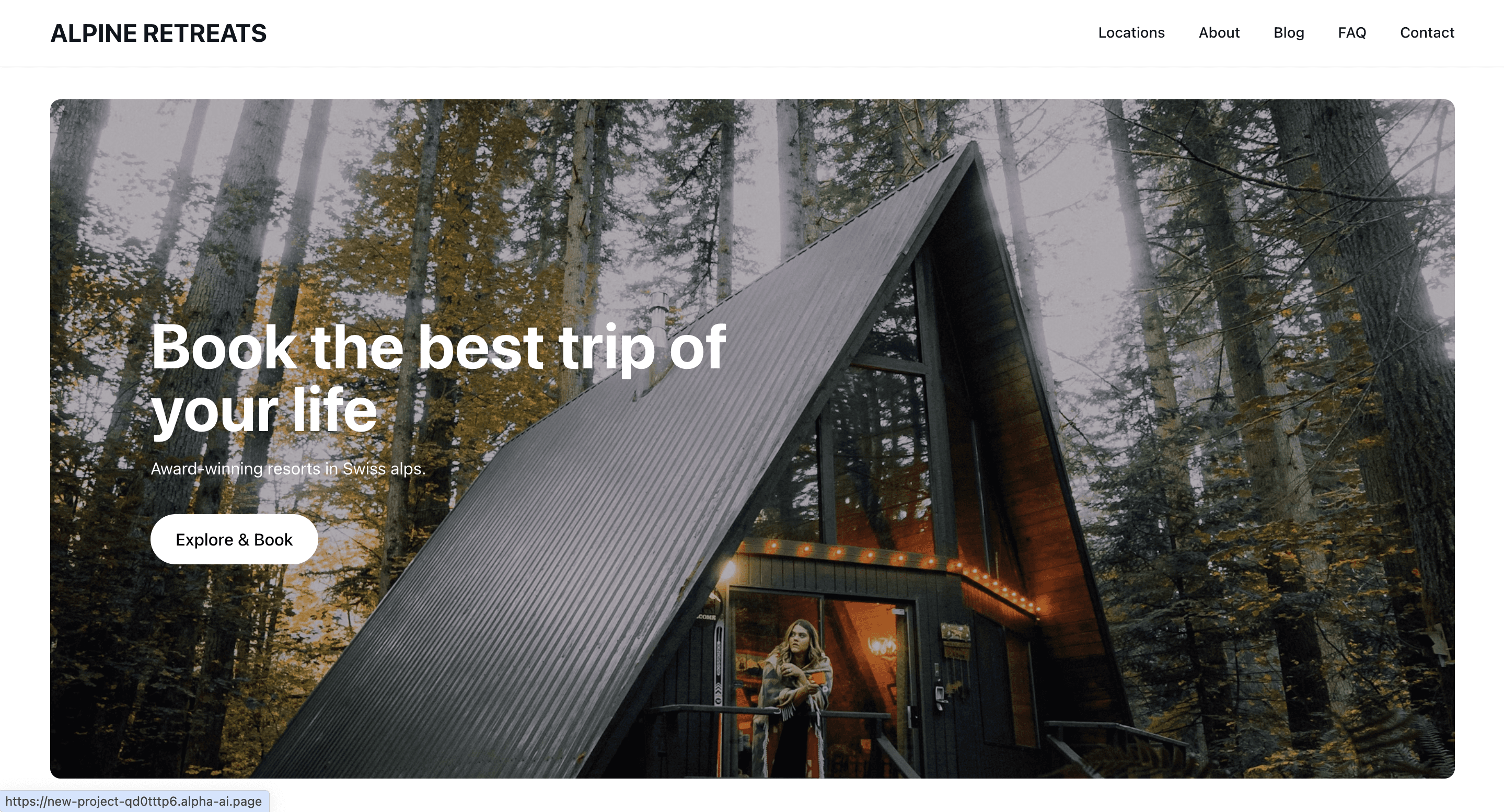
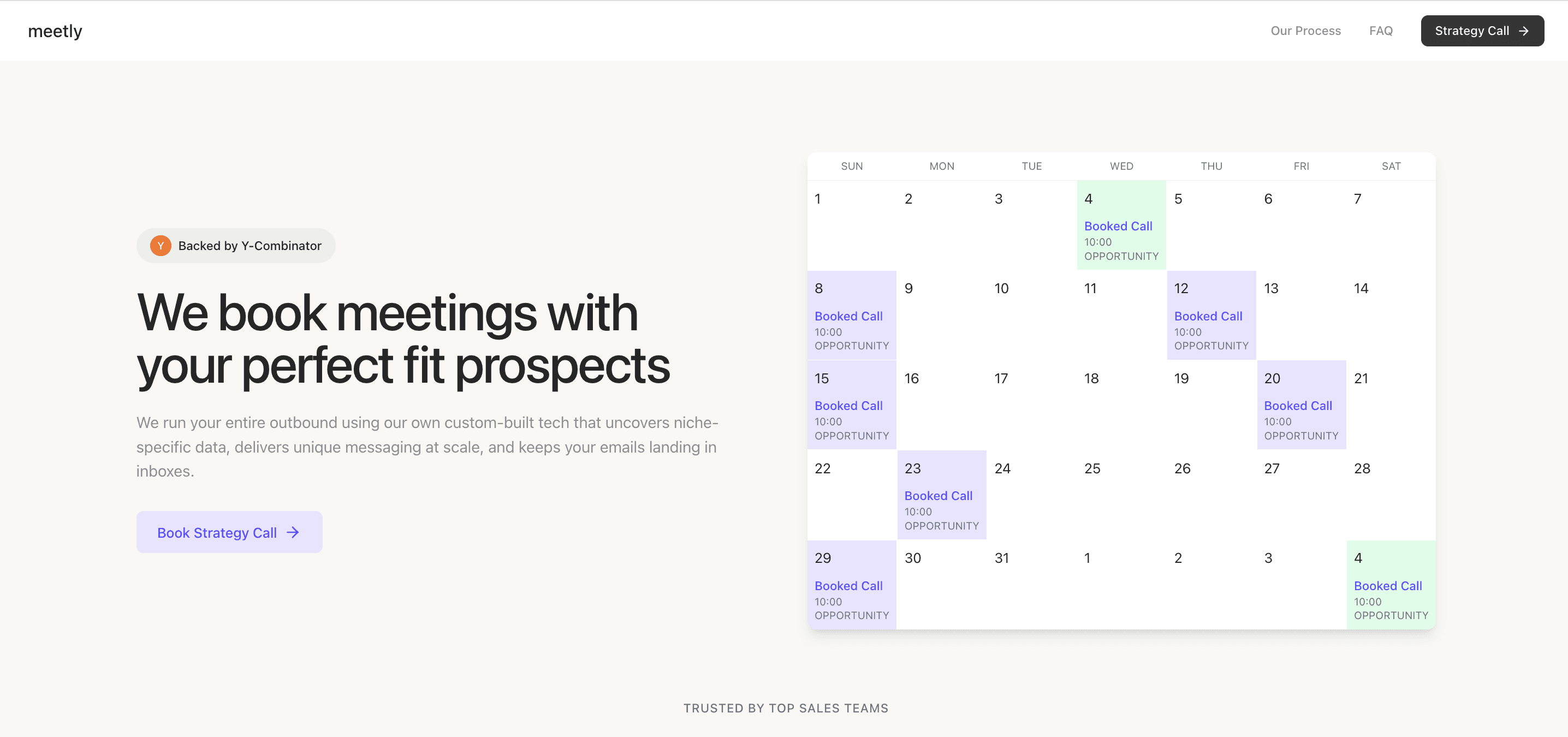
EXAMPLES
Build beautiful websites like these in minutes
Use Alpha to create, publish, and manage a fully functional website with ease.
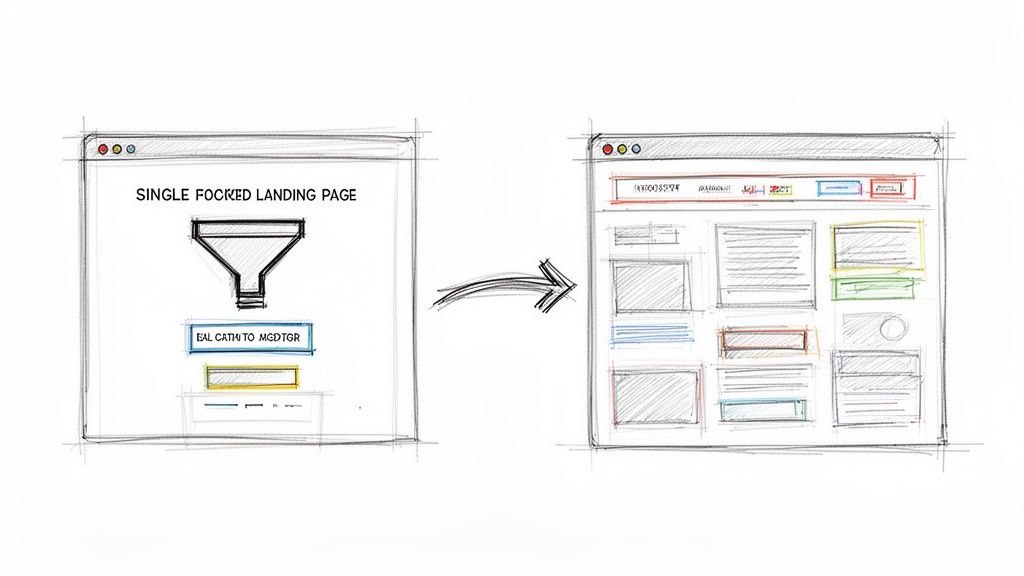
Let's get straight to the point. The fundamental difference is this: a landing page is a single, standalone web page created for one specific action—think signing up for a newsletter or buying a product. A website is a collection of multiple pages designed for visitors to explore your entire brand.
Your choice boils down to a simple question: are you aiming for a quick, focused conversion, or are you trying to build a broad, informative presence?
Choosing Your Digital Foundation
Picking between a landing page and a full website is one of the first big decisions you'll make for your online strategy. It's not just about how many pages you have; it's about the job you need your online presence to do.
Think of a landing page as your best salesperson, laser-focused on a single pitch. It’s designed to cut out all the noise—no complex navigation, no links to your blog, no distractions. Its only goal is to persuade a visitor to take one specific step, making it the perfect tool for targeted marketing campaigns where you need to track a clear conversion.
A website, in contrast, is your brand’s digital home base. It's built for wandering around. Visitors can learn about your story on the "About" page, browse your full range of services, read articles, and find your contact details. The purpose is much bigger: to establish credibility, educate your audience, and build a lasting relationship with them. The whole structure invites users to click around and dive deeper.
The decision isn't just about the number of pages. It’s a strategic choice between a direct, persuasive sprint (landing page) and an informative, brand-building marathon (website).
To really nail down the differences, a side-by-side comparison helps clear things up.
Landing Page vs Website At a Glance
Here’s a quick breakdown to help you see the core distinctions at a glance.
Attribute | Landing Page | Website |
|---|---|---|
Primary Goal | Conversion (e.g., lead, sale, signup) | Information, exploration, brand building |
Number of Pages | One | Multiple (e.g., Home, About, Services) |
Navigation | Minimal or none | Full navigation menu |
Content Focus | Concise, persuasive, single offer | Comprehensive, diverse, educational |
Traffic Source | Paid ads, email, social media campaigns | Organic search, direct traffic, referrals |
User Journey | Linear and controlled | Non-linear and exploratory |
This table gives you the high-level view, but the right choice always depends on your specific context and goals.
When building out your online presence, it's worth understanding the role of modern no-code tools and digital foundations and how they fit into a larger strategy. The tool you choose can make or break your efforts, which is why we've also put together a guide on the best platforms to build a website depending on what you need to accomplish.
Landing Page vs. Website: It’s All About Your Goal
So, you know the basic definitions. But the real decision between a landing page and a website boils down to one thing: your strategic goal. They aren't interchangeable. Each is a purpose-built tool designed for a completely different job, and their designs reflect that.
Think of it this way: a landing page is a direct flight to a single destination, while a website is a city map with endless places to explore.
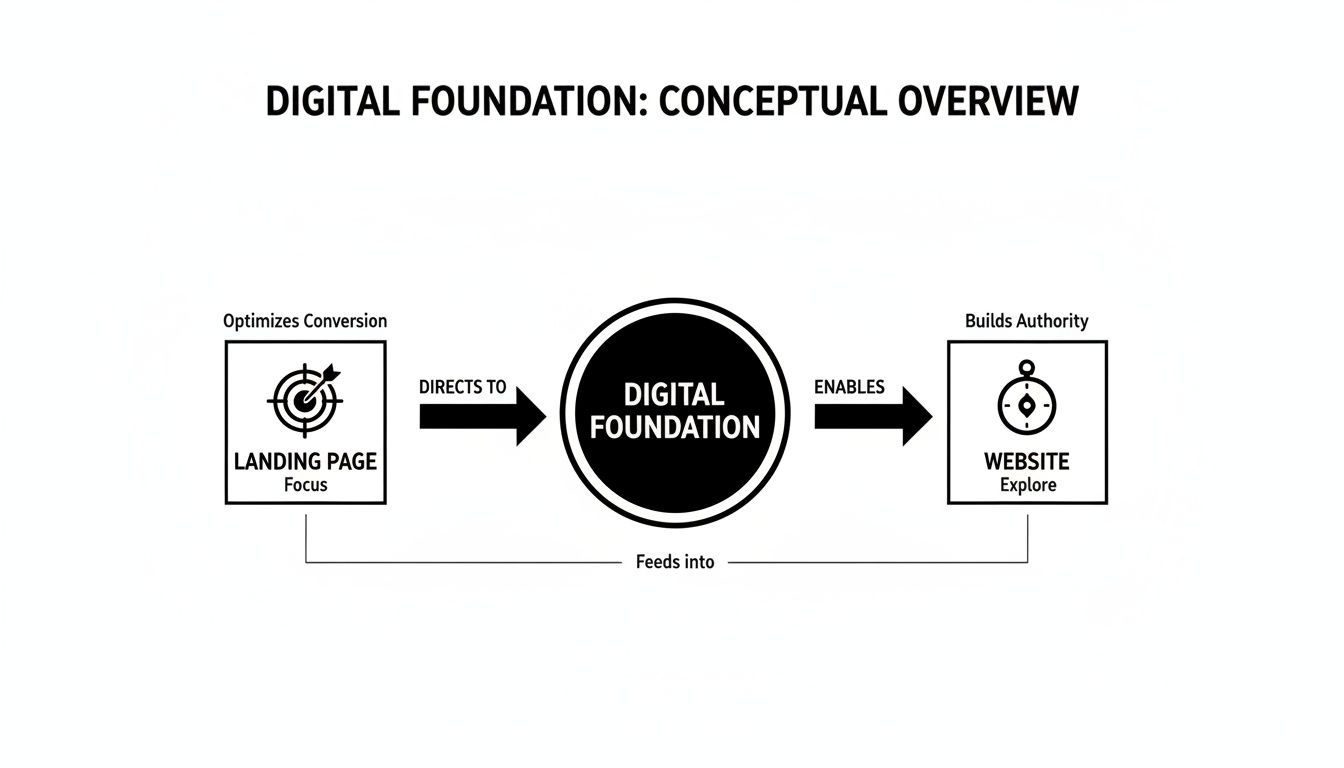
This image nails it. The landing page provides a straight line to a conversion, while the website builds the authority that makes people trust you in the first place. Let’s dig into how this fundamental difference shapes their design and strategy across four key areas.
Purpose and Focus
A landing page has one job and one job only. Its entire reason for being is to get a visitor to complete a single, specific action—buy a product, sign up for a webinar, download an ebook. Every word, image, and button is relentlessly optimized for that one call-to-action (CTA). This laser focus is why they are indispensable for paid ad campaigns where every click costs money and you need to see a return.
A website, on the other hand, is a multitasker. It’s your brand’s digital headquarters. It has to tell your story, showcase all your products, provide customer support, and publish blog posts. Its purpose is much broader: to build credibility, educate visitors, and nurture relationships over the long haul.
A landing page is a specialist surgeon, performing one precise operation. A website is a general practitioner, providing holistic care and building a long-term patient relationship.
User Navigation and Journey
This is where you see the biggest, most obvious difference. A landing page is a one-way street. By design, it has no distractions. You won't find a main navigation menu, a footer full of links, or a sidebar promoting other content. It's a closed-loop experience designed to keep the user focused on the offer until they convert.
Websites are built for the exact opposite: exploration. The navigation menu is the star of the show, inviting people to wander around. Visitors can check out your services, read your blog, learn about the team, or dive into case studies. The user is in the driver's seat, free to chart their own course through everything your brand has to offer.
Content Depth and Lead Strategy
Content on a landing page is lean, mean, and persuasive. It's a high-impact sales pitch that gives the visitor just enough information to make a decision and convert, right then and there. The goal is to capture the lead or make the sale immediately. If you want a closer look at how they work, our guide on what a landing page is breaks it down perfectly.
Website content goes wide and deep. It's all about being educational and engaging, positioning your brand as an expert in your field. The lead strategy here is more of a slow burn. You use blog posts, white papers, and in-depth guides to attract organic traffic and build trust over time, nurturing visitors into leads down the road. It’s about building a solid foundation for sustainable growth.
Understanding SEO and Conversion Implications
When you're weighing a landing page against a full website, you're really looking at two different marketing philosophies. Your choice directly impacts how you convert visitors and how you show up in search results. These two goals—getting quick conversions versus building long-term search visibility—are where the two options really diverge.
A landing page is a master of one trade: conversion rate optimization (CRO). Everything about it, from its single call-to-action to the complete absence of distracting navigation links, is designed to push a visitor toward one specific action. This laser-focused approach is why landing pages almost always deliver higher conversion rates for paid ad campaigns; the user's path is short, clear, and persuasive.
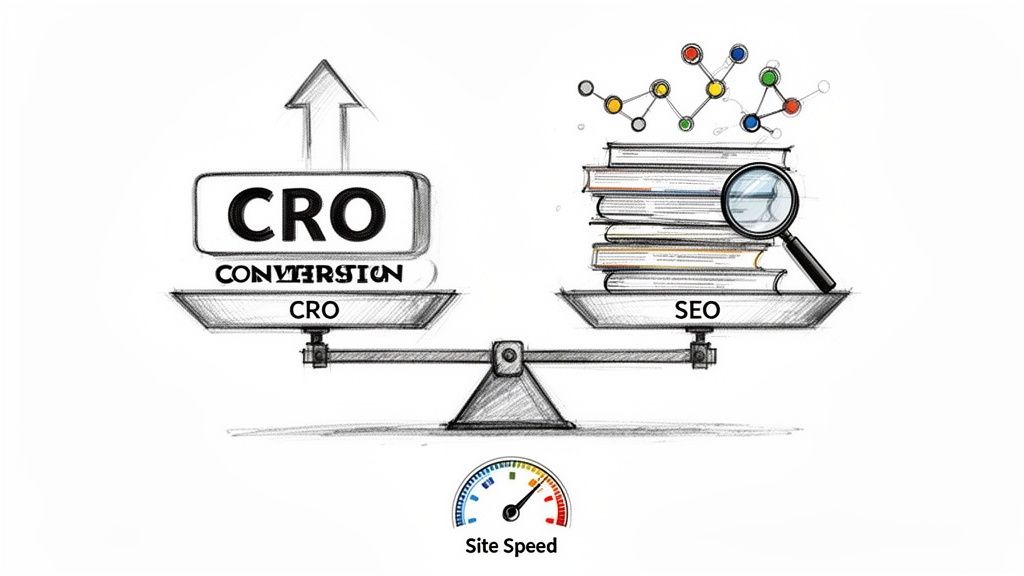
On the other hand, a full website is built to be a long-term search engine optimization (SEO) powerhouse. With its multiple pages, blog posts, and rich content, you can target a huge spectrum of keywords and establish your authority on a topic over time. Elements like internal linking and a well-organized site structure give search engines a clear map of your expertise, which helps boost your domain authority and pull in a steady stream of organic traffic.
The Unifying Factor: Site Speed
No matter which path you take, one thing is absolutely critical: site speed. A slow-loading page is a death sentence for both conversions and SEO rankings. Think about it—a page loading in just one second can see conversion rates up to five times higher than one that takes ten seconds to appear.
This isn't just theory. When Walmart ran a real-world test, they found that every one-second improvement in load time resulted in a 2% conversion hike. That same principle is now a core part of how Google ranks websites with its Core Web Vitals.
So, while landing pages and websites serve different primary goals, they both need a solid technical foundation. A fast, responsive experience is essential for keeping visitors around long enough to either click that "buy" button or browse your content.
Align your choice with your primary objective: a landing page for immediate, high-intent actions driven by paid traffic, and a website for sustainable organic growth and building brand equity.
To get good at turning visitors into customers, you'll need to implement effective conversion rate optimization strategies designed for your specific goals. A great way to see this in action is to check out some powerful personalized landing page examples that convert. You'll see exactly how they guide users toward a single, decisive action.
Ultimately, your decision comes down to whether your growth strategy is a sprint or a marathon.
Matching Your Goal to the Right Platform
Deciding between a landing page and a full website gets a whole lot easier when you anchor the choice to a specific goal. Abstract definitions are fine, but thinking through real-world scenarios is what makes the right answer click into place. At the end of the day, the best platform is simply the one that gives you the most direct path to the result you want.
If your objective is immediate and action-oriented, a landing page is almost always the way to go. It’s a specialist tool, built for speed and focus.
When a Landing Page is the Right Call
Think of a landing page as your digital sniper rifle—it’s precise, highly targeted, and built for a single, measurable outcome. It truly shines when you need to convert traffic from a specific source into a specific action, stripping away all the usual distractions.
A landing page is your best bet in these situations:
Running PPC Ad Campaigns: When you're paying for every single click from a Google or Facebook ad, you can't afford to waste that traffic on a cluttered homepage. A dedicated landing page that directly reflects your ad's promise creates a seamless experience and squeezes the most value out of your ad spend.
Launching a New Product or Service: A focused page is perfect for building hype and capturing those crucial first sales or sign-ups. It gives your new offer a dedicated space to shine, away from the noise of your main site.
Promoting a Webinar or Event: The goal here is simple: get people registered. A landing page with a clear value proposition, speaker bios, and a big, obvious sign-up form is the most efficient way to fill those virtual seats.
Offering a Lead Magnet: Giving away an ebook, checklist, or template? A landing page facilitates a clean, simple transaction: they give you their email, you give them the awesome resource. Done.
A landing page is the clear winner when your campaign has one urgent call-to-action. Its entire reason for being is to remove any friction between a visitor’s arrival and their conversion.
When a Full Website Is Non-Negotiable
Landing pages are absolute powerhouses for targeted campaigns, but a full website is the foundation of your brand's digital presence. It’s built for depth, exploration, and building relationships over the long haul. In many cases, anything less than a comprehensive website just won’t cut it.
A complete website becomes essential for these bigger goals:
Building a Corporate Brand: You need a multi-page site to properly tell your company’s story, showcase your mission and values, and establish yourself as a credible player in your industry.
Content Marketing and SEO: If your strategy hinges on attracting organic traffic through blogging and becoming a trusted authority, a website is your only real option. It provides the necessary structure to organize and host a wide variety of content.
Operating an E-commerce Store: For anyone selling more than a handful of products, a full e-commerce website is a must. You need it to handle product categories, individual product pages, a shopping cart, and a secure checkout system.
Providing Customer Support: A website is the perfect home for a knowledge base, FAQs, and contact forms, creating a central, reliable hub where customers can find answers and get help.
To make this even clearer, let's map some common business scenarios to the right digital tool. This table should help you quickly identify which path makes the most sense for your immediate needs.
Scenario-Based Decision Guide Landing Page vs Website
Business Goal / Scenario | Best Choice | Reasoning |
|---|---|---|
Validating a new business idea quickly | Landing Page | It's a low-cost, fast way to gauge market interest and collect email sign-ups before investing in a full build. |
Establishing a long-term brand presence | Website | A website is your digital headquarters, essential for building trust, showcasing your full story, and ranking on Google. |
Promoting a limited-time Black Friday sale | Landing Page | Urgency and focus are key. A dedicated page removes distractions and drives visitors directly to the sale items. |
Running a multi-product online store | Website | An e-commerce platform is necessary to manage inventory, product categories, customer accounts, and a complex checkout. |
Capturing leads for a B2B service from a LinkedIn ad | Landing Page | The page can be perfectly matched to the ad's message, maximizing conversions for that specific, high-intent audience. |
Creating a portfolio to showcase creative work | Website | A multi-page format allows for categorization, an "About Me" section, a blog, and a contact page, telling a richer story. |
Getting sign-ups for an upcoming webinar | Landing Page | The single goal is registration. The page should focus exclusively on the webinar's value and the sign-up form. |
Building a resource hub with articles and guides | Website | A blog or resource section requires the architecture of a full website to organize, categorize, and make content discoverable via SEO. |
As you can see, the choice isn't about which one is "better" in general, but which one is the right tool for the specific job you have in front of you right now. Use your primary objective as your guide, and the decision becomes straightforward.
Bringing Your Vision to Life with Alpha
Okay, you've made the call: landing page or full website. Now for the fun part—actually building it. This is where most people hit a wall, getting bogged down in complicated design tools. Alpha’s AI-powered platform is built to skip that entire headache. You can get a professional-looking landing page or a complete website up and running in a matter of hours, not weeks.
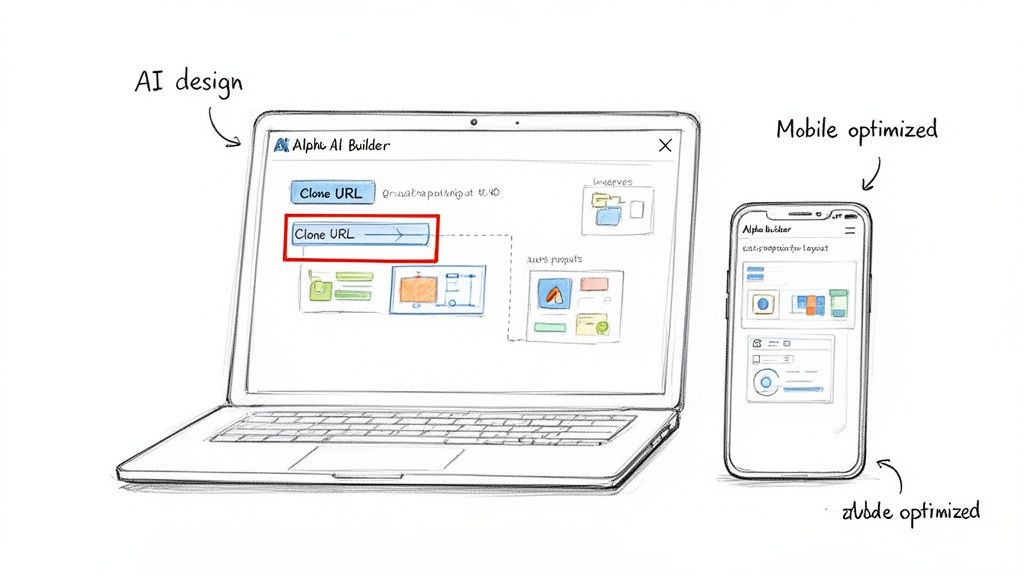
It doesn't matter if you need a single, focused page or a sprawling multi-page site; the process is the same. You just describe what you want in plain English. The AI takes your idea and instantly generates a clean layout, complete with relevant images and starter text.
"So glad I came across the recommendation on reddit. I have tried so many other 'ai' enabled website building apps (Wix, Squarespace and a bunch of upstarts) and they all pretty much suck. Alpha has been super easy and responsive." - Doug Roper, Founder & CTO @ Talent Spring
This whole approach lets you stop fiddling with confusing settings and focus on what really matters: your message. It’s a direct line from concept to a live, working online presence.
From Inspiration to Instant Layout
One of the coolest things you can do with Alpha is clone a URL. Instead of staring at a blank screen, find a website or landing page online that you love the look of. Just paste its URL into Alpha, and the AI will replicate the entire layout and design structure for you.
This gives you a battle-tested foundation to build on. All the sections are there, ready for you to swap in your own branding, images, and copy. It's a massive shortcut that lets you skip the tedious parts of design and get right to making it your own.
"The website format copying function is a game-changer." - Doug Roper, Founder & CTO @ Talent Spring
Customization and Optimization Made Easy
Once you have your initial design—whether from a text prompt or a cloned site—tweaking it is just as simple. You can edit anything on the page just by describing the change you want. Tell the AI to swap out the color scheme, adjust the spacing, or add a new testimonials section, and it does it instantly.
And you don't have to worry about how it looks on different devices. Every design created with Alpha is automatically mobile-optimized right from the start. This is huge for both SEO and conversions, especially since so much traffic comes from phones these days. Whether you build a landing page or a full website, Alpha makes sure your foundation is solid and ready to perform from day one.
So, Which One Is Right for Your Business?
Deciding between a landing page and a full website can feel like a huge fork in the road, but it gets a lot clearer when you focus on what you need to achieve right now. The best choice hinges on your immediate goals, the resources you have on hand, and how quickly you need to get moving.
Let's cut to the chase. What’s the single most important thing you need to accomplish? If the answer is "get sign-ups for my webinar," "sell this one new product," or "see if people are even interested in my idea," then a landing page is your best friend. It’s a precision tool, built for one thing: getting a specific, immediate action.
On the other hand, if you're playing the long game—building a brand people trust, becoming a go-to resource in your niche, or showcasing a whole range of products or services—then a website is non-negotiable. It gives you the real estate you need to build credibility, tell your story, and pull in traffic from search engines over time.
A Quick Framework to Help You Choose
To nail down your decision, think about these three things:
Your Goal: Are you hunting for quick conversions or planting seeds for long-term growth?
Your Budget: Do you need a lean, low-cost option to get started, or are you ready to invest in a more substantial digital foundation?
Your Timeline: Do you need to be live by next week, or are you building something to last for years to come?
Here's the most important thing to realize: this decision isn't set in stone. So many great businesses start with a simple landing page to test the waters and bring in their first dollars. Once they've proven their concept, they expand into a full website.
This strategy lets you move fast and learn from real customers before sinking a ton of time and money into a big project. You get to validate your idea, win over your first fans, and then build out your online presence from a position of confidence, not guesswork. The key is to pick the right tool for where your business is today, knowing you can always build on it tomorrow.
Common Questions, Answered
Even after weighing the pros and cons, a few practical questions always come up when you're on the verge of making a decision. Let's tackle the most common ones I hear from clients.
How Much Will It Cost?
A landing page is almost always the more budget-friendly and faster option. Because it’s a single page, the design, development, and content creation are much more contained.
A full website, on the other hand, is a bigger investment. You're dealing with a multi-page structure, more complex navigation, and the need for a lot more content to fill it out, all of which adds to the cost and timeline.
Can I Have a Landing Page and a Website?
Yes, you absolutely can—and frankly, most successful businesses do. Think of your website as your brand's permanent digital home. It's there to build long-term authority and pull in organic traffic over time.
Landing pages then become your specialized tools for specific marketing campaigns, like a Google Ad promoting a sale or a page dedicated to a new product launch. They work together beautifully.
Your website is your main storefront, always open for business. Landing pages are like targeted pop-up shops you set up for special events to capture immediate interest and drive sales.
Which One Is Easier to Maintain?
Hands down, a landing page is simpler to maintain. With just one page and a single, focused goal, updates are few and far between.
A website demands more consistent attention. You'll need to think about ongoing tasks like adding new blog posts, performing security checks, and making sure all your pages and links are still working correctly.
It’s worth noting that for both, the end goal is conversion. Interestingly, the global average e-commerce conversion rate for both websites and landing pages hovers between 2.5% and 3.0%. That number really underscores how important it is to optimize every element to turn visitors into customers. If you want to dive deeper, you can explore more e-commerce conversion rate insights to see how you stack up.
Ready to get started without the usual headaches? Alpha uses AI to build beautiful, high-converting websites and landing pages in minutes. Just tell it what you need, and our tech handles the heavy lifting. Start building your perfect site today.
EXAMPLES
Build beautiful websites like these in minutes
Use Alpha to create, publish, and manage a fully functional website with ease.