

How to Create Website Mockups People Actually Love
Learn how to create website mockups that bridge the gap between idea and reality. Our guide covers tools, principles, and developer handoff.
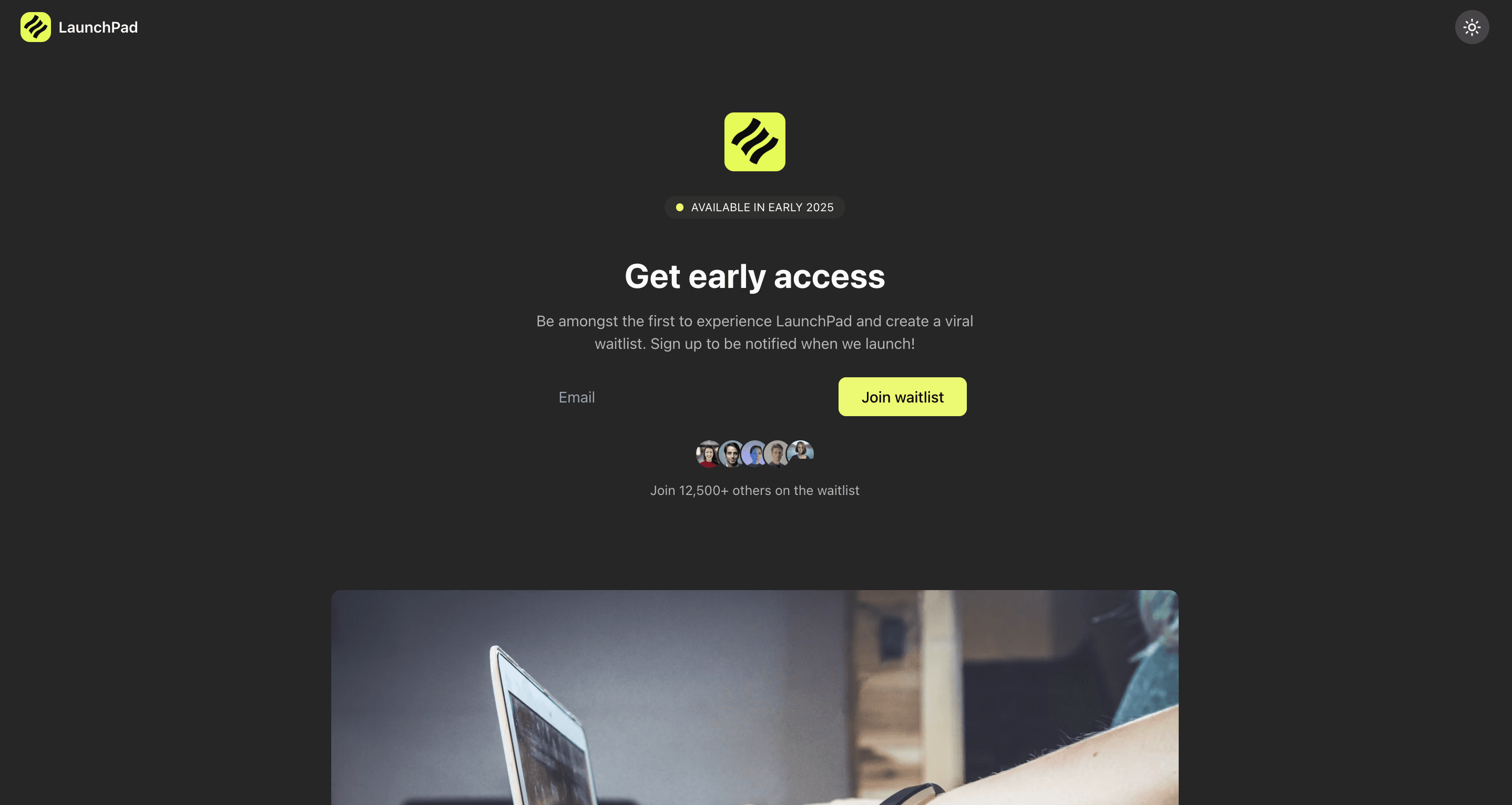
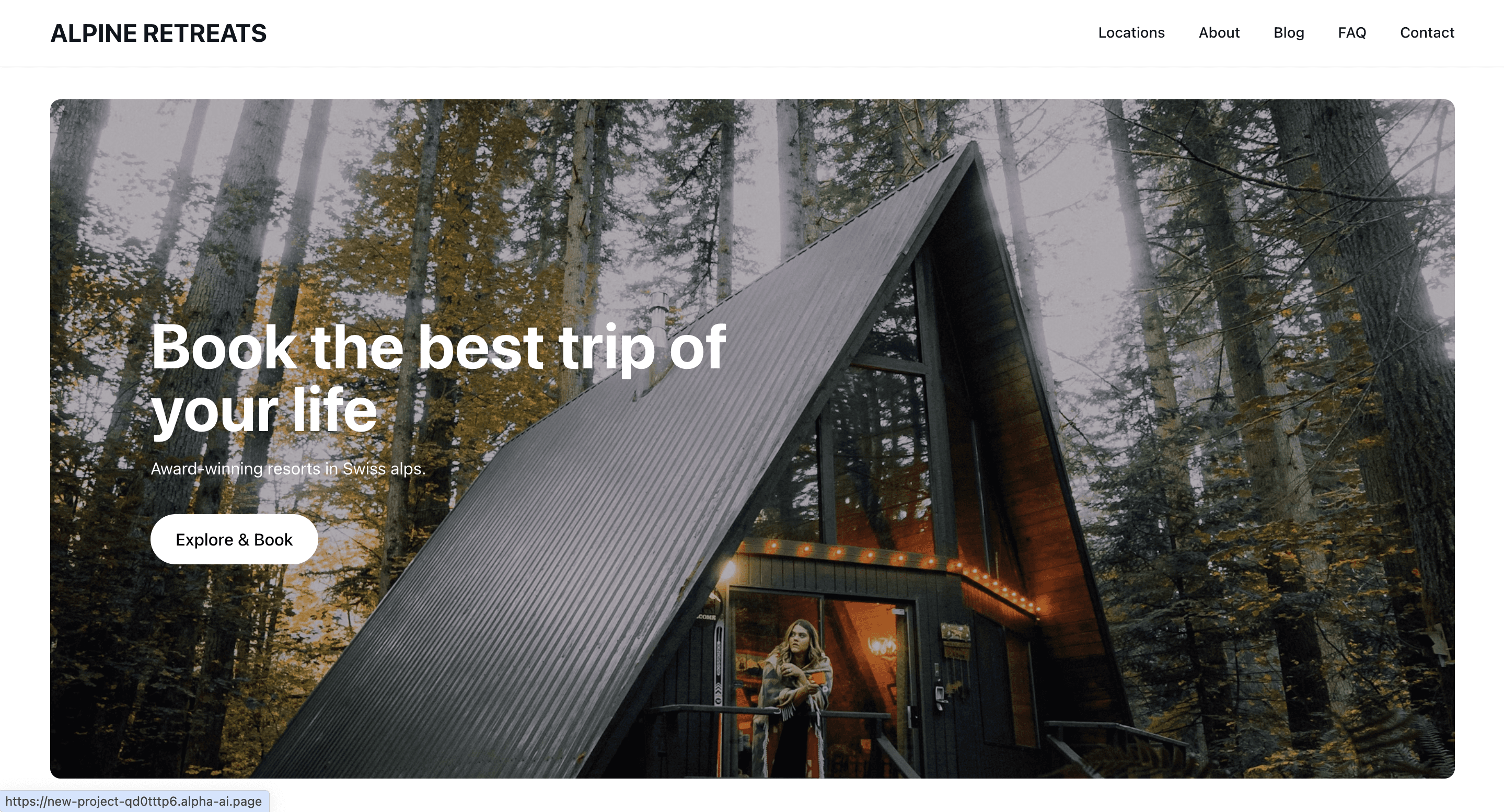
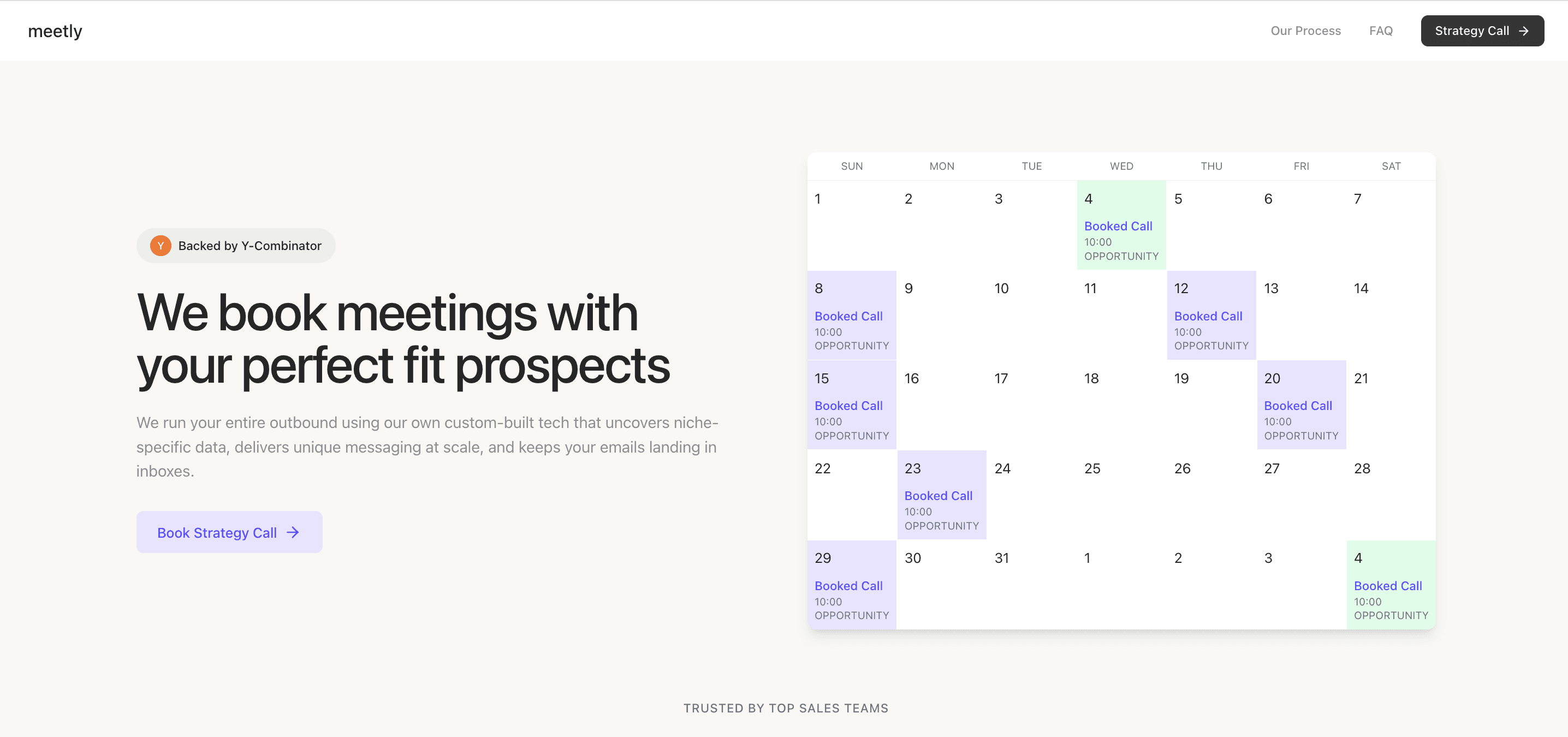
EXAMPLES
Build beautiful websites like these in minutes
Use Alpha to create, publish, and manage a fully functional website with ease.
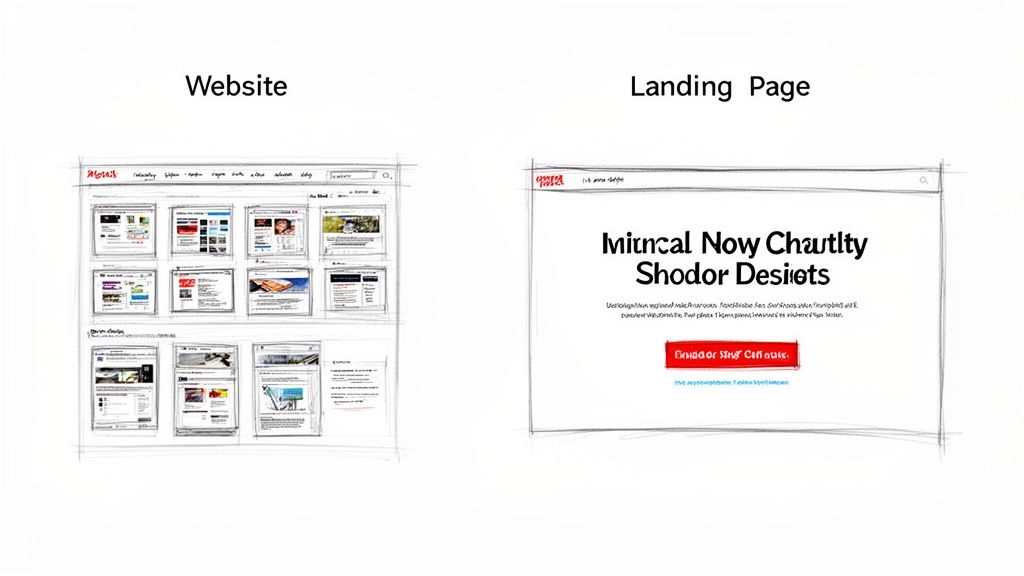
When people talk about landing pages versus websites, they're really talking about two different tools for two very different jobs. The core difference boils down to focus. A website is your brand’s digital home—a multi-page destination designed for exploration and building a relationship. A landing page, on the other hand, is more like a specialized tool—a single, focused page built to achieve one specific goal, and do it well.
Think of your website as the central hub for your business. It's where people go to learn who you are. A landing page is the direct, persuasive pitch you make to get them to take a specific action right now.
Understanding the Core Structures
Your website is the full story. It’s a collection of interconnected pages—a homepage, an 'About Us' section, product pages, a blog, and a contact form—all working together to build your brand’s credibility. The main goal is to inform, engage, and give visitors plenty of room to browse and learn about you on their own terms.
A landing page is a specialist with a single-minded purpose. It's a standalone page created for a specific campaign, like getting sign-ups for a webinar or driving downloads for an ebook. If you want to dive deeper into what makes them so effective, our guide on what is a landing page breaks it down. This intense focus is what makes them so powerful; they strip away all distractions to guide a visitor toward one clear action.
Key Structural Differences
The most obvious difference is in how they guide a visitor. A website encourages you to stick around and explore. It has a full navigation menu, footers packed with links, and countless internal pathways designed to keep you clicking and discovering.
A landing page does the exact opposite. It deliberately removes navigation and other links. Why? Because every single element on the page—the headline, the copy, the images—is designed to funnel the user’s attention directly to the call-to-action (CTA). There are no escape routes.
A website is a conversation; a landing page is a closing argument. One builds a relationship over time, while the other asks for a decision now.
This table gives a quick, high-level summary of the main differences between a landing page and a full website.
At a Glance Comparing Landing Pages and Websites
Attribute | Landing Page | Website |
|---|---|---|
Primary Goal | Conversion (e.g., signup, sale) | Information & Exploration |
Number of Pages | One | Multiple (often 5+) |
Navigation | Minimal or none | Full navigation menu |
Content Focus | Singular, action-oriented | Broad, educational, brand-focused |
Traffic Source | Paid ads, specific campaigns | Organic search, direct, referrals |
Call-to-Action | One primary CTA | Multiple CTAs and pathways |
Ultimately, it’s not a question of which one is "better." It's about using the right tool for the task at hand. Your website is the foundation of your online presence, while landing pages are the high-performance tools you use to hit specific marketing targets.
Strategic Goals: What Are You Trying to Accomplish?
Putting aside the technical stuff, the real difference between a landing page and a website comes down to one thing: intent. Why does it exist? A website has a broad, long-term mission. It’s your brand’s digital home, built to establish credibility, build trust with your audience, and support all kinds of visitor needs over time. Think of it as your central hub where people can poke around, get to know you, and engage on their own terms.
A landing page is the exact opposite. It’s a specialist with a single, urgent mission: get a visitor to act on one specific offer. Its purpose is immediate and transactional. Every single word, image, and button is there for that one reason, and anything that could distract from that goal is ruthlessly cut out.
The Flagship Store vs. The Pop-Up Shop
Here’s a simple way to think about it. Your website is your flagship retail store. It’s a permanent destination designed to welcome everybody. People can wander through different departments (pages), learn your company’s story (the "About Us" page), check out your entire product catalog, or find customer support. The whole point is to create a rich brand experience that keeps people coming back.
A landing page is more like a pop-up shop set up for a flash sale or a new product launch. It has one door in and one clear path to the checkout. The entire experience is built around a single offer, designed to grab attention and drive a specific action right now. You won't find other products or company info to get lost in; the focus is absolute.
This analogy really gets to the heart of the strategic split:
Website (The Flagship Store): Built for broad engagement, brand exploration, and building long-term relationships. It’s a multitasker by design.
Landing Page (The Pop-Up Shop): Designed for one specific, high-value action. It has a single, immediate goal tied to a campaign.
This core difference in purpose drives every other choice you'll make in design, copy, and the overall user experience.
The “One Page, One Purpose” Rule
The secret to a high-performing landing page lies in its intense focus. It lives by a simple but powerful rule: one page, one purpose, one main call to action. This laser-like focus reduces the mental effort required from a visitor, making it incredibly easy for them to decide what to do. A website, on the other hand, has to juggle multiple visitor goals, which naturally adds complexity.
A website asks visitors, "What can we help you with?" and gives them a dozen options. A landing page says, "Here's what you should do next" and gives them one clear path forward.
This isn't just about design—it's pure strategy. For instance, a SaaS company’s website will have pages for features, pricing, careers, and a blog to attract and educate a wide audience. But when that same company launches a new integration, they’ll send all their ad traffic to a dedicated landing page. That page won’t mention job openings or their latest blog post. Its entire existence is to convince visitors to sign up for a demo of that new feature.
Nailing down this fundamental difference in strategic goals is the first step. Your website is the foundation you build your brand on; a landing page is the precision tool you use to drive specific actions.
Measuring What Matters: Performance & Key Metrics
When you're trying to figure out if your landing page or website is actually working, you can't use the same yardstick for both. They have completely different jobs. For any entrepreneur, getting this right is the key to knowing where your money and effort are really paying off. Performance isn't just a buzzword; it's the hard data that tells you what to do next.
A website plays the long game. Its success is all about broad engagement—building a relationship with an audience and establishing your brand's credibility over time. But a landing page? It’s judged on one thing and one thing only: its power to convert.
Different Goals, Different Scorecards
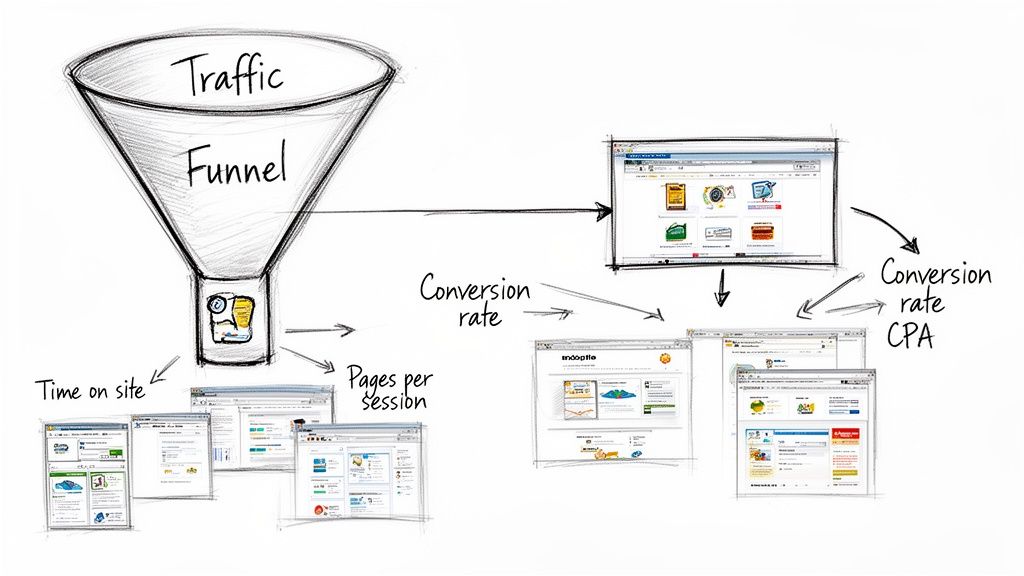
For your main website, success metrics paint a broad picture of visitor engagement and brand health. You're looking for signs that your content is hitting the mark and that your site is a place people want to spend time.
Some of the key things I always track for a website are:
Time on Site: Are people actually sticking around to read, watch, or learn?
Pages per Session: Do they click around and explore, or just hit one page and leave?
Bounce Rate: What percentage of people bail after seeing just a single page?
Returning Visitors: Is your audience growing? Are you building a base of loyal followers?
A landing page, on the other hand, is a conversion machine. You measure its performance with surgical precision, zeroing in on numbers that tie directly back to your campaign goals and ad budget. There's no gray area here. It's either working, or it isn't.
For any landing page I run, these are the only metrics that truly matter:
Conversion Rate: The big one. What percentage of visitors actually did the one thing you asked them to do?
Cost Per Acquisition (CPA): How much are you spending to get that one new customer or lead?
Lead Quality: Are the signups you're getting actually relevant and valuable to your business?
Why Landing Pages Almost Always Win for Campaigns
The secret weapon of a landing page is its intense focus. By stripping away all the extra stuff—navigation menus, unrelated links, extra info—you dramatically reduce a visitor's cognitive load. It's a simple psychological truth: give people fewer choices, and they're far more likely to make the one decision you want them to.
Think of it this way: a website gives a visitor a map and lets them choose their own adventure. A landing page gives them a direct, well-lit path to a single destination. That clarity is precisely why they convert so well.
This laser-focused user journey consistently delivers a much higher return on your ad spend. The data doesn't lie; sending paid traffic to a dedicated landing page almost always beats sending it to a general-purpose homepage. One real-world A/B test showed that a dedicated landing page produced nearly 3x the conversion rate at a one-third lower cost per conversion compared to the company's homepage.
Of course, learning how to improve conversion rate is a skill that helps with both landing pages and websites, even if the tactics differ. Both benefit from crystal-clear messaging and a compelling call-to-action.
Ultimately, measuring performance means looking at the right numbers for the right asset. If you really want to dig into boosting these numbers, our comprehensive guide on conversion rate optimization strategies is the perfect next step. Understanding these metrics will help you make much smarter decisions when deciding between a landing page and a website.
SEO and User Experience: A Tale of Two Strategies
When you get down to it, the biggest differences between a landing page and a website boil down to their approaches to search engine optimization (SEO) and user experience (UX). A website is built for the long game of organic search, casting a wide net to pull in a broad audience. A landing page, on the other hand, is a precision instrument, usually tied to a specific marketing campaign and engineered for one thing: a smooth, focused user journey.
Think of your website's SEO strategy as building a digital library. It’s filled with all sorts of content—blog posts, service pages, case studies—all targeting a huge range of keywords. Over time, this deep well of content and a smart internal linking structure signal authority to search engines, helping you rank for all kinds of queries and attract visitors with different needs. The main goal here is discoverability and building a steady stream of organic traffic.
A landing page plays a completely different game. Many are built for paid ad campaigns and are often intentionally hidden from search engines with a "no-index" tag. Their traffic isn't meant to come from a Google search; it comes from highly targeted ads. This means that optimizing for a specific keyword is far less important than crafting a message that converts.
How User Experience Shapes the Design
The user experience of a website is all about exploration. It’s intentionally designed with navigation menus, footers, and sidebars that invite people to click around, learn more, and get to know your brand. A successful website experience is one where a visitor spends time on the site, checks out a few different pages, and easily finds what they were looking for.
Landing page UX has a single, ruthless mission: remove all friction and guide the user toward one specific action. It does this by stripping away anything that could be a distraction.
No Navigation Menu: This is intentional. It keeps visitors from getting sidetracked and abandoning the conversion goal.
Singular Focus: Every single element, from the headline down to the form, is there to support one specific offer.
Linear Flow: The design is meant to draw the user’s eye down the page, straight to the call-to-action button.
This laser-focused approach is what makes landing pages so effective. By removing choices, a good landing page makes taking the desired action feel like the most natural and obvious next step. If you want to get better at this, diving into the fundamentals of user experience design is a great way to understand how to create pages that truly click with your audience.
A website's UX hands you a map and lets you pick your own adventure. A landing page's UX gives you a brightly lit, direct path to a single treasure chest.
The Common Ground: Speed and Mobile Experience
Despite their differences, both websites and landing pages share a critical foundation: performance. Page speed and mobile responsiveness are absolutely non-negotiable for both SEO and conversions. A slow-loading page gets penalized by search engines and, more importantly, frustrates users into leaving—whether they're on a blog post or a sales page. In fact, studies consistently show that even a one-second delay in page load time can slash conversions by 7%.
This is where modern platforms like Alpha really shine. They're built to handle these technical details for you, ensuring that both your full website and your campaign landing pages are lightning-fast and look fantastic on any device. This is the one area where SEO and UX goals perfectly overlap. A fast, mobile-friendly experience helps a website rank higher and makes a landing page convert better, proving that a rock-solid technical base is a win for every part of your digital strategy.
Deciding When to Use a Landing Page or a Website
Choosing between a landing page and a website isn’t really about picking a winner. It’s about knowing which tool to pull out of the toolbox for a specific job. The entire decision boils down to your immediate goal: are you after a quick, focused action, or are you trying to build a long-term digital home for your brand?
Getting this right is fundamental to any solid marketing strategy. Think of a landing page as your specialist—the surgeon you call for a precise, high-stakes procedure. A website, on the other hand, is your general practitioner, there to build a lasting relationship and handle a wide range of needs over time.
When a Landing Page Is Your Best Bet
Landing pages are all about focus and urgency. They shine when your objective is to push a single, specific action from a very targeted group of people. In these moments, the stripped-down, distraction-free nature of a landing page is purpose-built to get results.
You'll want to reach for a landing page in these kinds of situations:
Running Paid Ad Campaigns: If you’re spending money on traffic from Google Ads or social media, sending people to a dedicated landing page is non-negotiable. It creates a seamless connection between your ad copy and the page, which not only improves your ad quality scores but, more importantly, drives up conversion rates.
Launching a New Product or Service: A stand-alone landing page is perfect for building hype and capturing pre-orders or early sign-ups without all the clutter of your main website. It gives you a dedicated space to tell the story of your new offering.
Promoting an Event or Webinar: When you need registrations, a landing page with a clear value proposition, speaker info, and a big sign-up form will always outperform a lonely link buried somewhere on your site.
Offering a Lead Magnet: Looking to capture email addresses in exchange for an ebook, whitepaper, or free trial? A landing page is the ideal tool. Its only job is to make that exchange as frictionless as possible.
This decision tree helps visualize the core purpose that separates the two. It's all about whether your immediate need is direct sales or long-term search engine visibility.
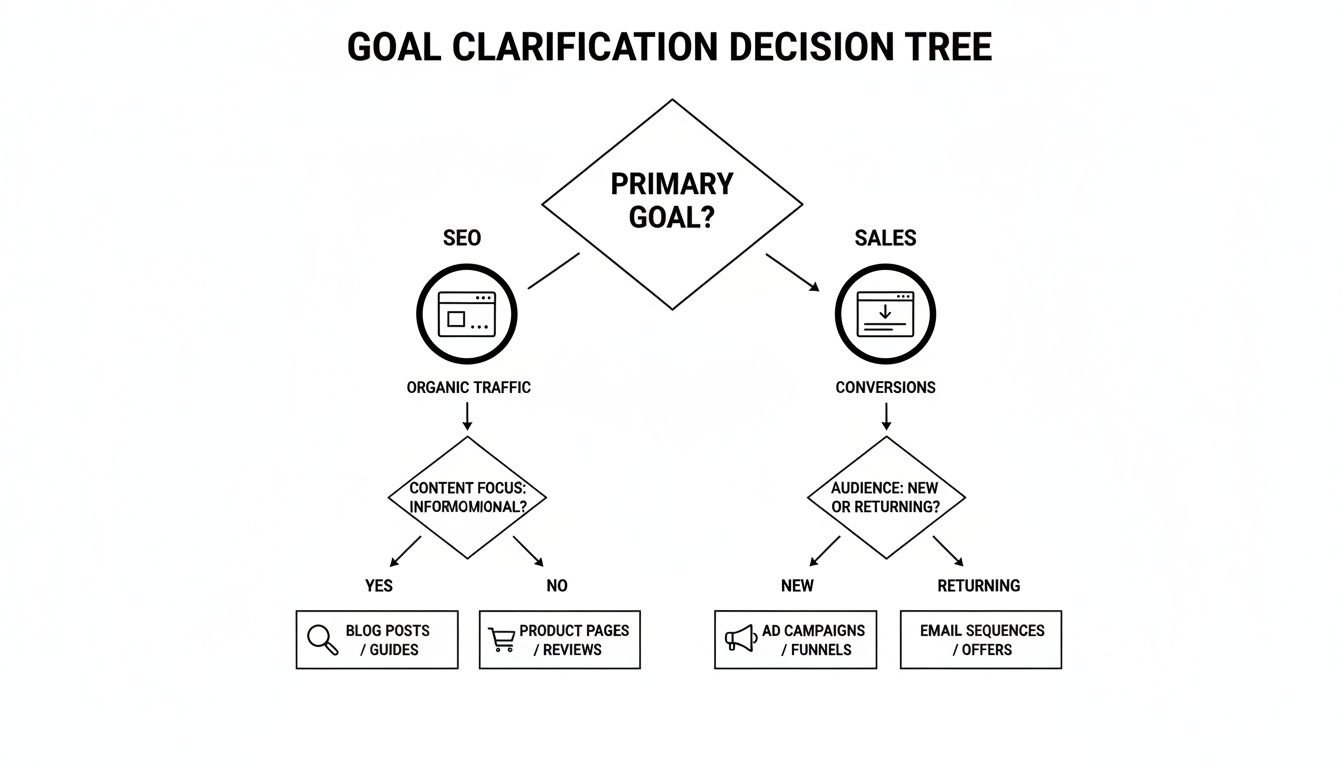
As you can see, if the goal is an immediate, conversion-focused action like a sale, a landing page is your most direct route. But if you're playing the long game of building organic authority through SEO, that’s squarely in the website’s territory.
When You Absolutely Need a Full Website
As powerful as landing pages are, they can't replace a complete website. Your website is what establishes your brand's credibility and authority, serving as the permanent digital address for your entire business.
A full website becomes the clear choice when you need to:
Establish Your Core Brand Presence: Your website is your digital headquarters. It’s where potential customers, partners, and future employees go to figure out who you are, what you stand for, and what you offer.
Build a Content Hub or Blog: If your strategy hinges on content marketing to attract organic traffic and educate your audience, a website with a blog is essential. This is where you build lasting SEO value.
Showcase a Diverse Product Catalog: For e-commerce stores or service businesses with many offerings, you need a website to properly organize products, provide detailed specs, and handle a shopping cart.
Offer Customer Support and Resources: A website is the natural home for your FAQs, knowledge bases, and contact details, which helps build trust and support your existing customers.
The real debate isn't "landing page vs. website." The strategic question is how to make them work together. A great website builds the brand, while targeted landing pages convert the traffic that brand attracts.
In the end, the most successful businesses use both in harmony. Research backed by HubSpot found that just increasing the number of landing pages from 10 to 15 can boost leads by a massive 55%. This shows how having multiple, focused pages allows for much tighter audience segmentation than a single website ever could. You can dive deeper into these kinds of figures with these landing page performance statistics on Hostinger.com.
Your website acts as the central hub, and your landing pages become the high-performance entry points for all your marketing campaigns.
Bringing It All to Life with Alpha
Knowing the difference between a landing page and a website is one thing. Actually building them is another. For most entrepreneurs, the thought of creating a professional website or a high-converting landing page sounds intimidating, expensive, or both. That's where modern tools like Alpha come in, designed to get you from idea to live page without needing to write a single line of code.
Whether you're building out your brand's digital home or launching a laser-focused marketing campaign, you can manage both from one place. This is key to creating a unified online presence where your website and landing pages work together, not against each other.
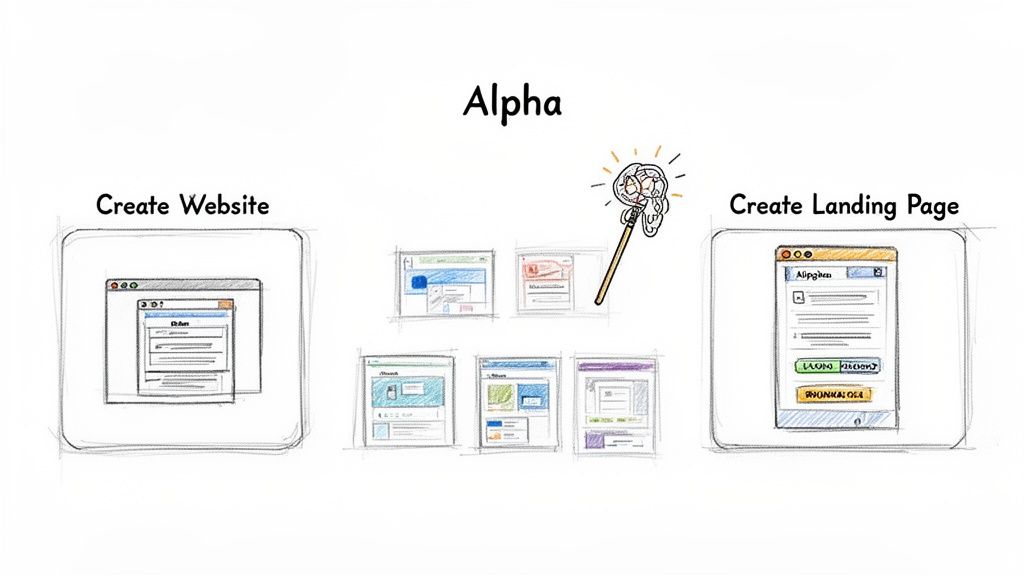
Creating Your Website with AI
When it's time to build your digital headquarters, Alpha really simplifies things. A good website needs multiple pages, intuitive navigation, and solid content to tell your story and build trust.
Getting started with Alpha is surprisingly fast, thanks to features built specifically for this:
Multi-Page Templates: Kick things off with a professionally designed, multi-page layout. It already includes the essentials like a homepage, about us, services, and a contact page.
AI-Powered Design: Don't have a design in mind? Just drop in the URL of a site you like, and Alpha's AI will use it as inspiration to generate a unique layout for your brand. It’s a game-changer for getting a custom look without the custom price tag.
Integrated SEO Tools: You need a strong foundation for search traffic from day one. Alpha gives you the tools to optimize your titles, meta descriptions, and other on-page elements to make your site more visible to Google.
The platform takes care of all the technical heavy lifting, so you can just focus on your message and your business.
Building a High-Converting Landing Page
Now, when you shift gears to a specific marketing campaign, your needs change completely. A landing page has to be persuasive, focused, and totally free of distractions. This is where specialized tools are non-negotiable if you want to maximize your ad spend.
Alpha is also engineered to build these powerful, conversion-focused pages:
Conversion-Optimized Templates: Pick from a library of templates built with one goal: getting that conversion. These layouts follow proven best practices, with big headlines, clear calls-to-action, and a logical flow.
Easy Replication: Found a landing page design that's crushing it? You can duplicate and tweak it for new campaigns in minutes. This makes scaling your marketing efforts incredibly efficient.
Built-in Lead Capture Forms: You can integrate forms to capture leads without needing to mess with third-party tools. Hook them up to your email marketing service and start nurturing new prospects instantly.
This focused approach is absolutely critical. Studies show that landing pages with fewer distractions and a single purpose perform dramatically better. Dedicated landing pages can see sign-up conversion rates 160%+ higher than generic forms on a website. One analysis even found that targeted landing pages convert at around 23%—a huge jump from the 2% average for sign-up boxes on a regular webpage. You can discover more insights about landing page performance on EmailVendorSelection.com. Alpha's templates are built on this very principle.
"So glad I came across the recommendation on reddit. I have tried so many other 'ai' enabled website building apps... and they all pretty much suck. Alpha has been super easy and responsive. The website format copying function is a game-changer.” - Doug Roper, Founder & CTO @ Talent Spring
At the end of the day, the landing page vs. website debate isn't about picking a winner. It's about knowing you can deploy the right tool for the right job, right when you need it. Platforms like Alpha give you the flexibility to build your foundational brand website and then spin up targeted landing pages on the fly, all from the same dashboard. This lets you build a complete and effective digital strategy without the usual technical headaches.
Frequently Asked Questions
Even after mapping out a strategy, some practical questions always seem to pop up when you're weighing a landing page against a full website. Let's tackle some of the most common ones I hear from entrepreneurs.
Do I Need a Website Before Creating a Landing Page?
Not at all. You can absolutely launch a landing page completely on its own, and many businesses do. It’s a fantastic way to test a new product idea, gather sign-ups before you launch, or drive traffic from a specific ad campaign to a single, focused offer.
Think of it as your initial foothold online. A standalone landing page can be a simple, powerful presence while you work on building out your full website behind the scenes. That said, having a main website does lend an extra layer of credibility. Linking your landing page's logo back to your company's homepage gives curious visitors an 'out'—a way to explore your brand further if they're not quite ready to commit, which can be a great trust-builder.
How Many Landing Pages Should a Business Have?
There's no golden rule here. The real answer depends entirely on your marketing efforts. The best approach is to create a dedicated landing page for every single campaign, offer, and audience you're targeting. For instance, if you're running ads for three different services, you should have three distinct landing pages.
I've worked with businesses that have dozens, even hundreds, of active landing pages at any given time. Each one is finely tuned to a specific ad, email, or social media post. Why? Because more targeted pages almost always mean higher conversion rates.
What Is the Main Cost Difference?
Building a single landing page is almost always cheaper and faster than developing a complete, multi-page website. A full site is just a bigger project, requiring more design work, content for all the standard pages (About Us, Services, Contact, Blog), and often more complex features.
Landing pages, on the other hand, are built for one thing and one thing only, so their design and development are far more streamlined. If you're planning your budget, you might also find answers to other general FAQs in this resource.
Ready to build the high-converting assets your business needs? With Alpha, you can create stunning websites and targeted landing pages in minutes, not months. Start building for free on Alpha.
EXAMPLES
Build beautiful websites like these in minutes
Use Alpha to create, publish, and manage a fully functional website with ease.