
How to Create Website Mockups People Actually Love
Learn how to create website mockups that bridge the gap between idea and reality. Our guide covers tools, principles, and developer handoff.
EXAMPLES
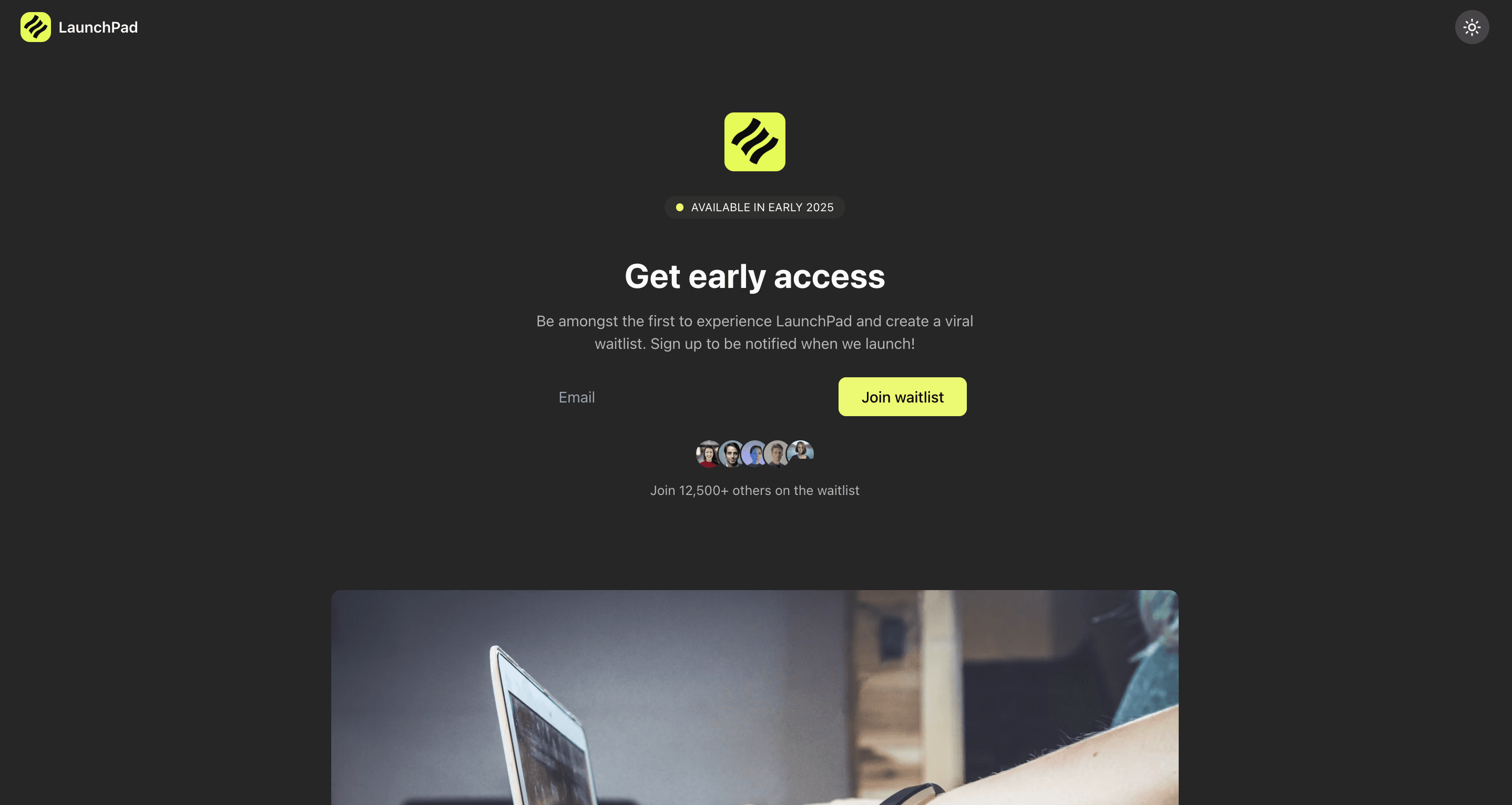
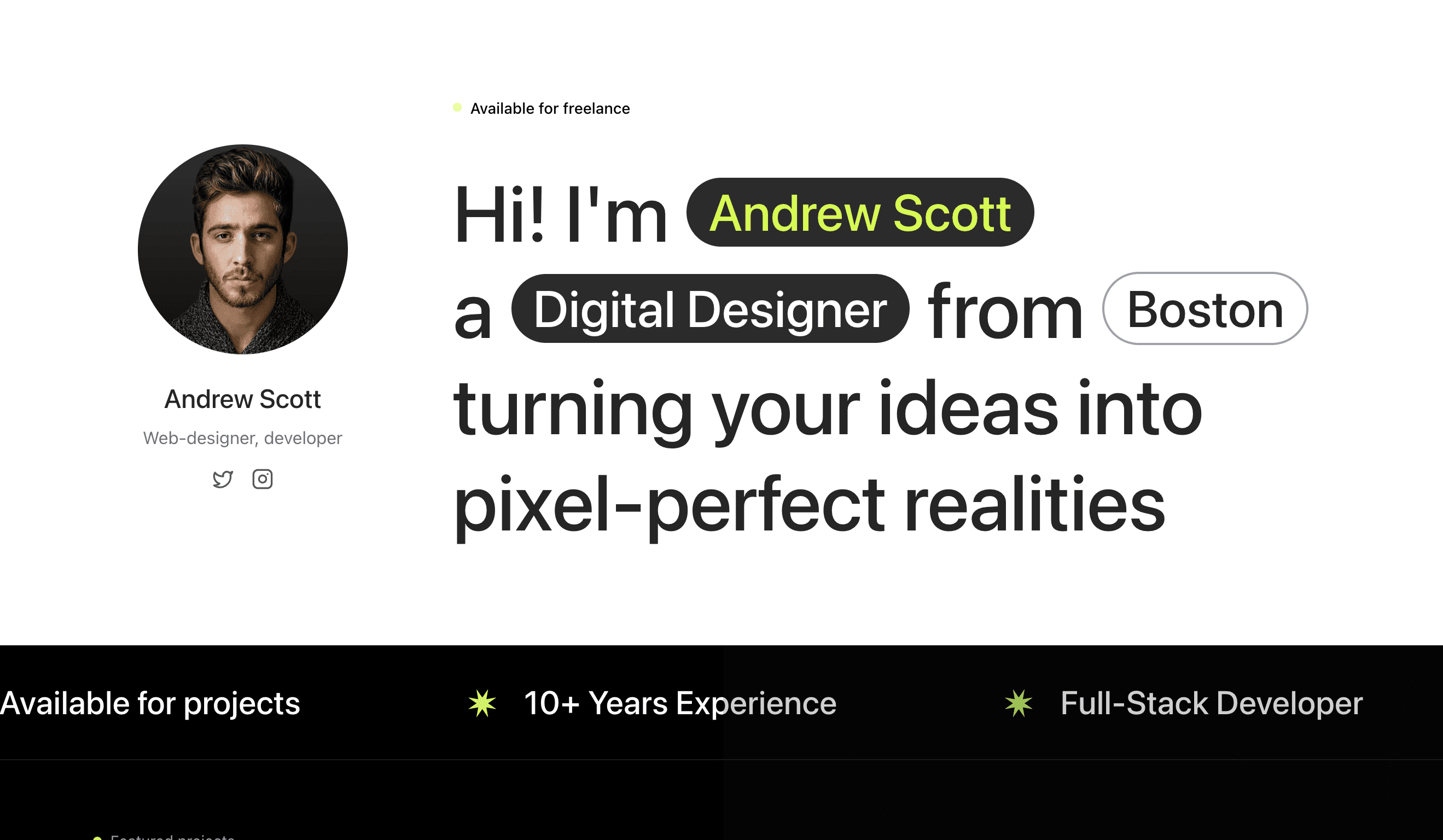
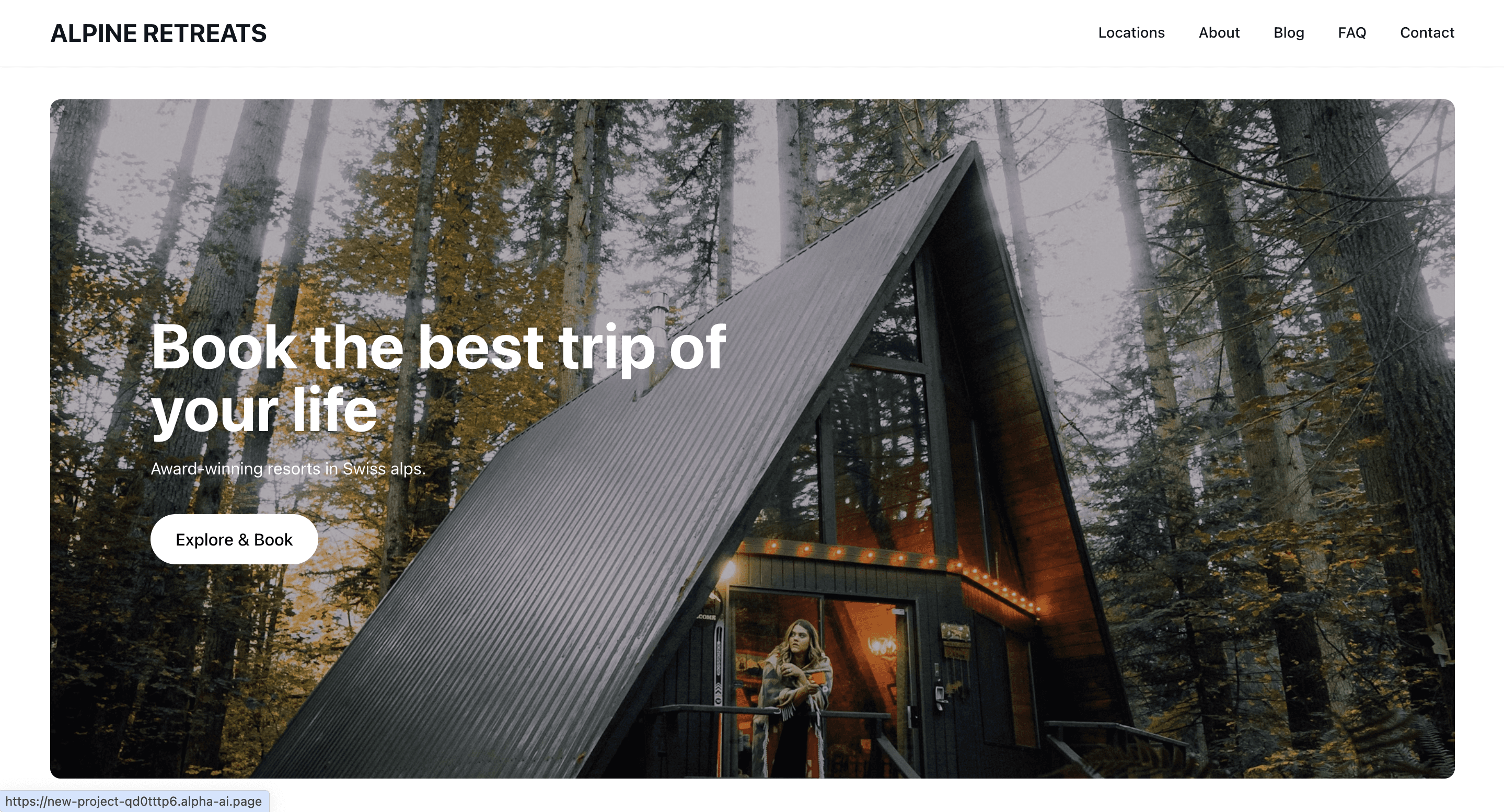
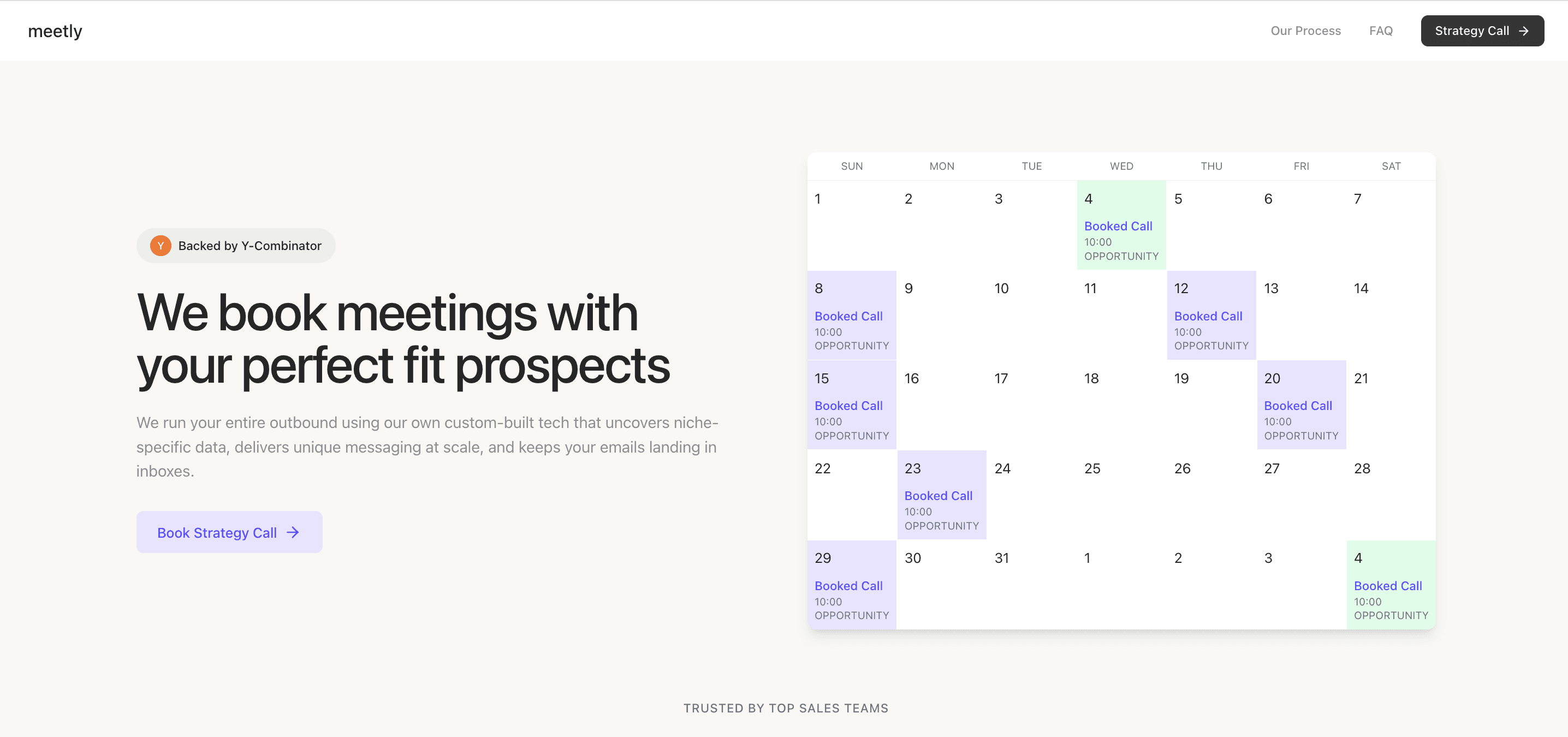
Build beautiful websites like these in minutes
Use Alpha to create, publish, and manage a fully functional website with ease.
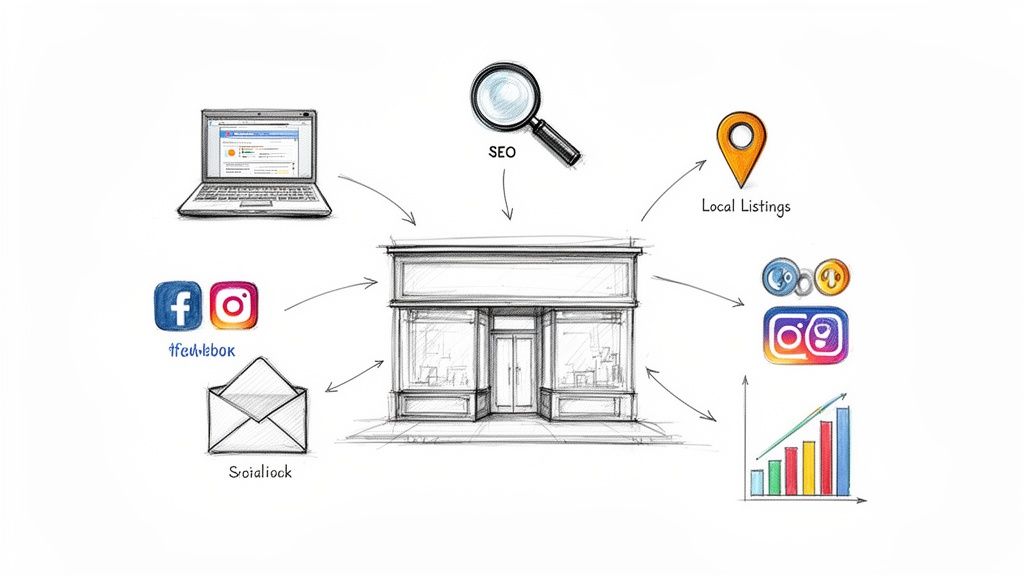
Think of your online presence as your digital footprint—it's how customers find you, get to know you, and decide if they trust you. It's not just about having a website. It's your virtual storefront, your customer service hub, and your brand's personality, all working together.
Why Your Online Presence Is Your New Front Door
I get it. The idea of building a digital presence from scratch can feel like a mountain to climb. Many small business owners I talk to are worried about the time, the money, and the tech skills they think they need. But here's a thought: what if the biggest risk isn't trying, but standing still?
These days, your online presence is the first place customers look. It's your 24/7 salesperson and your first impression, all rolled into one. For most people, it's the digital equivalent of walking past your shop on the street.
The Real Cost of Staying Offline
The gap between how people shop and how businesses operate is staggering. Even in 2023, only 73% of small businesses in the U.S. had a website. That means more than a quarter of businesses are basically invisible online. And while 92% of owners agree a website makes them look more credible, nearly a third still haven't taken the plunge.
This isn't just a missed opportunity; it's a huge one. If you don't have a solid digital footprint, you're missing out on the vast majority of people who start their search for pretty much everything on Google.
Take a look at the numbers. The disconnect between consumer habits and small business adoption tells a powerful story.
The Digital Divide Opportunity at a Glance
Consumer Behavior | Small Business Reality | The Opportunity |
|---|---|---|
97% of consumers search for local businesses online. | 27% of small businesses don't have a website. | Capture local search traffic your competitors are ignoring. |
88% of consumers trust online reviews as much as personal recommendations. | Many businesses have an incomplete or unmanaged Google Business Profile. | Build trust and social proof with a well-managed review strategy. |
50% of consumers who do a local search on their phone visit a store within a day. | A lack of a mobile-friendly site creates a poor user experience. | Drive immediate foot traffic with a responsive, easy-to-use website. |
These stats paint a clear picture: customers are online, and businesses that meet them there have a direct path to growth.
This whole process boils down to a simple, repeatable cycle. You help people discover you, you earn their trust, and then you grow.
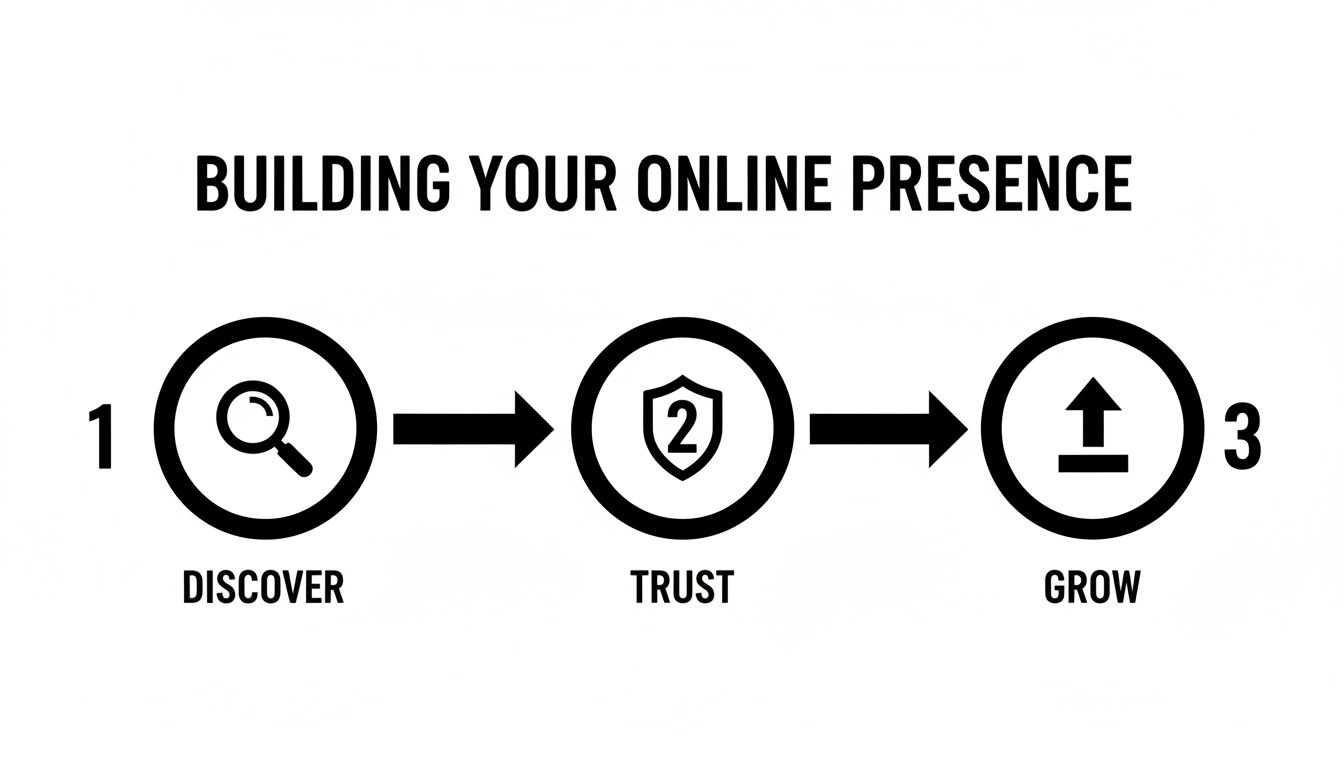
The takeaway here is simple but powerful: growth doesn't happen by accident. It’s the direct result of making your business easy to find and easy to trust.
Modern Tools Have Leveled the Playing Field
The good news? All the old barriers are coming down. You don't need to be a coding genius or have a massive marketing budget anymore. Modern tools have made it easier and more affordable than ever to build a professional online foundation that actually gets results.
At the end of the day, your online presence has one job: make it incredibly easy for the right people to find you, trust you, and buy from you. Every single piece—from your website to your social media posts—should be working toward that goal.
Before you jump in, it's smart to map things out. Having an actionable marketing strategy for small business will give you a clear roadmap. Think of this guide as your playbook. We'll break everything down into simple, manageable steps to build a presence that doesn't just look good, but actively works to grow your bottom line.
2. Build a Website That Actually Sells for You
Think of your website as your best salesperson—the one that never sleeps. It’s not just an online brochure; it’s your digital storefront. And just like a messy, confusing physical shop, a poorly designed website will send potential customers running. The goal here isn’t just to have a website, but to build one that actively turns browsers into buyers.
Let's walk through this with a real-world example. Imagine a local bakery, "The Rolling Pin," that wants to grow its business online. They need more than just a pretty gallery of cakes; they need a website that pulls in orders for birthdays, weddings, and those "just because" moments.
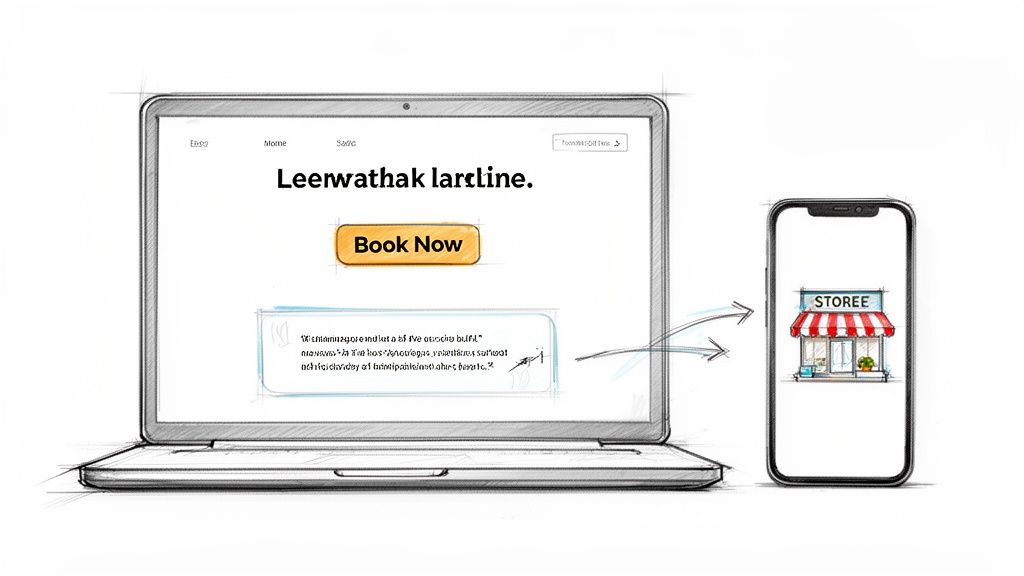
Putting real effort into a professional site pays off, literally. On average, businesses with a solid website can see up to 50% more revenue. But there’s a catch: a staggering 88% of shoppers will ditch a site for good after a single bad experience. Good design isn't a luxury; it's essential.
Have a Clear Goal for Every Single Page
Before you get lost in choosing colors and fonts, stop and ask one simple question for every page you plan to build: “What do I want the visitor to do here?”
That answer is your call-to-action (CTA). A website without clear CTAs is like a salesperson who shows you a fantastic product and then just walks away. You need to guide the customer to the next step.
For our bakery, The Rolling Pin, the goals might look like this:
Homepage: We want people to see our amazing custom cakes. The main CTA button should be big, bold, and say something like, "Design Your Dream Cake."
Wedding Cakes Page: The goal is to get couples in the door for a tasting. So, the CTA here becomes "Schedule Your Free Tasting."
Contact Page: We want to make it dead simple for people to ask questions. The button shouldn't just say "Submit"; it should say "Send Your Inquiry."
See the pattern? Each CTA tells the user exactly what to do next. This clarity is the bedrock of a website that actually converts.
Design for Trust and Simplicity
A cluttered, confusing website screams unprofessionalism. Your visitors are busy, and they need to find what they're looking for in seconds. The secret is a clean layout and navigation so simple a five-year-old could use it.
Keep Your Navigation Obvious
Now is not the time to be clever with your menu. Stick to the classics: Home, About, Services, Contact. For The Rolling Pin, the navigation should be crystal clear: Cakes, Cupcakes, Weddings, About, and Contact. No one should ever have to guess where to go.
Show, Don't Just Tell, with Social Proof
People trust other people more than they trust brands. That’s why testimonials, reviews, and logos of clients you’ve worked with are so powerful. This is called social proof, and it tells visitors they're in safe hands.
The Rolling Pin could have a scrolling section on its homepage featuring glowing reviews from happy parents and newlyweds. It instantly builds confidence.
Your website is your greatest asset. More people will visit your website than will ever walk into your store. – Forbes
This is exactly why building that trust digitally is so crucial. Your website has to do the heavy lifting of building rapport when you're not there to do it in person.
Make Your Site Mobile-First, No Excuses
More than half of all internet traffic now comes from smartphones. Let that sink in. If your website is a pain to use on a phone, you're willingly turning away over half of your potential customers.
"Mobile-first" means you design the experience for the small screen first and then adapt it for desktops. It's not an afterthought.
This is where modern website builders like Alpha are a game-changer. You don’t have to be a tech wizard; the platform is built to automatically make your site look and work perfectly on any device. For our bakery, this means a busy parent can order a birthday cake from their phone while waiting in the school pickup line. Easy.
Your High-Converting Website Checklist
So, what are the absolute must-haves? Before you launch, run through this quick checklist to make sure your site is built to perform.
A Clear Value Proposition: A headline on your homepage that says exactly what you do and for whom. For The Rolling Pin: "Handcrafted Custom Cakes for Every Celebration in Springfield."
Strong Calls-to-Action (CTAs): Obvious buttons with action-oriented text.
Simple Navigation: An easy-to-use menu that gets people where they need to go, fast.
Trust Signals: Real customer testimonials, reviews, or partner logos.
High-Quality Photos & Videos: Professional images of your products, your team, or your space.
A Flawless Mobile Experience: Your site must be a joy to use on a smartphone.
Speed, Speed, Speed: A slow-loading site will kill your conversions and your search rankings.
Turning visitors into customers is a science, and your website is your lab. For a deeper look into the mechanics, it’s worth reading up on how to improve your website conversion rate. And if you're ready for more advanced strategies, check out our guide on https://www.alpha.page/blog/how-to-increase-website-conversions.
4. Get Found by Customers in Your Neighborhood
So, you've built a beautiful website. That's a fantastic start, but it's a bit like opening a stunning new shop on a hidden back alley. If your ideal customers can't find you, it doesn't matter how incredible your products or services are.
This is where local search comes in. It's probably the single most important step for any business that serves a specific geographic area.
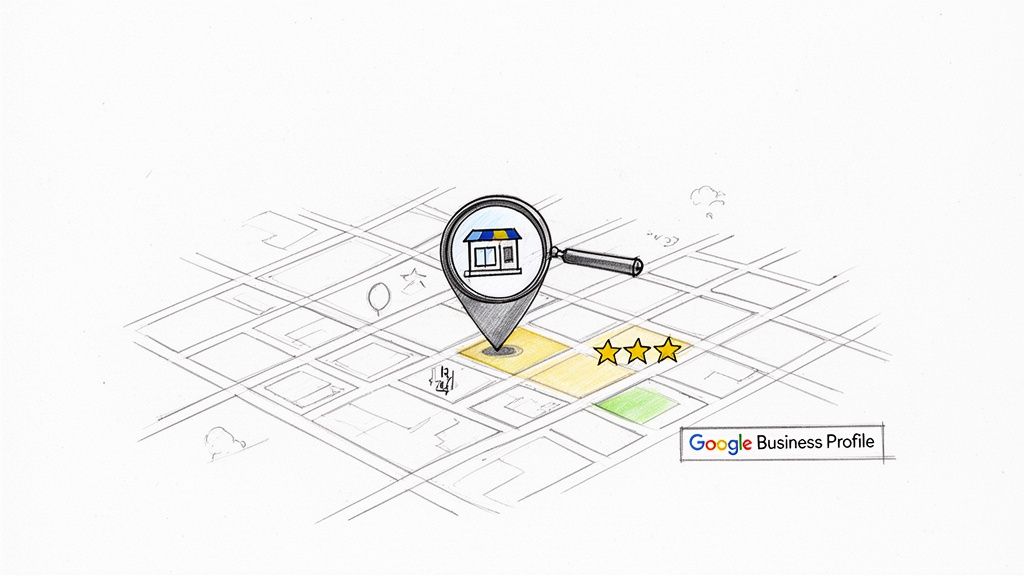
Let's cut through the jargon. Local SEO is just about making your business impossible to miss when people nearby search for what you offer. When someone types "best coffee near me" or "plumber in Springfield" into Google, you need to be the business that pops up.
Your Most Powerful (and Free) Marketing Tool
Enter your Google Business Profile (GBP). This is the cornerstone of your local presence. It's that info box you see in Google Search and on Maps showing a business's hours, phone number, address, and reviews.
And the best part? It's completely free.
Claiming and optimizing this profile isn't optional anymore—it's essential. Think of it as your digital storefront on the biggest search engine in the world. A well-managed profile can send a flood of new calls, website visits, and foot traffic your way.
In many ways, a complete Google Business Profile has become the new homepage for local businesses. It gives customers the key details right where they're searching, often before they even need to click through to your website.
But simply filling out your profile once and forgetting it won't cut it. To really make it work for you, it needs consistent attention.
How to Turn Your Profile into a Customer Magnet
To transform your GBP from a basic listing into a lead-generating machine, you need to focus on a few key areas. These activities signal to Google that your business is active, relevant, and trustworthy.
Fill Out Everything: Don't skip a single field. Seriously. Add your services, specific business hours, accessibility info, and special attributes like "veteran-owned" or "outdoor seating." The more details you provide, the better Google can match you with the right customers.
Become a Photo Hoarder: It's a fact that businesses with over 100 images on their profile get way more engagement. Post high-quality photos of your storefront, your team in action, your products, and even happy customers (with their permission, of course). Photos tell a story and build instant trust.
Obsess Over Reviews: Customer reviews are a massive ranking factor. Make it a habit to ask happy customers to leave a review. Then, make sure you respond to every single one—good or bad. It shows you're listening and that you care.
Use Google Posts Weekly: Think of these as free mini-ads that show up right on your profile. You can use Posts to share a special offer, announce a new product, or highlight an event. They’re a fantastic way to grab a searcher's attention with timely info.
Answer Questions Before They're Asked: Check out the Q&A section on your profile. You can—and should—proactively add common questions and then answer them yourself. This puts helpful information right at your customers' fingertips.
These actions do more than just help your rankings; they create a rich, engaging experience for anyone who discovers your business online.
Simple Website Tweaks for Local Authority
Your Google Business Profile and your website need to work as a team. A few simple tweaks to your site's content can reinforce your local authority to search engines.
For instance, a local bakery's homepage title shouldn't just say "Welcome to Our Bakery." It should be something specific like, "Artisan Breads & Custom Cakes in Springfield." That immediately signals your location and what you do.
Make sure your service pages and contact page clearly list the specific towns or neighborhoods you serve. This helps Google connect your website to location-based searches, boosting your entire local online presence. For a much deeper dive, our small business SEO checklist is a great place to start optimizing your website.
Build a Real Community with Smart Social Media
Let's be honest, social media can feel like a bottomless pit of work. But building an effective online presence for your small business isn't about being everywhere all at once. It’s about being in the right places, showing up consistently, and being yourself. The secret is to work smarter, not harder, to build a genuine community around your brand.
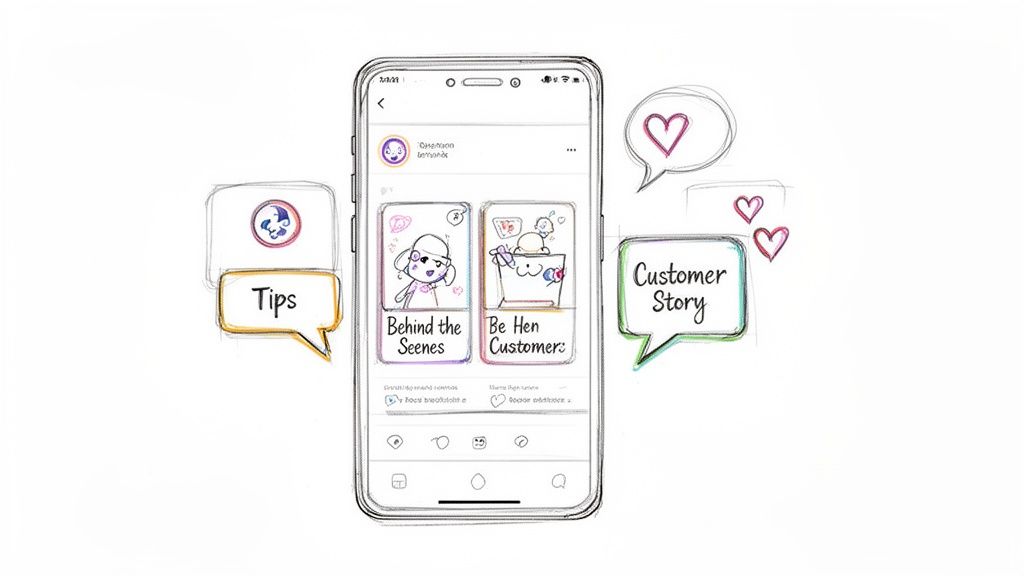
First thing's first: resist the urge to jump on every new, shiny platform. Your energy is a finite resource. It's far better to focus on one or two channels where you know your ideal customers are already hanging out. A local coffee shop will probably crush it on Instagram, while a B2B consultant is far more likely to find clients on LinkedIn.
Choose Your Platforms Wisely
This is the most critical first step, so don't just guess. Do a little recon work to figure out where your target audience spends their time online.
For visual brands (restaurants, boutiques, artists): You belong on Instagram and Pinterest. These platforms are built for beautiful photos and videos that show off what you do best.
For B2B or service businesses (consultants, contractors, agencies): Your best bet is usually LinkedIn or Facebook. They're perfect for more detailed posts, networking, and engaging in community groups.
For brands targeting a younger crowd: Look to TikTok and Instagram Reels. This is where you connect through short-form video, trends, and a bit of humor.
Once you’ve picked your platforms, commit. Seriously. One active, engaging profile is infinitely better than five ghost towns.
Create a Simple and Sustainable Content Plan
You don't need a 50-page strategy document. All you really need to get started is a simple plan built around "content pillars"—a handful of core topics you'll consistently talk about. This turns content creation from a daily headache into a simple fill-in-the-blanks exercise.
Here are a few pillars that work for almost any small business:
Helpful Tips: Share what you know. A landscaper could post weekly lawn care advice. A local bakery could show a simple frosting technique. This isn't giving away secrets; it's building trust and showing you're the expert.
Behind the Scenes: People buy from people. Show the human side of your business—your team at work, how a product is made, or even just a funny moment from the day. It makes your brand relatable.
Customer Stories & Features: Let your happy customers do the selling for you. Share their testimonials or photos of them using your product (always ask for permission first!). This is powerful social proof.
Having a simple structure like this makes planning a breeze. If you want to dive deeper, we have a complete guide on how to create a content strategy that actually works.
Focus on Engagement Over Broadcasting
The real power of social media isn't in shouting your promotions from the rooftops; it's in the conversations you have. It’s a two-way street, and replying to comments and messages is arguably more important than whatever you plan to post next.
The goal isn't just to gather followers; it's to build a community. A community talks back, supports each other, and ultimately becomes your most passionate group of advocates.
This is where so many businesses drop the ball. While a staggering 94% of small businesses post on social media monthly, only 37% consistently engage with their customers. That's a huge missed opportunity, because engagement is exactly what people want. When someone takes the time to comment, a quick reply shows you’re listening and that you care.
Use Paid Ads to Accelerate Growth
Once you’ve got a good organic rhythm going, paid social ads can be a fantastic way to pour a little fuel on the fire. You don’t need a massive budget, either. A small, targeted investment can go a long way.
For example, imagine a local pizza shop with a "Two-for-One Tuesday" special. They could spend just $50 on a Facebook ad targeted specifically to people within a 5-mile radius who have shown an interest in pizza. This hyper-focused approach gets their offer in front of the most relevant people, driving actual foot traffic without wasting a dime on an audience that’s too far away to visit. That's how you use paid ads smartly.
Turning Followers into Loyal Customers
Getting website traffic and seeing likes pile up on social media feels great, but let's be honest—those "vanity metrics" don't pay the bills. The real work begins when you start converting all that online attention into actual, sustainable revenue. This is where you build the bridge between simply having an audience and creating a community of loyal customers.
The engine that powers this transformation is content marketing. It sounds like a big, intimidating term, but the idea behind it is incredibly simple: create and share genuinely useful stuff that solves your customers' problems. When you do that, you build trust, and trust is the foundation of any lasting business relationship. The easiest place to kick this off? A simple blog on your website.
Think of it this way: every blog post is another door for a potential customer to walk through. Imagine a local dog groomer who writes an article titled "5 Simple Ways to Keep Your Dog's Coat Healthy Between Grooms." That single piece of content does two things brilliantly. First, it attracts local pet owners who are actively searching for solutions online. Second, it instantly positions the groomer as a knowledgeable, trustworthy expert in their field.
From Casual Visitor to Engaged Subscriber
Once you get someone to visit your site, the next challenge is to keep the conversation going. While social media is fantastic for reaching new people, you're essentially building on rented land. You don't own your followers, and the platform's algorithm decides who sees what you post.
Email, on the other hand, is different. It's the most direct and reliable communication channel you have. An email list is a direct line to your most interested fans—people who have literally raised their hand and said, "Yes, I want to hear from you." This is an asset you own and control, making it incredibly powerful for building real relationships.
For every $1 you spend on email marketing, you can expect an average return of $42. That’s a higher return than you can expect from any other form of marketing.
That mind-blowing ROI isn't an accident. It underscores why building an email list should be a top priority from day one. It’s not about blasting people with sales pitches; it's about continuing the valuable conversation you started with your helpful content.
Digital Marketing Channel ROI Comparison
To put the power of email into perspective, it's helpful to see how it stacks up against other common marketing channels. While the best strategy always involves a mix of tactics, understanding the potential return on investment for each can help you prioritize your time and budget.
Marketing Channel | Key Benefit | Reported ROI / Impact |
|---|---|---|
Email Marketing | Direct access to an owned audience, high engagement | $36 - $42 for every $1 spent |
SEO | High-quality, organic traffic with long-term value | Often cited as one of the highest ROI channels |
Content Marketing | Builds authority, trust, and generates inbound leads | Generates 3x as many leads as traditional marketing |
Social Media Ads | Highly targeted reach and brand awareness | Varies widely by platform, typically $2 - $5 return per $1 |
As you can see, while paid ads offer targeted reach, channels that build trust and provide value—like email and content marketing—tend to deliver a much higher return over the long haul.
Building Your Email List the Right Way
Getting people to hand over their email address is all about offering a fair trade. You're asking for something valuable—their direct attention—so you need to give them something valuable in return. This little "bribe" is what marketers call a lead magnet.
Here’s a simple game plan to get started:
Create a Simple Offer: You don't need a 50-page ebook. Your lead magnet could be a simple one-page checklist, a special discount on a first purchase, or a helpful template. For our dog groomer, a "Printable At-Home Grooming Checklist" would be perfect.
Add a Signup Form to Your Site: Make it easy for people to sign up. Place a clear, simple form in key spots, like at the bottom of blog posts, on your homepage, or even in a polite pop-up that appears as someone is about to leave. Use a compelling call-to-action, like "Get Your Free Checklist."
Choose a User-Friendly Tool: You don't need to be a tech wizard. Services like Mailchimp or ConvertKit make it incredibly easy to manage your list and send beautiful emails. Most have free plans to get you started without any upfront cost.
This creates a simple but effective funnel. A potential customer finds your helpful blog post, sees the offer for a free checklist, and gives you their email to get it. Just like that, you now have a direct line to stay in touch.
Nurturing Relationships with a Monthly Newsletter
Once people subscribe, the goal is to provide consistent value, not just bombard them with sales pitches. A simple monthly newsletter is the perfect way to do this without overwhelming yourself or your audience.
A great rule of thumb to follow is the 80/20 rule: 80% of your newsletter should be genuinely helpful, while only 20% should be promotional. Share another useful tip, link to your latest blog post, or tell a quick customer success story. Then, at the very end, you can tack on a small section with a special offer or a link to your services.
This approach builds a real relationship over time. When your subscribers are finally ready to buy, you’ll be the first business they think of because you’ve been there all along, helping them out for free. That's the secret to turning followers into customers who stick around for the long haul.
Common Questions About Building an Online Presence
Diving into the online world can feel like a huge undertaking, and it's natural to have a lot of questions. I've seen countless small business owners pause, not because they doubt the importance of being online, but because a few key uncertainties hold them back.
Let's cut through the jargon and tackle those big questions head-on. My goal is to give you straight answers so you can move forward with a clear plan.
How Much Does Building an Online Presence Cost?
This is usually the first thing people ask, and the answer is surprisingly flexible: it costs whatever you decide to invest. You absolutely do not need a massive budget to make a real impact. In fact, some of the most powerful first steps are completely free.
Google Business Profile: Getting your business listed on Google is 100% free. This is arguably the most important thing you can do for local visibility, and it costs nothing but a little bit of your time.
Social Media Accounts: Creating a profile on Facebook, Instagram, or LinkedIn doesn't cost a dime.
Email Marketing: Many of the best email platforms, like Mailchimp, offer free plans that are perfect when you're just starting to build a subscriber list.
Your website is typically the main variable in your budget. While a custom site from a design agency can easily run into thousands, that's no longer the only option. Modern tools have completely changed the game. You can now build a professional, effective website for a small monthly fee—often less than what you pay for coffee each month.
The most important thing to remember is that you are in control of the budget. Start with the free, high-impact tools and scale your investment as your business grows and you see a return.
Ultimately, think of this as an investment, not an expense. A solid online presence doesn't just cost money; it actively makes you money by bringing new customers right to your door.
How Much Time Does This Really Take?
For a small business owner, time is the most valuable currency there is. The thought of adding a whole new set of tasks to an already packed schedule can feel overwhelming, and that's a completely valid concern.
The secret isn't to do everything at once. It’s about being strategic and consistent.
You can get fantastic results with just a few focused hours a week.
Initial Setup (4-6 hours): This is a one-time block of time to get the essentials in place. That includes building a simple website with a tool like Alpha, claiming your Google Business Profile, and setting up your primary social media account.
Weekly Upkeep (1-2 hours): This is all it takes to maintain momentum. We're talking about posting to social media a couple of times, responding to new reviews, and answering customer messages.
Focus on the 20% of activities that drive 80% of the results. Trying to be a superstar on five different social media platforms is a fast track to burnout. Instead, pick one, do it well, and stay consistent. That's a manageable—and much more effective—approach.
What If I Am Not Tech-Savvy?
This is the biggest myth that holds people back. The idea that you need to be a coding whiz or a graphic design pro to build a presence online is completely outdated. Today's tools are built for business owners like you, not for developers in Silicon Valley.
Modern website builders use simple drag-and-drop editors or AI prompts where you just describe your business and what you need. Posting on social media is as easy as sending a text. If you can use a smartphone, you already have all the technical skills you need to get started.
The learning curve has never been flatter. Don't let a fear of technology stop you from reaching the 97% of consumers who go online to find local businesses. You can do this.
Ready to build a website that looks professional without the technical headaches? Alpha uses AI to help you create a stunning, high-converting site in a matter of hours, not weeks. Turn your vision into reality and start growing your business today. https://www.alpha.page
EXAMPLES
Build beautiful websites like these in minutes
Use Alpha to create, publish, and manage a fully functional website with ease.