
How to Create Website Mockups People Actually Love
Learn how to create website mockups that bridge the gap between idea and reality. Our guide covers tools, principles, and developer handoff.
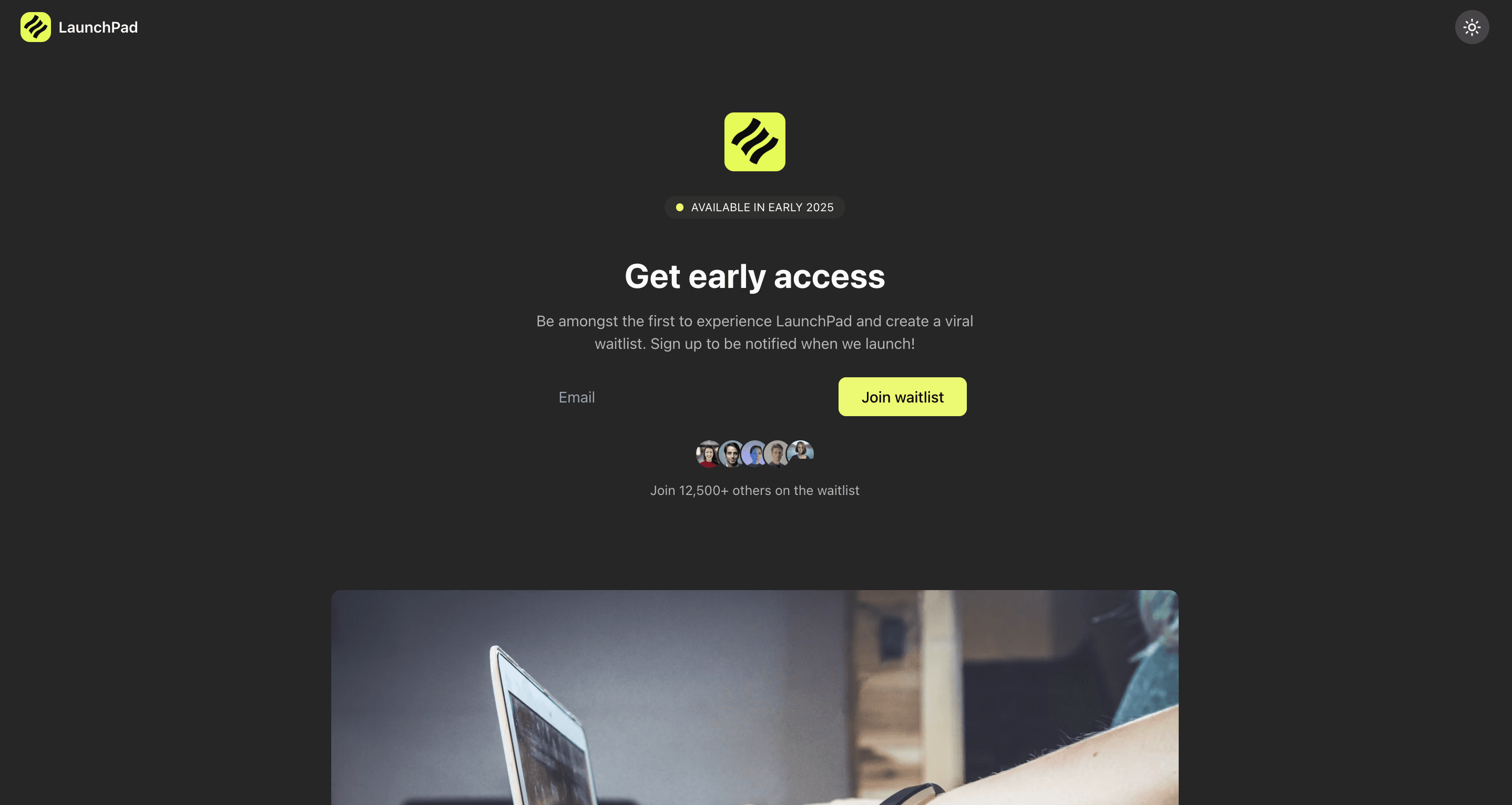
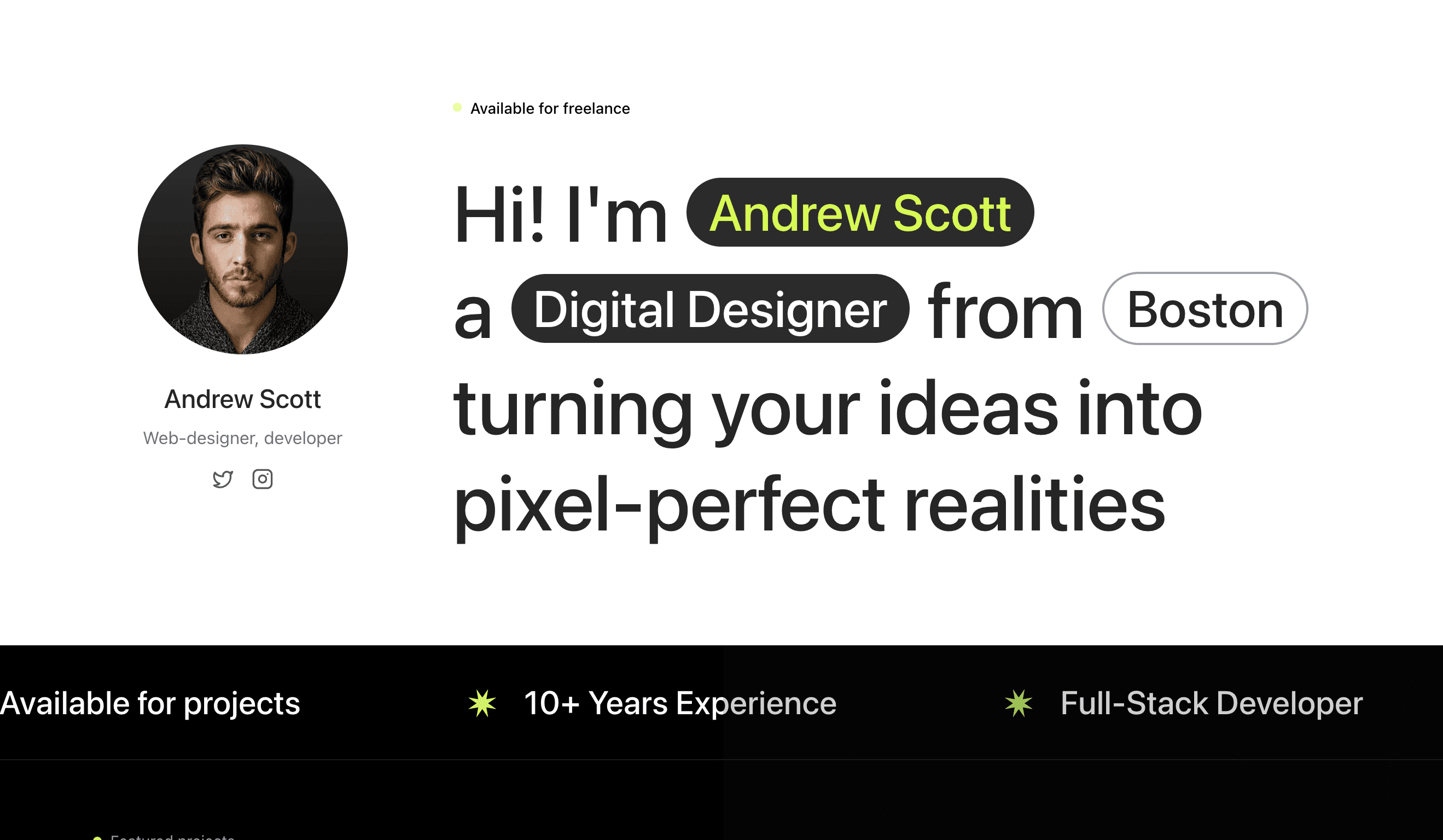
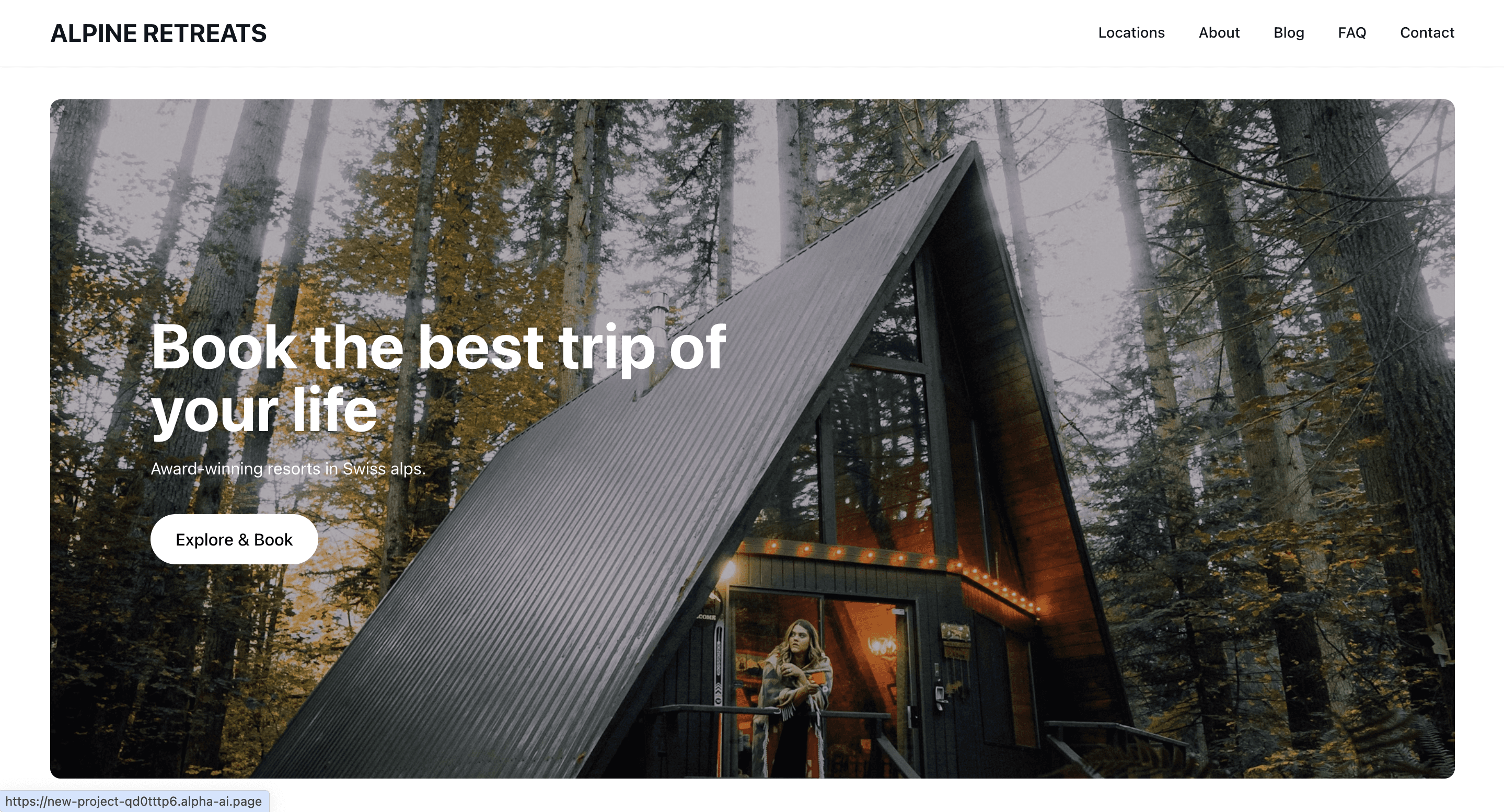
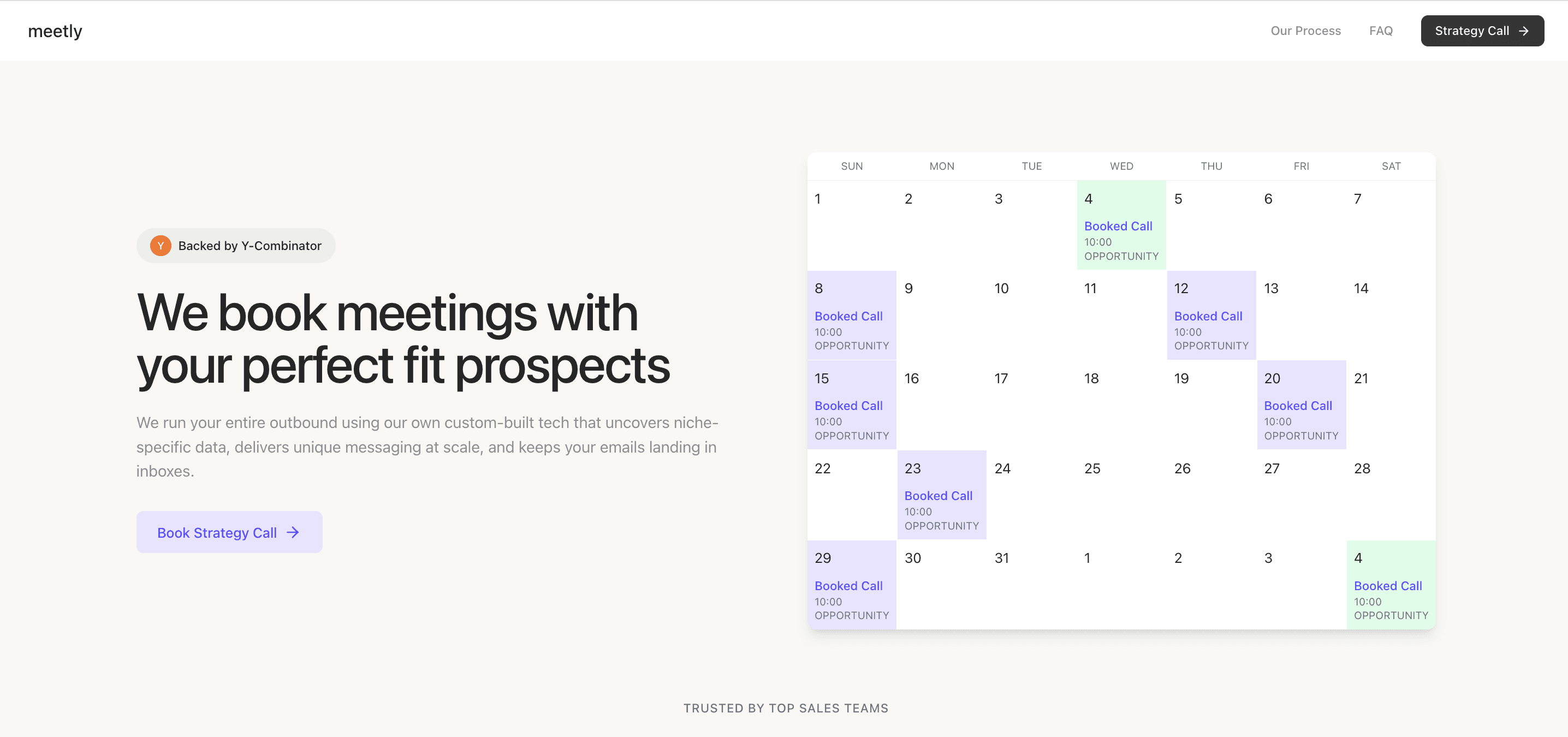
EXAMPLES
Build beautiful websites like these in minutes
Use Alpha to create, publish, and manage a fully functional website with ease.
In the food business, your website isn't just a digital brochure—it's your new front door. Think of it as the first impression, the maître d', and the cashier all rolled into one. Using website templates for food industry businesses is one of the smartest moves you can make, because they’re built from the ground up to turn a casual browser into a paying customer.
Why Your Digital Storefront is Everything
Let's be honest, a generic website just won't cut it for a restaurant, café, or catering company. Your online presence is directly tied to your bottom line, influencing everything from table bookings to takeout orders. A template designed specifically for food service acts as a 24/7 sales and marketing machine. It’s the difference between an online signpost and a powerful tool that actually makes you money.
Many food business owners get stuck in a tough spot. Do you shell out thousands for a custom-built site that takes months to launch? Or do you settle for a cheap, one-size-fits-all platform that can't even handle a proper menu or online ordering? Neither option is great.
The Sweet Spot: Specialized Templates
This is where industry-specific website templates come in. They offer a perfect middle ground, giving you the features you need without the custom-build price tag. They're designed with a food customer's journey in mind—from the moment they land on your site feeling hungry to the moment they complete their tenth order.
A well-chosen template is built to:
Put More Money in Your Pocket: By integrating a commission-free online ordering system, you stop handing over huge chunks of your revenue to third-party delivery apps.
Make Your Life Easier: With seamless reservation widgets and easy-to-update menus, you’ll spend less time on the phone and more time focusing on what you do best—serving great food.
Keep Customers Coming Back: A site that looks great and is simple to use encourages people to return. It becomes their go-to for a quick lunch order or a weekend dinner reservation.
The right template isn't just about pretty pictures; it’s a strategic asset that directly impacts your key business metrics.
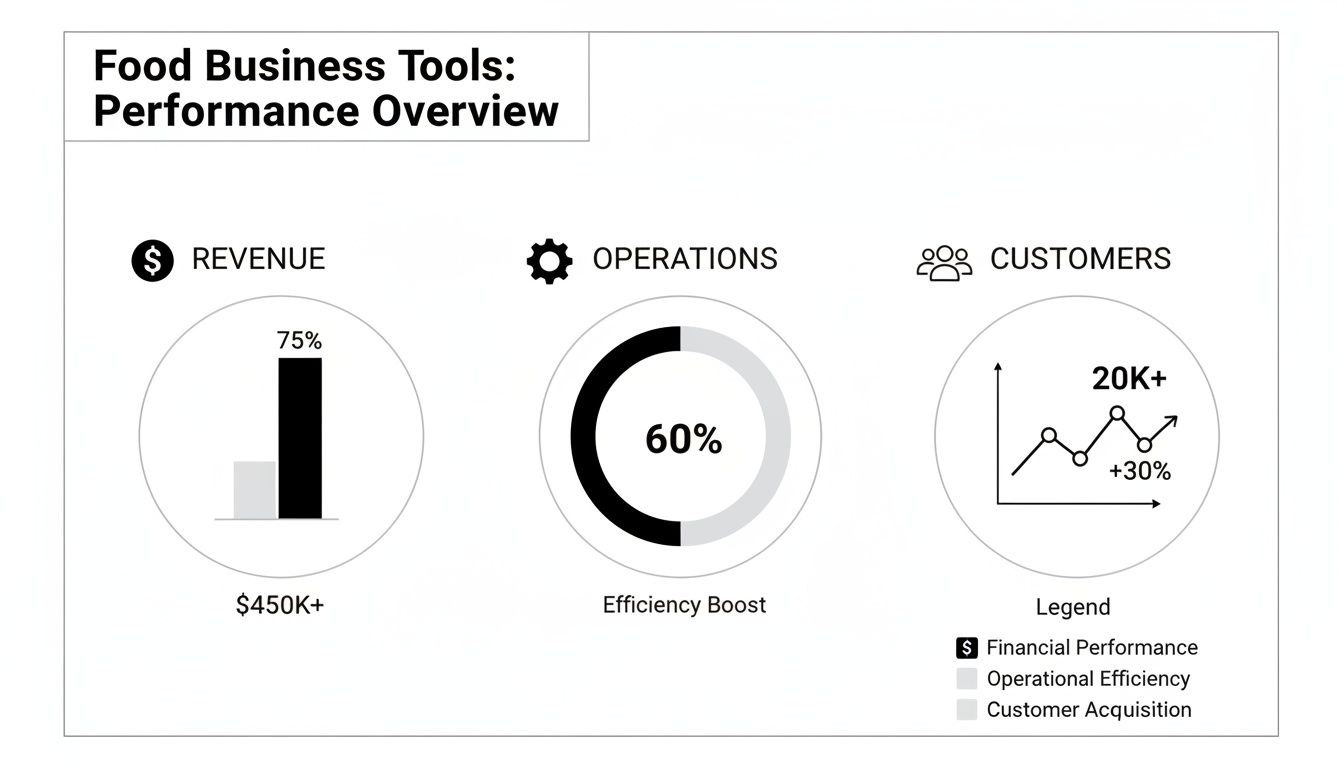
As you can see, a focused digital presence enhances everything from your revenue and operational flow to your customer relationships.
Putting Professional Design Within Reach
Not long ago, getting a website with this level of polish and functionality required a team of developers and designers. That's not the case anymore. Modern tools, especially AI-powered website builders, have made it possible for anyone to create a professional, industry-specific website without writing a single line of code.
Your website template should be your best employee. It works tirelessly around the clock to bring in new customers, take their orders, and book their tables—and it never asks for a day off.
At the end of the day, picking the right digital storefront is a crucial investment in your business’s growth. It gives you direct control over your brand, helps you connect with your community, and carves out a profitable space for you in a very crowded market.
What Every Great Food Website Template Needs
When you're sifting through the endless options for website templates for food industry businesses, it's easy to get sidetracked by flashy designs. But a great website is more than just a pretty face; it’s your hardest-working employee. Certain features are absolutely non-negotiable—they're what turn a casual browser into a paying customer.
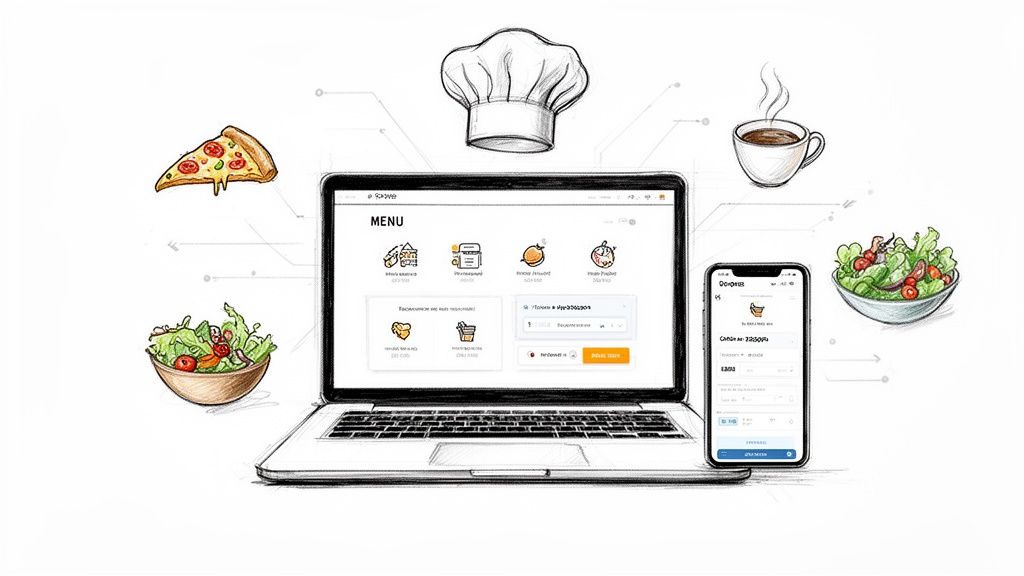
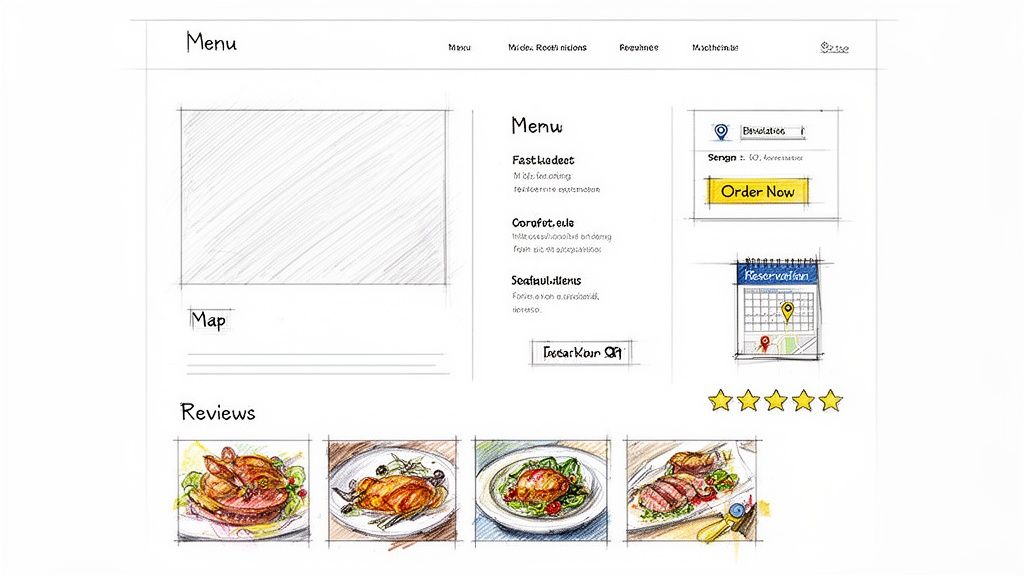
Let's start with the heart of your site: the menu. A stunning, visual menu is a must, but it has to perform. Customers, especially those on their phones, won't tolerate a clunky, slow-loading PDF that they have to pinch and zoom. You need a template that supports a lightning-fast, interactive digital menu that you can update in seconds when the daily special changes.
That menu should lead directly to your most valuable feature: integrated online ordering. If you're only using third-party delivery apps, you're handing over a huge slice of your revenue in commissions. The best templates come with built-in or easily integrated systems that let you take orders directly, commission-free. This puts you back in control of your profits and, more importantly, your customer relationships.
Making Reservations and Orders Effortless
A top-tier website template should make your life easier, not harder. A seamless reservation widget is the perfect example. When customers can book a table directly on your site, it frees up your phone lines and kills the risk of double-booking from juggling different platforms. The whole process should be incredibly simple for the user, asking for just enough information to lock in their spot.
The same goes for your ordering system. A clunky checkout with too many steps is a guaranteed way to lose a sale. Look for templates that simplify the process with features like saved customer profiles and one-click reordering. This isn’t just about convenience; it’s a smart strategy for building loyalty and getting people to order again and again.
Your website's job is to remove every possible barrier between a hungry visitor and a completed order. Each feature, from the menu to the checkout, should make it easier for them to give you their business.
In the food industry, having a dialed-in online presence is a massive advantage. Recent industry data shows that restaurants using specialized website templates saw a 32% jump in online orders and a 41% increase in returning customers. Why? Because these platforms bake in seamless ordering without the punishing fees of third-party services. You can read more about these findings and how a specialized template can boost your business.
Building Trust with Mouth-Watering Visuals and Real Reviews
We all know people eat with their eyes first, and your website is their first taste. A high-quality photo gallery isn't a "nice-to-have," it's essential. Your template needs a dedicated, well-designed space to show off professional shots of your food, your restaurant's vibe, and even your smiling team. These images tell your story and set expectations long before anyone walks through your door.
Just as crucial is building trust through social proof. Look for a template with a built-in section for customer reviews or testimonials. Even better, find one that can integrate a live feed from your Google or Yelp reviews to keep the content fresh and authentic. That kind of validation is often the final nudge a potential customer needs to hit "Book a Table" or "Order Now." For more tips on layout and visual hierarchy, check out our guide on website design best practices.
And of course, don't forget the basics. Your address, phone number, and hours of operation need to be impossible to miss. A good template will place this info right in the header or footer and include an embedded Google Map on your contact page. Make it dead simple for people to find you.
To help you prioritize, here’s a quick breakdown of the core features a high-performing food website absolutely must have. Think of this as your checklist for evaluating any template you're considering.
Core Features of a High-Performing Food Website
This table outlines the crucial features, their purpose, and the direct business value they deliver, helping you prioritize what matters most in a template.
Feature | Primary Function | Direct Business Impact |
|---|---|---|
Digital Menu | Displays food offerings in a fast, mobile-friendly format. | Enhances user experience and guides them toward ordering. |
Online Ordering | Allows direct, commission-free order placement. | Increases profit margins and provides valuable customer data. |
Reservation System | Enables customers to book tables directly on your site. | Streamlines operations and reduces manual booking errors. |
Photo Gallery | Showcases high-quality images of food and ambiance. | Creates desire and sets a premium brand perception. |
Customer Reviews | Displays testimonials and ratings from happy customers. | Builds trust and social proof, encouraging new visitors. |
Contact & Map | Provides clear location and contact details. | Drives foot traffic and makes it easy for customers to connect. |
Ultimately, choosing a template with these core components built-in sets a strong foundation for a website that not only looks great but also actively contributes to your bottom line.
Finding the Perfect Template for Your Food Niche
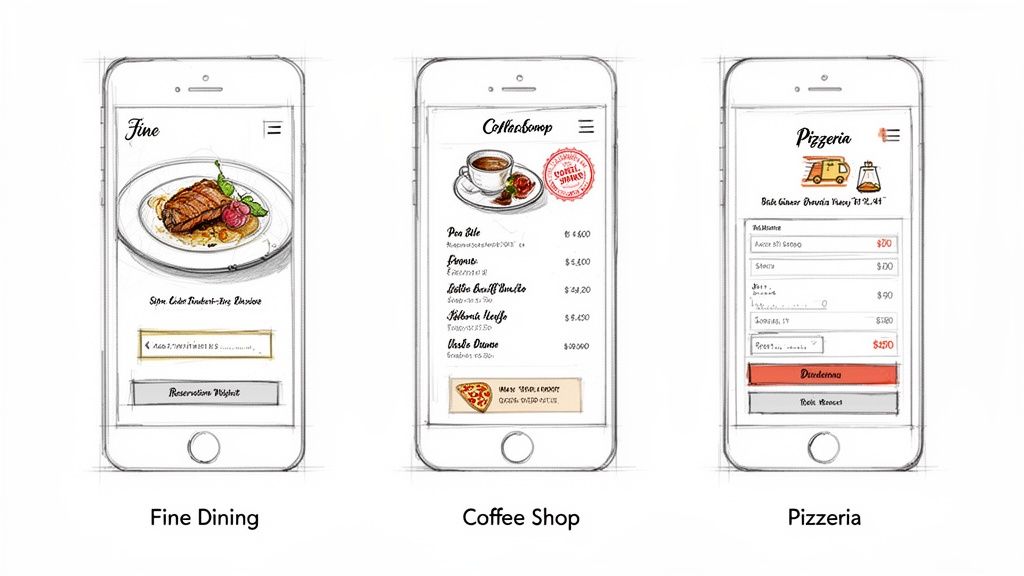
Here’s the thing: not all food businesses are the same, so why would their websites be? The online presence for a high-end steakhouse has completely different goals than a quick-service pizzeria or a weekly meal-kit delivery. Choosing the right template isn't just about picking a pretty design; it’s about finding one with the right bones to support your specific business model.
Think about it. A fine-dining restaurant needs a website that whispers elegance. The template should feel spacious, using stunning professional photos and maybe even video to set the mood. The main goal isn't a "Buy Now" button; it's getting people to book a table. So, a slick, integrated reservation system is a must-have, not a nice-to-have.
On the other hand, if you're running a ghost kitchen or a takeout-heavy pizza joint, your website needs to be all about speed and simplicity. The moment a hungry customer lands on your homepage, they should see the menu and a big, impossible-to-miss "Start Your Order" button. The whole process, from browsing to checkout, should be dead simple and take less than a minute.
Match the Template Features to Your Daily Grind
What does a typical day look like for your business, and what do your customers actually want from you online?
An artisan bakery, for example, needs a way to show off its incredible pastries and breads. A template with a beautiful, image-forward gallery is key, as is a system for pre-ordering custom cakes. We actually walk through this entire process in our guide to bakery website design, showing how to build an online experience that sells the craft.
A neighborhood coffee shop has a different goal. Its website should feel like a cozy extension of the physical space. Look for templates with blog sections or event calendars to announce things like new seasonal drinks or a weekend latte art throwdown. The focus is all on building a community.
Let's break it down for a few other common food businesses:
The Food Truck: Your website needs one thing front and center: a "Find Us Today" section. This should be dead simple to update and, ideally, pull from a live map feed. A mobile-first design is non-negotiable since everyone will be looking you up on their phone.
The Caterer: Your site is your digital portfolio. It needs to show off your work with gorgeous photo galleries of past events, feature sample menus, and have a detailed inquiry form that asks the right questions—guest count, event date, venue, etc.
The Online Grocer: This requires a serious e-commerce setup. It’s way more than a simple menu. You need a template built for inventory management, product filtering (think "organic" or "gluten-free"), and a secure checkout that customers trust.
Look Past the Pretty Pictures
When you're browsing templates, try to ignore the demo content. You might see a template styled for a fancy sushi restaurant, but if you look at its structure—the layout, the built-in features—it might be the perfect fit for your vegan cafe once you swap in your own photos and colors.
Focus on the layout and the functional modules. Does the template’s structure actually help you achieve your main goal? Whether that’s getting reservations, online orders, or catering leads, the foundation has to be right.
By looking at a template’s architecture instead of just its aesthetics, you’re making sure the digital home you build for your business is strong enough to grow with you. It’s about picking a true business tool, not just a digital brochure.
How AI Is Changing the Game for Restaurant Websites
For a long time, getting a website off the ground was a massive headache for anyone running a food business. You were usually stuck between two bad options: sink a ton of cash into a slow, custom-built site or settle for a generic template that never really captured your brand's flavor.
But that’s all changing. Artificial intelligence is flipping the script, making it quicker and easier than ever to launch a professional website that actually gets results. Think of AI-powered website builders as your personal design assistant, taking care of the tedious stuff so you can focus on your food and your customers.
From Blank Page to Full Website in Minutes
Let's be honest, staring at a blank screen is one of the biggest hurdles in web design. AI tools completely demolish that barrier by doing the heavy lifting for you. Instead of dragging and dropping every last button and text box, the AI can generate a complete, industry-specific layout from a few simple prompts.
Take a platform like Alpha, for example. You can literally just give it the URL of a competitor's website you like. The AI then instantly analyzes that site’s structure, layout, and key sections, building a proven framework for you to make your own. It's a game-changer because you're starting with a design that's already battle-tested for attracting customers in your specific niche.
"So glad I came across the recommendation on reddit... Alpha has been super easy and responsive. The website format copying function is a game-changer.” - Doug Roper, Founder & CTO @ Talent Spring
This single feature can save you months of guesswork. You’re not just mimicking a look; you're adopting a structure that works. You get a solid foundation right away, ready for you to personalize with your own branding, photos, and menu.
Your Personal On-Demand Copywriter and Designer
The help doesn't stop after the initial setup. Need a mouth-watering description for that new truffle pasta dish? AI can whip up compelling, SEO-friendly text in seconds. Not sure which colors create the perfect cozy café vibe? AI can suggest entire color palettes that fit your brand’s personality.
This technology puts a whole team of specialists at your fingertips, automating tasks that used to require a pro:
Content Creation: It can generate everything from your "About Us" story to menu descriptions and even blog post ideas.
Image Optimization: It will automatically resize and compress your food photos for lightning-fast loading times without losing that delicious quality.
SEO Suggestions: You'll get practical recommendations for keywords and meta descriptions to help your site show up in local searches.
This is more than just a time-saver. As a business owner juggling a dozen different roles, having an AI assistant means you can produce professional-grade work without hiring a separate copywriter or web designer. It makes the entire process far less intimidating. If you're curious about this approach, you can learn more by using AI to build a website.
A Smarter Way to Build and Grow
At the end of the day, AI-powered website templates for the food industry level the playing field. They give independent restaurants, cafes, and food trucks access to the kind of sophisticated digital tools that were once reserved for big chains with massive budgets.
This isn't just about building faster; it's about building a smarter, more effective online presence from day one. By analyzing successful designs and automating the grunt work, AI helps you create a website that not only looks incredible but is engineered to drive reservations, orders, and repeat business.
To really stay ahead, it helps to keep an eye on broader food service industry trends, where AI is playing an increasingly important role. This technology ensures your digital presence is built on a foundation of what’s already proven to work.
Turning a Template into Your Restaurant's Digital Home
Think of a great website template as the perfect storefront location. The foundation is solid, but it's empty. Customization is how you build out the interior, hang your sign, and create an atmosphere that tells customers exactly who you are. It’s the process of transforming a generic layout into an online experience that feels authentically yours.
This is where the real work begins, moving beyond demo content to create a digital asset that works as hard as you do. To do it right, you'll need to lean on effective branding strategies to ensure every pixel reflects your restaurant's identity. The end goal? A site so perfectly aligned with your brand that no one would ever suspect it started from a template.
Weaving Your Brand into the Visuals
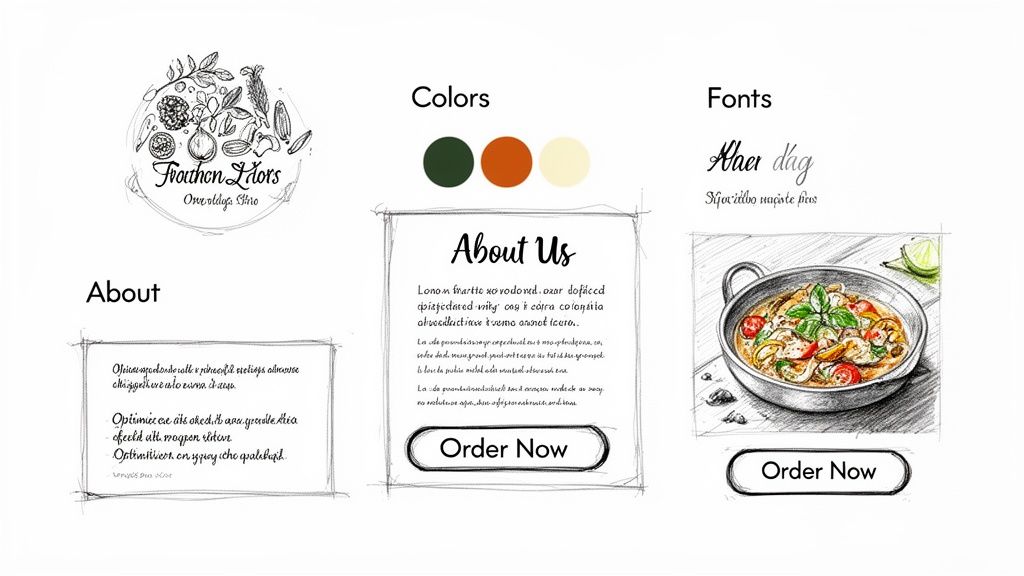
Your brand’s look and feel is its signature, and your website needs to be covered in it. The first, most obvious step is uploading your logo and implementing your core color palette. Don't just settle for the template's defaults. Use your primary brand colors for buttons, headers, and links to create a cohesive and professional look from the moment a visitor lands on your page.
Next up is typography. Fonts communicate a surprising amount of personality. A flowing script font can suggest elegance and fine dining, while a clean, modern sans-serif feels more casual and approachable. The key is to choose fonts that not only match your restaurant's vibe but are also dead simple to read on any screen, big or small.
Your website should feel like a digital extension of your physical restaurant. The colors, fonts, and imagery should instantly evoke the same feeling a customer gets when they walk through your front door.
Crafting Words and Images That Tell Your Story
With the visual foundation set, it's time to replace all that placeholder "lorem ipsum" text with copy that connects. Your "About Us" page isn't just a box to check—it's your chance to tell your story. What inspired you to open? Who’s the genius in the kitchen? Do you have a special connection to local farmers? This narrative builds a personal connection that a national chain could never replicate.
Your menu descriptions need that same energy. They should do more than just list ingredients; they need to make people hungry. "Chicken Pasta" is boring. "Pan-Seared Chicken with a Creamy Tuscan Garlic Sauce over Fresh Pappardelle" gets reservations.
And please, don't skimp on photos. High-quality images are non-negotiable. Hire a professional to capture your signature dishes, your dining space, and your team in action. These visuals are your best sales tool, but they must be optimized for the web. Huge image files will slow your site to a crawl, which frustrates visitors and tanks your search rankings. Always use a tool to compress your images before uploading them.
Winning the Local Search Game
For any food business, being found online means being found locally. Local SEO is your secret weapon for pulling in customers from right around the corner who are searching for things like "best tacos near me" or "brunch in downtown."
The first rule is consistency. Your restaurant's name, address, and phone number (NAP) must be identical everywhere it appears online. From there, you'll want to sprinkle local keywords throughout your site's copy, especially on your homepage and contact page.
Here are a few things you can do right away:
Target "Near Me" Searches: Mention your neighborhood, cross-streets, and nearby landmarks naturally in your content.
Use Menu Schema Markup: This is a bit of special code that helps Google understand your menu items, prices, and descriptions, sometimes even showing them directly in search results.
Optimize Your Google Business Profile: Make sure your profile is completely filled out, up-to-date, and linked directly to your website. Don't be shy about asking happy customers to leave you a review, either.
Designing for Action
At the end of the day, your website has a job to do: get people to book a table, place an order, or walk through your door. Every single element should guide visitors toward one of those actions. This is the heart of conversion rate optimization (CRO), and the best website templates for the food industry are already built with this in mind.
Your most important calls-to-action (CTAs)—buttons like "Order Now" or "Book a Table"—need to be impossible to miss. Stick them in prominent spots, like the top-right corner of your navigation bar, and use a contrasting color that makes them pop off the page.
We're seeing a huge shift toward specialized restaurant HTML templates for a reason. In 2025 alone, top-selling templates saw a 35% sales increase, driven by the fact that 80% of consumers now expect features like parallax menus and integrated maps. This directly correlates with a 22% rise in direct bookings through restaurant websites, proving just how powerful a well-designed digital storefront can be.
Common Questions About Food Website Templates
Diving into a new digital tool always brings up some questions. As you start exploring website templates for food industry businesses, it's totally normal to have a few reservations. Let's walk through some of the biggest concerns we hear from restaurant owners and food entrepreneurs so you can feel confident moving forward.
Can a Website Template Really Compete with Delivery Apps?
Yes, it can—and frankly, it's a much smarter long-term play. While delivery apps give you visibility, they also carve out a massive slice of your revenue. We're talking commission fees of 15-30% on every single order, which goes straight from your bottom line to theirs.
A great website template changes the game by letting you plug in your own commission-free online ordering system. All of that money goes directly back into your pocket. More importantly, you gain full control over the customer experience and, crucially, you own the customer data. This is gold for your future marketing efforts.
Once your site is optimized for local SEO, you'll start showing up for searches like "tacos near me." This pulls in direct traffic and builds a loyal customer base that knows to order straight from the source, cutting out the expensive middleman.
How Much Technical Skill Do I Need to Customize a Template?
Honestly, a lot less than you'd think. The days of needing a computer science degree to build a decent website are long gone. Modern platforms, especially the ones powered by AI, are built specifically for people who aren't coders.
You won't be messing with lines of code. Instead, you’ll be using simple drag-and-drop editors or typing plain-language prompts to change layouts, swap colors, and add your content. The whole point of these tools is to handle the techy stuff behind the scenes, letting you focus on what matters: your menu, your photos, and your brand's story.
If you can update a Facebook page or create a Word document, you have all the skills you need to customize a modern website template. The learning curve is intentionally shallow.
These platforms empower you to make quick updates yourself. No more calling a developer (and paying an invoice) just to add a weekend special or change your holiday hours.
Will My Website Look Generic If I Use a Template?
That’s a common worry, but a good template is just the foundation, not the finished house. The real magic, the thing that makes your site unique, comes from your branding and your content.
Think about it. Once you upload your logo, apply your specific brand colors, and fill the pages with high-quality photos of your food and your space, the template becomes unrecognizable. It becomes your site. Your unique story on the "About Us" page and those mouth-watering descriptions of your signature dishes are what people will remember.
It's like giving two chefs the same top-of-the-line pan; the meals they create will be entirely different. A premium template gives you a solid, well-built structure, but your content is what brings it to life and sets you apart.
What Is the Most Critical Factor for My Food Website's Success?
Hands down, it's the mobile experience. The vast majority of your customers will find you on their phones, often when they’re already out and deciding where to eat right now.
If your site is slow to load on a mobile connection or forces people to pinch and zoom a clunky PDF menu, you've lost them. They'll just hit the back button and go to your competitor whose site actually works. It happens in seconds.
The one feature you absolutely must look for is "mobile-responsiveness." This just means the template automatically re-formats itself to look great and work perfectly on any device, whether it's a giant desktop monitor or a tiny smartphone screen.
A flawless mobile experience isn't a bonus feature anymore; it's the absolute bedrock of a successful food website. Make it your number one priority when you're looking at templates.
Ready to build a stunning, professional website without the technical headaches? With Alpha, you can use AI to generate a complete, mobile-responsive site in minutes. Just provide a reference URL you admire, and let our technology build a proven framework for you to customize.
EXAMPLES
Build beautiful websites like these in minutes
Use Alpha to create, publish, and manage a fully functional website with ease.