

How to Create Website Mockups People Actually Love
Learn how to create website mockups that bridge the gap between idea and reality. Our guide covers tools, principles, and developer handoff.
EXAMPLES
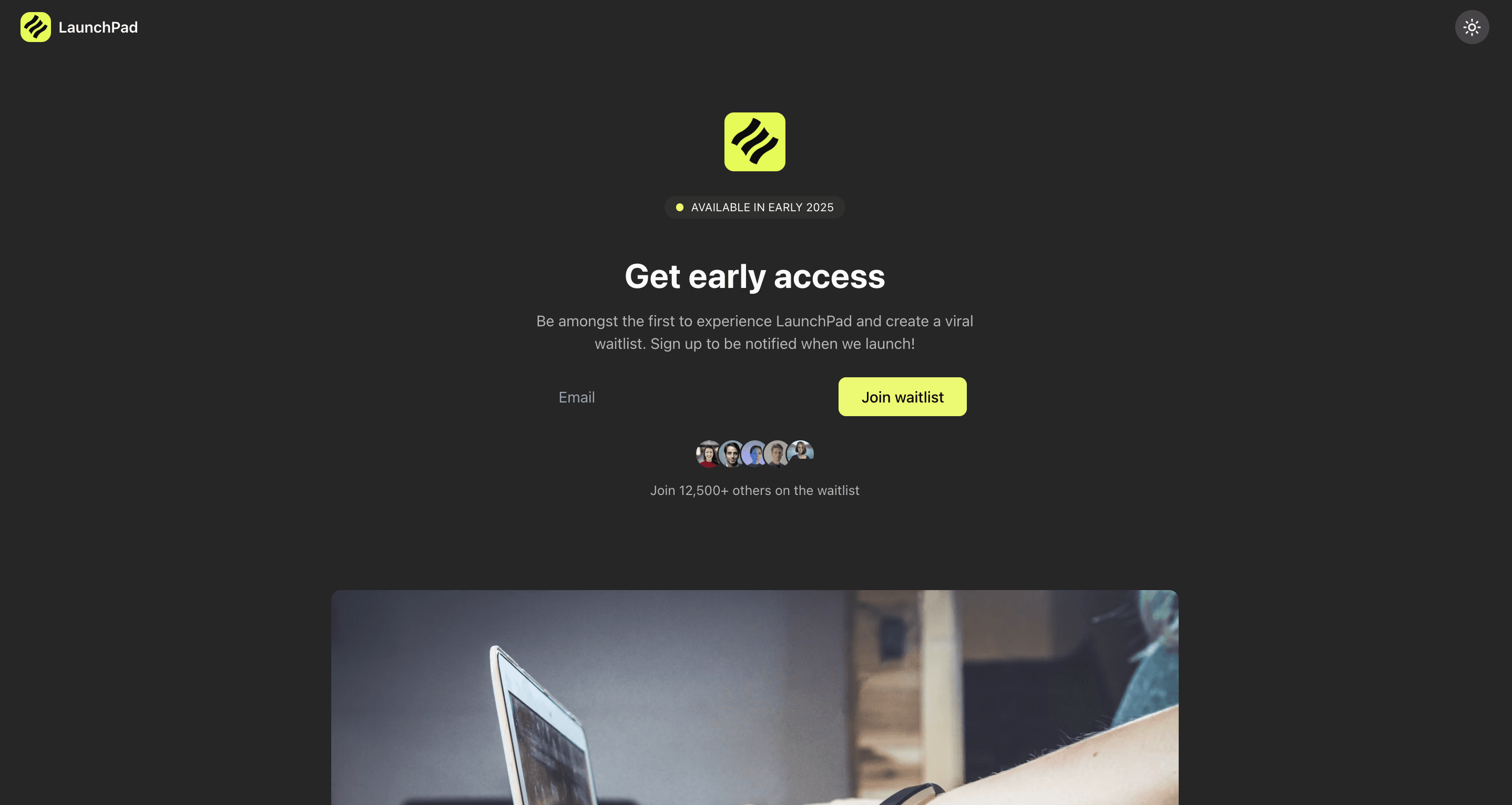
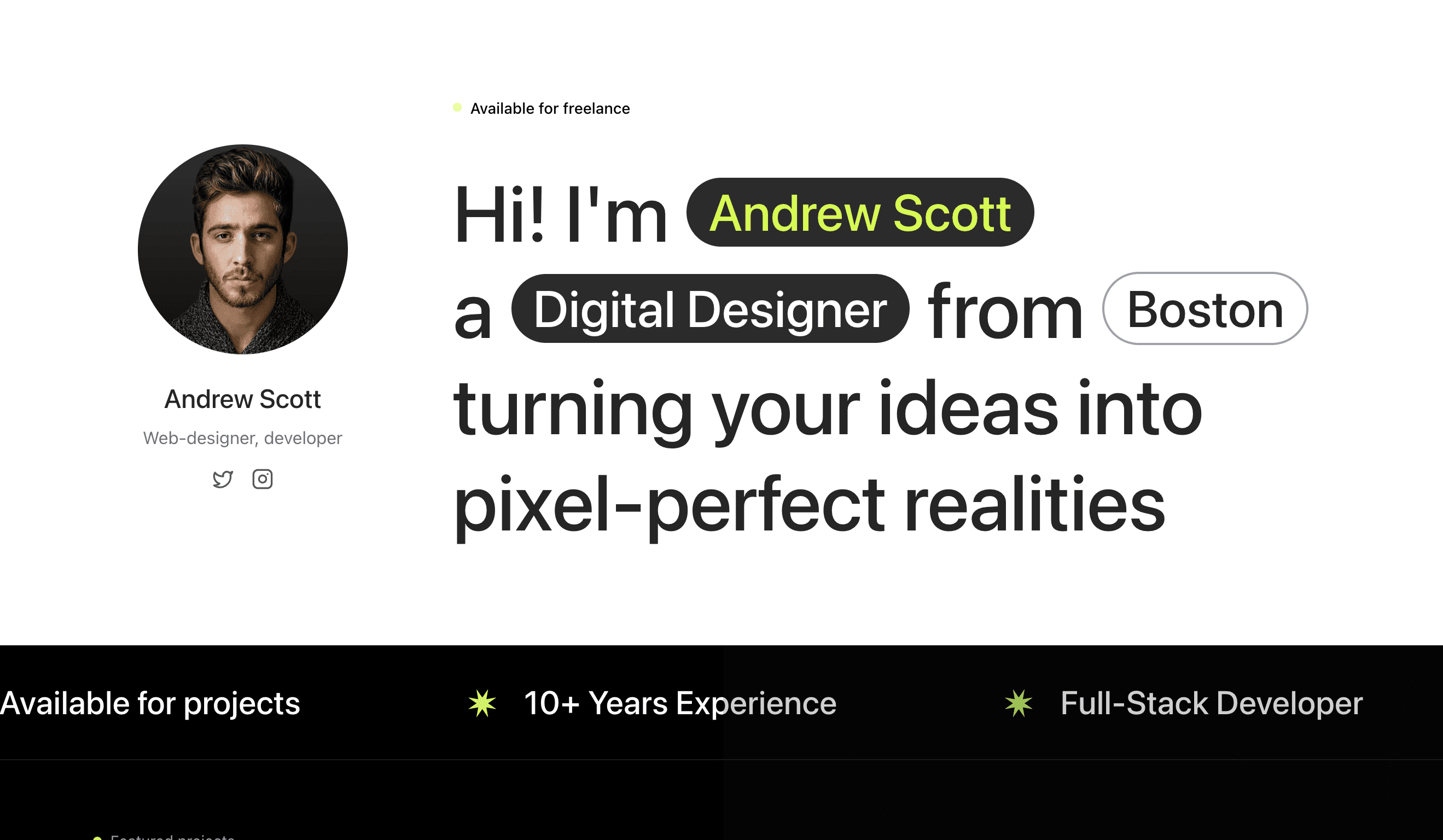
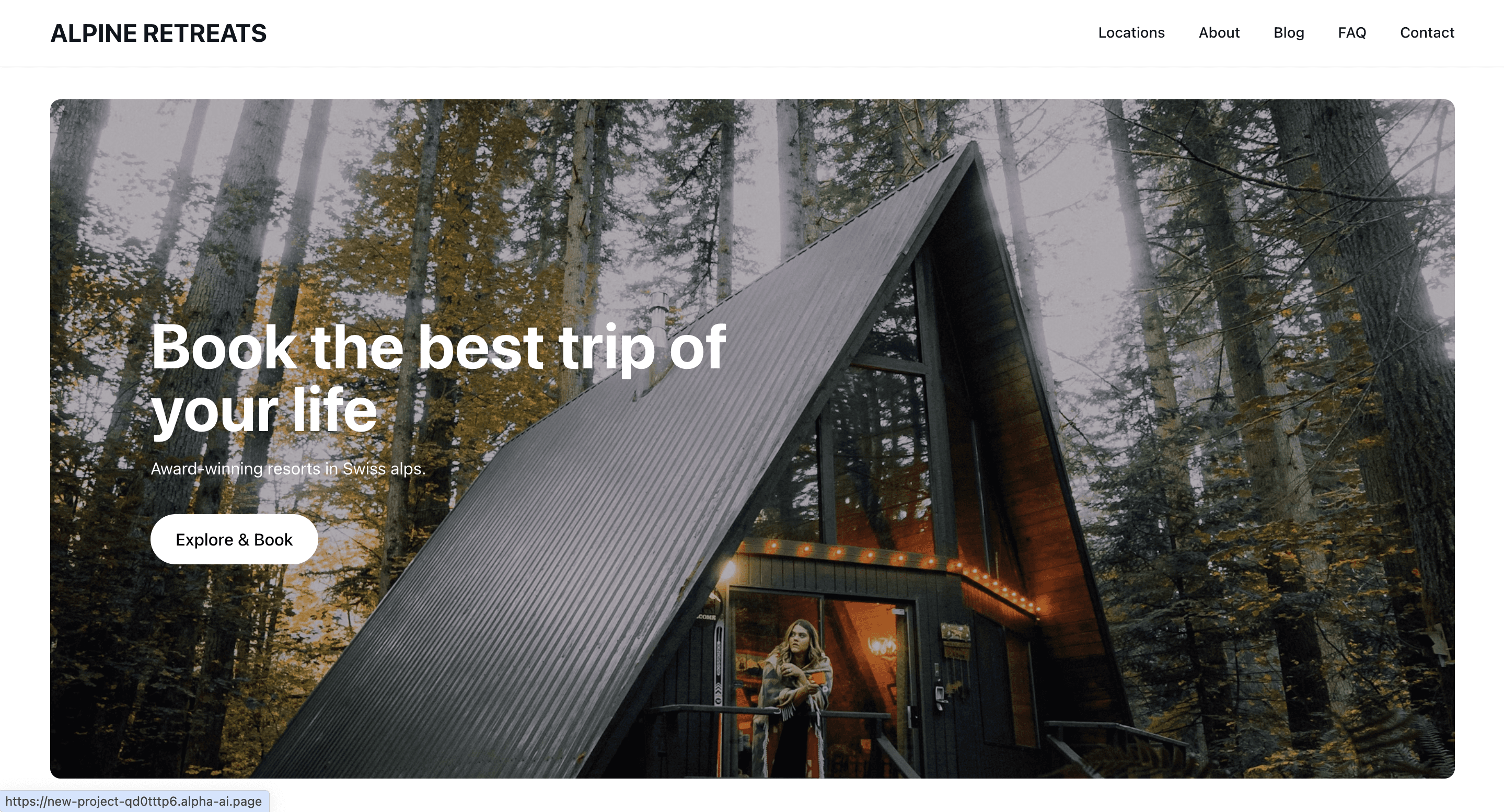
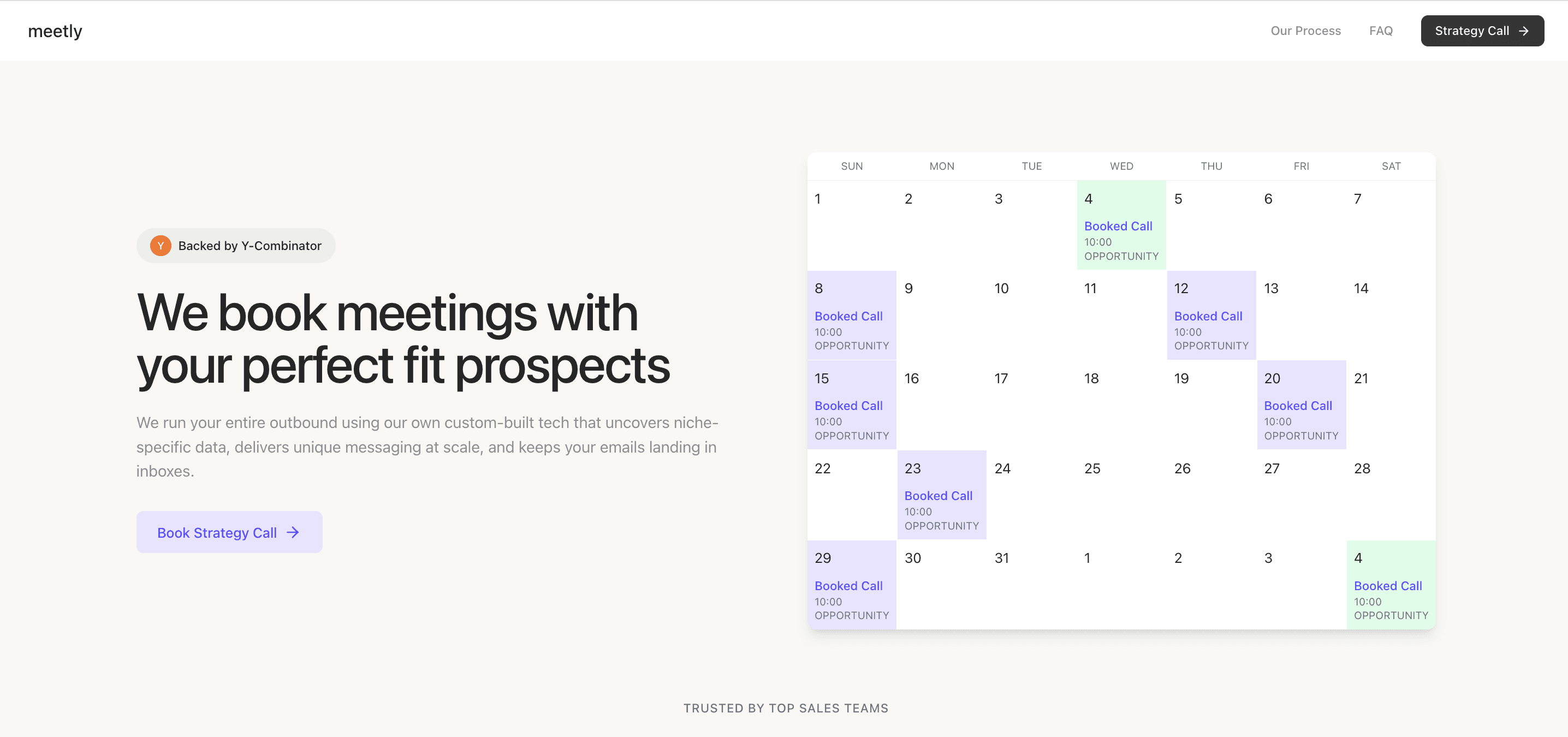
Build beautiful websites like these in minutes
Use Alpha to create, publish, and manage a fully functional website with ease.
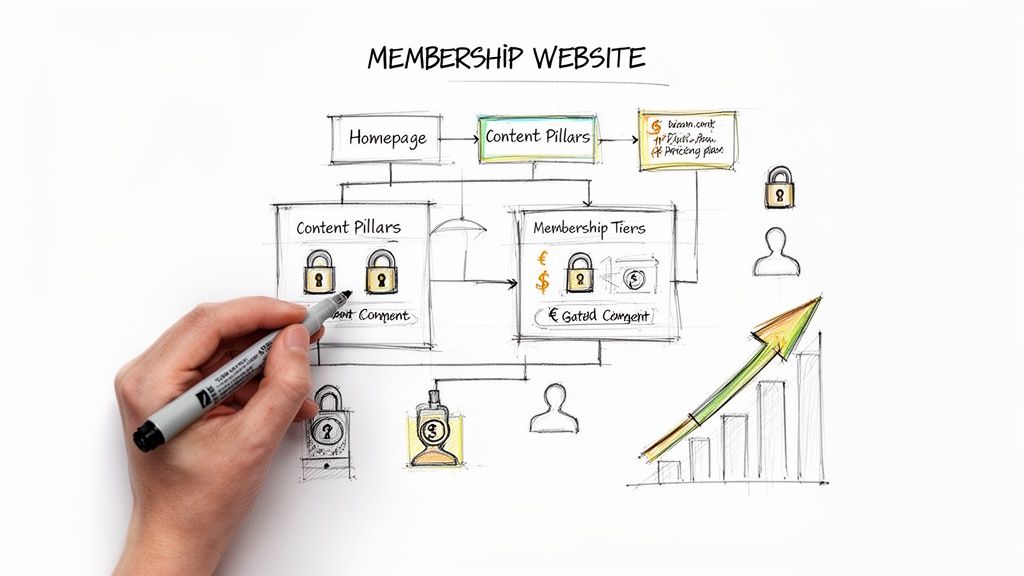
Before you ever think about designing a logo or picking a tech platform, the real work of building a successful membership site happens. It all starts with a solid plan. A clear blueprint is what separates the sites that thrive from the ones that fizzle out. Without it, you're just guessing.
This isn't about the tools; it's about strategy. Get this part right, and everything that follows becomes ten times easier.
Your Blueprint for a Profitable Membership Site
Let's be honest: a great membership site doesn't just happen. It's built on a foundation of smart, upfront planning that perfectly aligns what you offer with an audience that's eager to pay for it. This is where you ask the hard questions and draw the map that will guide every single decision you make from here on out.
The journey starts by finding a profitable niche where you can make a real impact. It’s not just about what you love, but where your passion meets a genuine market need. Are people out there right now, searching for the exact solutions you can offer? More importantly, are they willing to open their wallets for it? Answering that question is your first step toward building something that lasts.
Defining Your Niche and Value Proposition
Finding your sweet spot means getting specific. Really specific. Instead of a vague "fitness" site, think "postnatal yoga for new moms" or "strength training for cyclists over 40." This kind of focus makes your marketing exponentially more effective because you're no longer shouting into the void—you're having a direct conversation with your ideal member.
Once you’ve nailed the niche, your value proposition is the promise you make to them. What incredible transformation or exclusive benefit will they get by joining? This has to be something they can't just find for free on Google.
Your value might be:
Exclusive Content: Think deep-dive courses, expert tutorials, or unique tools that are locked away just for members.
Vibrant Community: A private forum or Slack channel where members connect, network, and learn from each other.
Direct Access: The chance to get one-on-one coaching, join group Q&As, or get direct support from you.
Curated Resources: A library of plug-and-play templates, checklists, and other assets that save your members time and headaches.
A strong value proposition instantly answers the question: "Why should I pay for this every single month?" If the answer isn't a clear and compelling "yes," you need to go back to the drawing board.
Mapping the Member Journey
With your niche and value proposition locked in, it's time to walk a mile in your future member's shoes. Map out their entire experience, from the moment they first hear about you to the day they become a raving fan. For a great deep-dive on this, check out this creator's guide to building a membership website which really unpacks these foundational strategies.
Visualizing this journey helps you see exactly what you need to build and when.
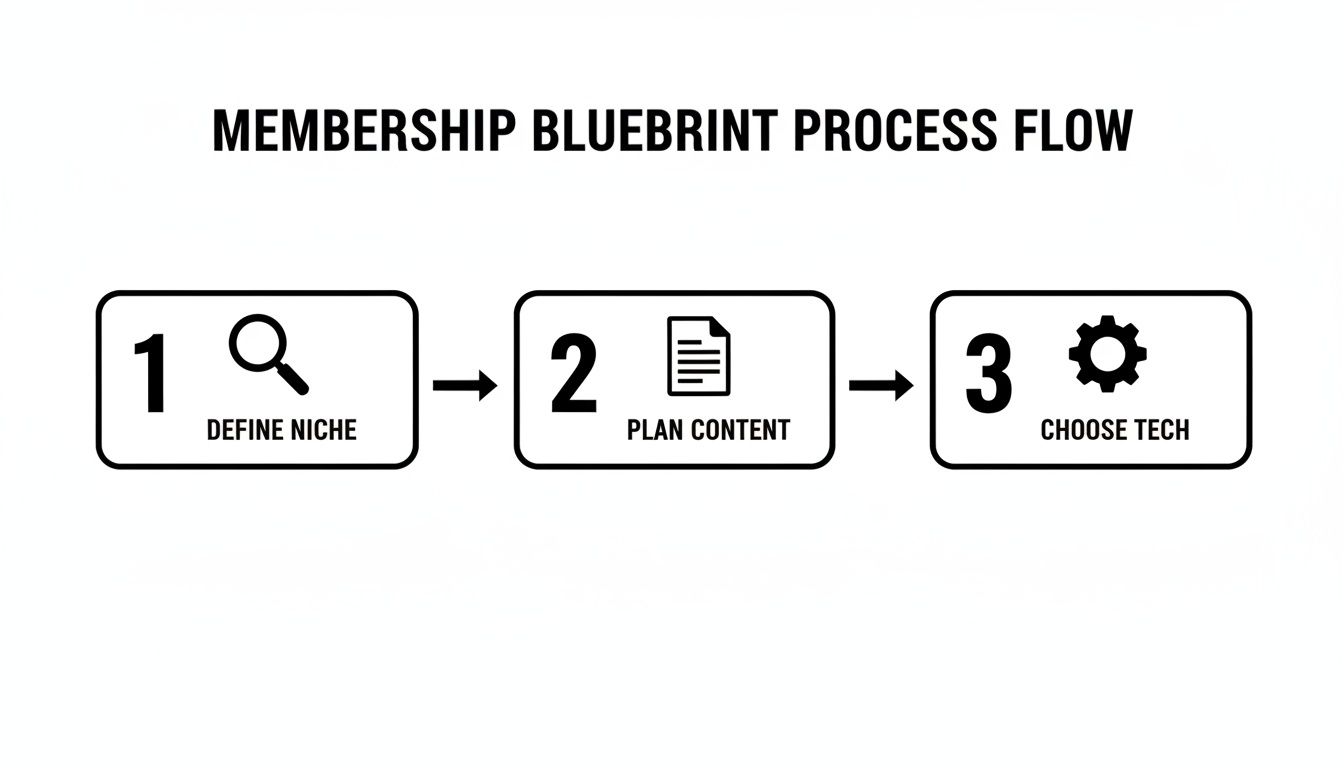
This simple flow—define your niche, plan your content, then choose your tech—is the key. It forces you to put strategy before tools, ensuring everything you build serves a clear purpose. When your plan is this solid, decisions about pricing, marketing, and everything else fall into place much more naturally.
Structuring Your Membership Tiers and Pricing
Let's talk about one of the make-or-break decisions for your membership site: pricing. Getting this right is crucial. If you price too low, you’ll leave money on the table and attract less committed members. Price too high, and you might scare away the very people you want to help.
The goal isn't just to pick a number. It's about building a structure that clearly communicates the value you're offering and makes your members feel like they’re getting a fantastic deal. Your pricing strategy is a direct reflection of the transformation you promise.
Deciding On Your Core Pricing Model
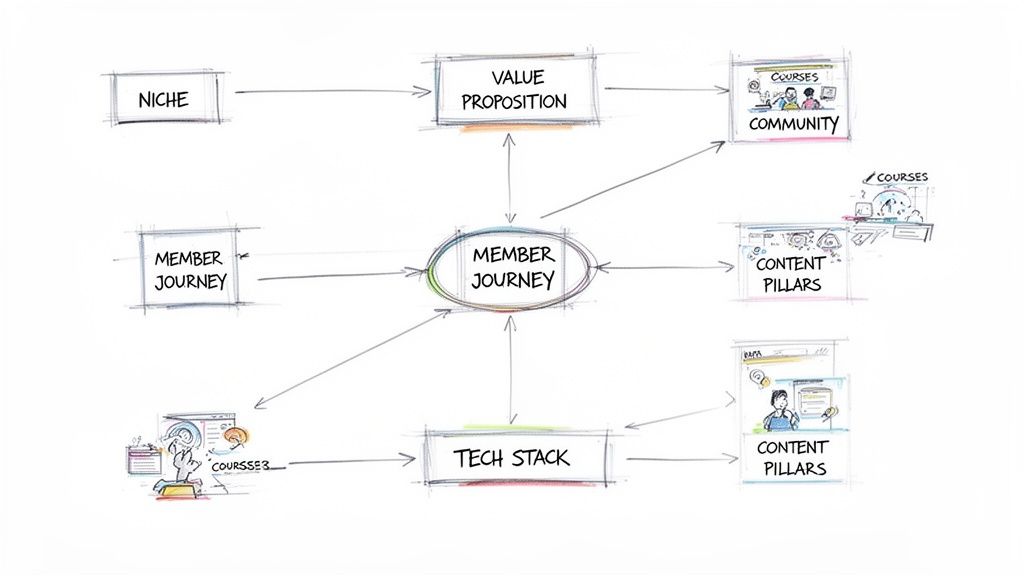
First things first, you need a model. The most popular choice by far is the classic tiered model—think Bronze, Silver, and Gold. This works brilliantly when you can create clear, distinct value at each level, giving members a natural reason to upgrade as they get more invested.
Imagine a membership site for freelance marketers:
Bronze Tier: Grants access to the core library of articles and a monthly newsletter.
Silver Tier: Includes everything in Bronze, but adds access to a private community and bi-weekly live Q&A calls.
Gold Tier: Offers all of the above, plus a monthly one-on-one coaching session and entry to exclusive masterclasses.
See how that creates a clear ladder? It allows people to enter at a comfortable level and climb higher as their needs evolve.
The alternative is the all-in-one model, where one price gets you everything. This is all about simplicity. It removes any decision fatigue for potential buyers and works perfectly if your core offer is a single, comprehensive resource, like a deep-dive course or a complete digital library. Segmenting it just wouldn't make sense.
Choosing Your Membership Pricing Model
Deciding between a tiered, all-in-one, or another model can be tough. This table breaks down the most common options to help you see what might be the best fit for your specific content and community.
Model Type | Best For | Pros | Cons |
|---|---|---|---|
Tiered | Content that can be logically segmented; sites with a mix of content, community, and coaching. | Creates clear upgrade paths; maximizes potential revenue per member; caters to different budgets. | Can be complex for users to choose; requires careful value-balancing between tiers. |
All-in-One | A single, high-value offering (e.g., a master course, a complete resource library). | Simple for users to understand; easy to market and manage; focuses on one core value prop. | No upsell opportunities; a single price point might be too high for some potential members. |
Usage-Based | Services that can be measured (e.g., download credits, API calls, design requests). | Members only pay for what they use, which feels fair; can be very profitable for high-use members. | Unpredictable revenue for you; can be confusing for members to track their usage and costs. |
Freemium | Platforms aiming for massive user acquisition where a small percentage converts to paid. | Excellent for building a large user base and email list; lets users "try before they buy." | High risk of attracting freebie-seekers; requires a huge top-of-funnel to be profitable. |
Ultimately, the best model aligns with the value you provide. A tiered structure offers flexibility and growth potential, while an all-in-one model provides powerful simplicity. Don't be afraid to start with one and adapt as you learn more about your members' needs.
The Psychology Behind Your Price Tag
Pricing is more art than science. Your price doesn't just represent cost; it anchors your brand's perceived value in the mind of your audience. If you price too low, people might assume your content isn't very good.
A huge mistake I see people make is pricing based on the quantity of their content. Don't do that. Instead, price based on the outcome or transformation you provide. If your membership helps a freelancer reliably land their first $5,000 client, that’s where the value is—not in the number of videos they get.
Don't be afraid to charge what you're worth. Your pricing is a filter. It helps you attract members who are serious about getting results and are happy to invest in a real solution. Honestly, it’s far better to have 100 members paying $50/month than 500 members paying $10/month.
Crafting Tiers That Practically Sell Themselves
If you’re going with a tiered model, you need to be strategic. The secret is to make your entry-level tier a complete no-brainer, but leave just enough on the table to make upgrading to the next level incredibly tempting. Your middle tier should almost always be highlighted as the "best value" or "most popular" choice.
Here’s a simple framework for mapping out your features:
Entry-Level Tier: This is the hook. It should solve your audience's most immediate pain point and give them a quick win. This proves your value and gets them in the door.
Mid-Level Tier: This is where most people should land. Build on the entry tier by adding features that deepen the experience—think community access, live events, or advanced workshops.
Premium Tier: Reserve this for your highest-touch offerings. We're talking direct access to you, one-on-one coaching, or exclusive "done-for-you" resources.
By structuring your tiers this way, you create a natural journey for your members. They start where they're comfortable, experience a taste of the value you provide, and then see a clear, compelling reason to invest more to get an even better result.
Getting Your Tech Stack Right
Okay, you've got a solid plan and you know how you're going to price everything. Now for the fun part: picking the tools to actually build your membership site. This is where your vision starts to become a reality. And don't worry, you absolutely do not need to be a coding genius to build a membership website that looks professional and works flawlessly.
Thanks to modern platforms, a lot of the heavy lifting is done for you. The real trick is choosing a system that lets you focus on creating great content for your members, not wrestling with technical glitches.
All-in-One Platforms vs. WordPress Plugins
This is your first major fork in the road. You're generally looking at two main paths: an all-in-one website builder or a self-hosted WordPress site beefed up with membership plugins. Each has its pros and cons.
All-in-one platforms are built for speed and simplicity. They bundle everything—hosting, design, payments, and membership features—into one neat package. If you're a creator who wants to get online fast without getting lost in the weeds, this is your best bet.
For example, a platform like Alpha lets you use AI to generate a full-blown website in just a few minutes. You can even point it to a site you admire and say, "make me something like that," which is an incredible time-saver. Everything is managed from a single dashboard, which keeps things simple.
On the other hand, you have WordPress with membership plugins. This approach gives you ultimate control and flexibility. If you have a very specific vision for your site and need custom features, nothing beats WordPress. But that power comes with a price: a steeper learning curve and the responsibility for handling your own security, updates, and maintenance.
The Must-Have Components of Your Tech Stack
No matter which path you take, your membership site needs a few non-negotiable pieces to function properly. Think of these as the engine, the doors, and the checkout counter of your digital business.
A Killer Sales Page: This is your digital storefront. It has to clearly sell the value of your membership, show your different tiers, and have a can't-miss call-to-action button.
A Secure Members-Only Area: This is the private club where all your exclusive content, courses, and community forums live. The system must be rock-solid at keeping non-members out.
Frictionless Sign-Up and Login: Getting into your site should be effortless. I've seen so many people abandon a purchase because the sign-up form was a nightmare. Make it simple.
Payment Gateway Integration: You need a trusted way to handle recurring payments. Integrating with a major player like Stripe or PayPal is key for building trust and ensuring you actually get paid.
I can't stress this enough: a clunky user experience kills momentum. If a paying member can't log in or find the content they're paying for, the perceived value of your entire offering plummets. Smooth tech is the invisible foundation of a successful membership.
Using AI to Build Faster and Smarter
This is where the game has really changed. AI-powered tools can slash your build time from weeks to just a few hours. Instead of agonizing over design elements, you can get a polished, professional look almost instantly.
Think about the old way of building a sales page. You'd either hire a designer or spend countless hours in a drag-and-drop editor, tweaking every little thing. With an AI builder like Alpha, you just tell it what you need.
You could give it a prompt like: "Create a sales page for my yoga membership. I need a header with a video, a three-tier pricing table, a spot for testimonials, and a final CTA to join." The AI will then generate a fully designed page that you can fine-tune.
This isn't just about being fast; it's about being effective. The AI can analyze successful designs and apply conversion-focused principles from the get-go. If you're still weighing your options, our guide on the best platforms to build a website can help you narrow down the choices.
Making the right tech decisions now will save you from a world of headaches later. By choosing tools that are both powerful and easy to manage, you free yourself up to do what really matters: serving your community and creating amazing value for your members.
Getting the Word Out: Launching and Promoting Your Membership Site
You can build the most brilliant membership site in the world, but if no one knows it exists, it's just a digital ghost town. The technical side is one thing, but a smart launch and a solid promotion plan are what separate a thriving community from an empty one. Your marketing shouldn't start on launch day; it needs to begin long before you’re ready to open the doors.
The real goal here is to build a groundswell of excitement. You want a virtual line of eager, potential members waiting to sign up the moment you go live. This isn't about just flipping a switch and hoping people show up. It’s a calculated, phased approach to create buzz, build trust, and drive that all-important first wave of sign-ups.
Crafting a Winning Pre-Launch Strategy
Your pre-launch is all about building anticipation. More importantly, it’s about building an audience you can talk to directly. Hands down, the most valuable asset you can have before your site goes live is an email list. It’s a direct line to your most interested fans, completely unfiltered by social media algorithms.
Start with a simple "coming soon" landing page. This page needs to nail your value proposition and have a can't-miss-it sign-up form for your waitlist. You need to give people a compelling reason to hand over their email, so offer a real incentive:
An exclusive early-bird discount just for your founding members.
A free, high-value piece of content, like a preview ebook or a mini-course that gives them a taste of what’s coming.
Bonus content or special features that will only ever be available to those on the waitlist.
This isn't just about harvesting emails. It's your chance to start a conversation. We cover the fundamentals of this in our guide on building an effective email list. Use this pre-launch window to nurture that list, share some behind-the-scenes updates, and forge a genuine connection.
Executing a High-Impact Launch
When launch day finally arrives, your mission is to convert all that pent-up excitement into paying members. Your waitlist is your first stop. Send them a dedicated email sequence letting them know the doors are officially open and reminding them of their exclusive offer. Creating a little urgency—like a special "founder's price" that expires in 72 hours—can work wonders.
At the same time, blast the news across all your channels. Post on social media, reach out to peers in your industry, and maybe even run a small, tightly-targeted ad campaign to your ideal audience. Think of the launch not as a single day, but as a focused campaign that might run for a week or two.
My Two Cents: Your launch should feel like an event. Don't just quietly hit "publish." Make a splash, celebrate your founding members, and create a powerful sense of community right from the get-go.
Keeping the Momentum Going with Post-Launch Promotion
The initial launch buzz will eventually settle down, and that's when the real work of sustainable growth kicks in. You have to shift from a short-term sprint to a long-term marketing marathon. A multi-channel approach is absolutely critical for building a steady stream of new members over time.
This is where you need to start paying attention to the numbers. Data shows that 39% of new subscribers come from organic channels, which makes SEO and content marketing powerful long-term plays. Paid social ads can get you traffic right away, but you need a site that’s built to convert that traffic. A strong strategy usually blends both. It's worth diving into these subscription statistics to see why things like free trials can boost lifetime value and why premium pricing often wins out.
Here are the growth engines you should really focus on:
Content Marketing & SEO: Get into a rhythm of publishing high-quality, free content like blog posts, videos, or podcasts that solve your audience's problems. This is how you build trust and attract organic traffic from search engines over the long haul.
Social Media Engagement: Don't just be a broadcaster; be a community builder. Jump into conversations, share genuinely helpful tips, and use your platforms to show off the culture and benefits of being a member.
Paid Advertising: Once you have a handle on your customer acquisition cost, targeted ads on platforms like Facebook, Instagram, or LinkedIn can become a predictable and scalable source of new leads.
Affiliate & Partner Marketing: Team up with other creators or influencers in your space. Offer them a commission for every new member they send your way. This is a fantastic way to tap into their established audience and trust.
By mixing and matching these strategies, you build a robust system that isn't dependent on any single source for new members. That’s the key to ensuring your community continues to grow long after the launch-day confetti has been swept away.
Keeping Members Engaged and Reducing Churn
Getting that first sign-up feels like a huge win, and it is! But the real test for any membership website is what comes next. I've learned from experience that acquiring a new member is just the start of the relationship; sustainable, long-term success is built on retention, not just a constant chase for new customers. The trick is to turn that initial flash of excitement into lasting loyalty.
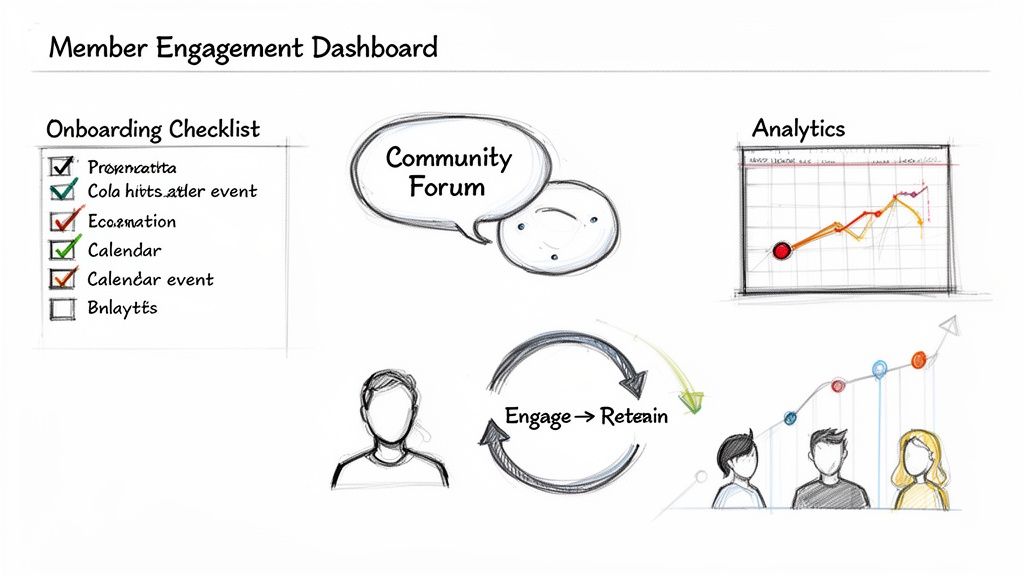
The moment someone signs up is your golden opportunity to prove they made the right call. A clunky or confusing first impression can plant seeds of doubt and lead to quick cancellations. That’s why a smooth, intentional onboarding process isn’t just a nice-to-have—it’s non-negotiable if you want to build a membership website that thrives.
Nail the Onboarding Experience
A new member's first few days are everything. Your one and only goal should be to guide them straight to that "aha!" moment where they experience the core value of what you offer. You can't just drop them into a library of content and expect them to figure it out.
Think of a great onboarding flow as a personal tour guide. It should:
Welcome them warmly with a personalized email or an in-app message.
Show them exactly where to begin, maybe by pointing them to your single most valuable resource or most popular video.
Explain how to get the most out of their membership, like how to join the community forum or sign up for the next live workshop.
Something as simple as a "Start Here" page or a short welcome video can make a world of difference. The faster you can help a new member get a small win—like learning a new skill or connecting with another member—the more invested they'll become. At its core, a stellar onboarding process is a key part of effective user experience design fundamentals.
Foster a Thriving Community
Content might be what gets people to sign up, but community is what convinces them to stay. A lively community transforms your membership from a simple content subscription into a real human connection, making it much harder for someone to hit that cancel button.
This doesn't have to be some massive, complicated forum, either. It can be as simple as a private Facebook group, a dedicated Slack channel, or a monthly members-only Zoom call. The goal is just to create a space where people can connect with each other, ask questions, share their wins, and feel like they belong to something bigger than themselves.
Retention is the secret sauce of profitable membership sites. The numbers don't lie: community-driven memberships often see retention rates as high as 85-92%, crushing the 60-70% typical for content-only platforms. Churn often strikes hardest in the first 60 days, which makes that initial community connection absolutely vital.
Keep Your Content Fresh and Consistent
Predictability builds loyalty. Your members need a reason to keep coming back, and a consistent content schedule is the best way to build that habit. It doesn't matter if it's a new expert interview on the first Monday of every month, a weekly live Q&A, or a new course module every quarter—consistency prevents your site from feeling stale.
This isn’t about becoming a content factory that pumps out new material every single day. It's about quality and rhythm. Let your members know what to expect and when, and then deliver on that promise. Sharing a simple content calendar can build anticipation and keep people engaged for the long haul.
Use Analytics to Proactively Reduce Churn
Don't wait until members are already gone to figure out why they left. Basic analytics can give you early warning signs that someone might be at risk of churning. Understanding and managing your customer churn rate is one of the most important things you can do for your long-term profitability.
Keep an eye on a few key engagement metrics:
Last login date: Has a member been MIA for over 30 days?
Content consumption: Are they actually watching your videos or downloading your guides?
Community participation: Have they ever made a post or left a comment?
When you spot a member whose engagement has dropped off, you can step in. A simple, automated email just to check in can work wonders. A quick note like, "Hey, we've missed you! Here’s a great new resource you might find helpful," can be enough to re-engage them and remind them of the value they're paying for. This small, proactive effort shows you care and can make a huge difference in your churn rate over time.
Got Questions About Building a Membership Site? Let's Get Them Answered.
Thinking about building a membership site is exciting, but it’s completely normal for a flood of questions to follow. How much will it cost? How much content do I really need to start? How do I even handle payments? Getting these answers sorted out early on can save you a ton of headaches down the road.
First, let's talk timing. You're jumping in at a fantastic moment. The subscription model isn't just a trend; it's a massive shift in how people consume content, and the numbers are staggering. The global subscription market hit an incredible $487 billion in 2024, and analysts project it could rocket past $2 trillion by 2034. If you want to dive deeper, you can explore more of these membership site statistics to see just how big this opportunity really is.
How Much Does It Cost to Build a Membership Website?
This is always the first question, and the honest-to-goodness answer is: it depends. Your costs could be a couple of hundred bucks or climb into the tens of thousands. It all boils down to the platform you choose and whether you decide to bring in a pro for the heavy lifting on design and development.
Here’s a realistic look at what you can expect to spend:
DIY with an All-in-One Platform: This is your most wallet-friendly option. You’ll have a monthly or annual fee that typically bundles everything—hosting, design tools, and the membership features themselves. It’s perfect for getting your idea off the ground without a huge upfront investment.
WordPress with Plugins: While WordPress itself is free, the costs sneak in. You’ll be on the hook for hosting, a good premium theme, and of course, the membership plugins. Budget anywhere from $150 to $500+ a year for these essentials.
Hiring a Developer: Need something completely custom? This is the route for you. Hiring a freelancer or an agency gives you total control and a bespoke solution, but it comes with a premium price tag, often starting in the thousands.
How Much Content Do I Need to Launch?
So many creators get stuck here, thinking they need a massive vault of content before they can even think about launching. That’s a myth. You don’t need a year’s worth of videos, articles, and courses on day one.
What you do need is enough high-quality content to give your first members an immediate and obvious win.
Your launch content should solve your member's most pressing problem. Focus on providing a quick win that makes them feel they made a smart investment. One amazing, in-depth course is far more valuable than twenty mediocre articles.
The goal is to get people through the door and prove your value right away. From there, you can build out your content library over time, guided by what your members actually want and need. This iterative approach is so much more effective than building in a silo.
What Is the Best Way to Handle Payments?
When you’re handling people’s money, security and reliability are everything. Thankfully, you don't have to reinvent the wheel. The smartest and most standard approach is to integrate with a trusted payment gateway.
For most membership sites, the decision comes down to two major players:
Stripe: It's the industry standard for a reason. Stripe is known for its powerful developer tools, rock-solid security, and easy integration with just about every membership platform out there.
PayPal: A name everyone recognizes. The trust factor is huge, and since many people already have a PayPal account, it can make the checkout process just a little bit smoother for your customers.
The good news is that most modern website builders and membership plugins offer dead-simple, one-click integrations for these gateways. This removes the technical burden of managing recurring subscriptions, handling different currencies, and keeping data secure, so you can focus on what you do best: building your community.
Ready to stop wondering and start building? With Alpha, you can use powerful AI to generate a professional, conversion-focused membership site in minutes. Just describe your vision or provide a reference URL, and watch your idea come to life without the technical headaches. https://www.alpha.page
EXAMPLES
Build beautiful websites like these in minutes
Use Alpha to create, publish, and manage a fully functional website with ease.